

Beyond Cutting: How an Automatic Bag Cutting Machine Improves PP Woven Sack Production
By Rentech Machine Private Limited
Introduction: A Smarter Approach to Woven Bag Manufacturing
In the PP woven packaging industry, production efficiency depends on more than cutting fabric at a particular length. Manufacturers must maintain consistent bag dimensions, coordinate cutting with stitching operations, minimize avoidable material waste, and meet customer delivery schedules.
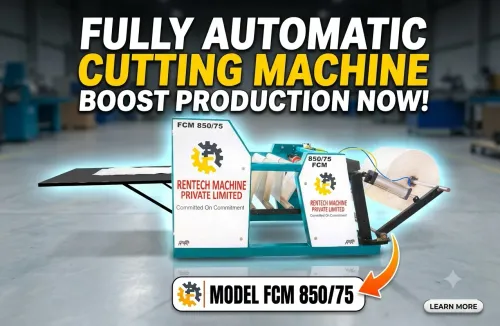
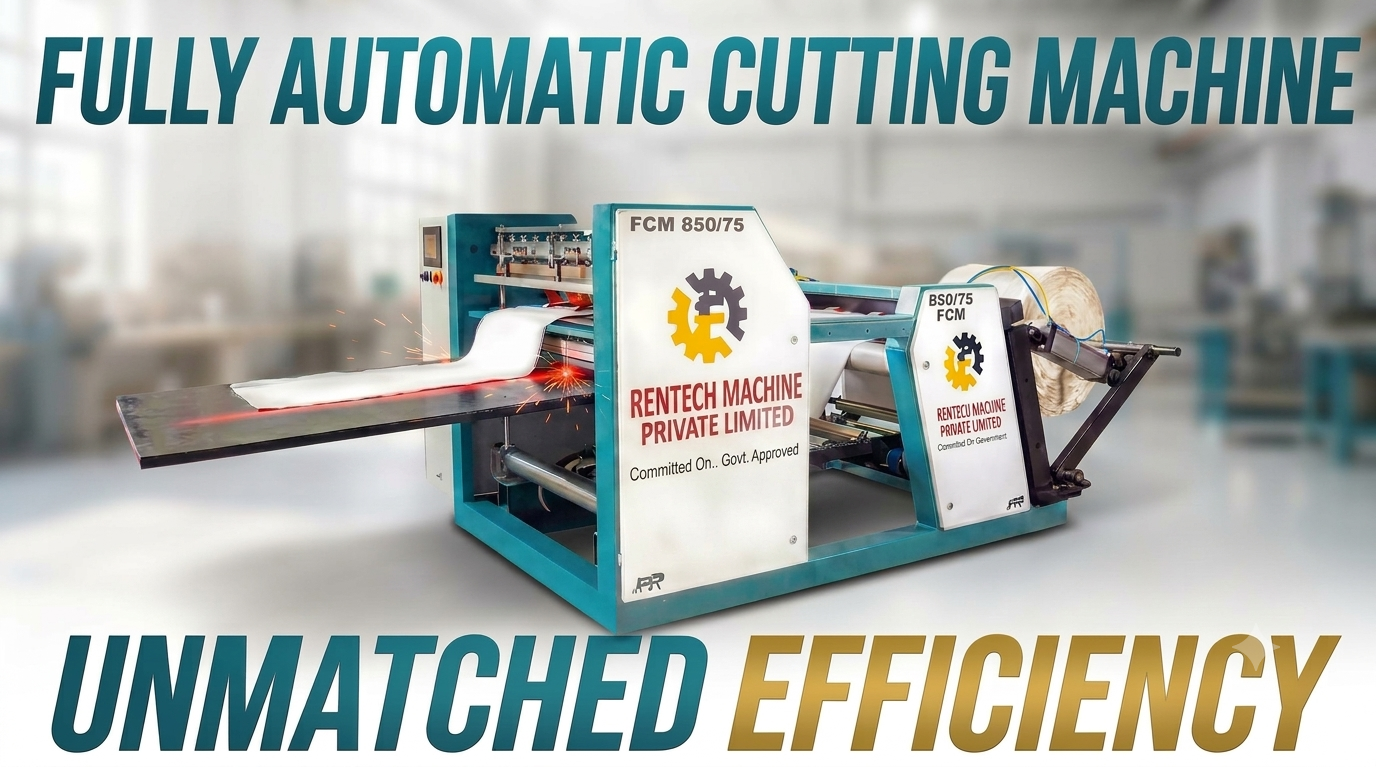
An Automatic Bag Cutting Machine helps streamline the conversion of PP woven fabric rolls into individual bag blanks. When correctly configured and operated, it can improve process consistency, reduce repetitive manual work, and support a more organized production workflow.
Rentech Machine Private Limited provides machinery solutions for woven sack manufacturers seeking practical approaches to fabric conversion and industrial bag production.
This article explores how manufacturers can evaluate automatic cutting technology from a production-management perspective rather than simply comparing machine features.
1. Why Cutting Consistency Matters in Bag Manufacturing
Cutting accuracy directly affects the dimensions and usability of the finished bag. Variations in cut length can create difficulties during stitching, printing alignment, folding, and subsequent bag handling.
A properly configured automatic cutting system can help manufacturers maintain repeatable cutting lengths across production batches.
Important considerations include:
- Consistent bag-length settings
- Stable fabric feeding and alignment
- Reliable cutting performance
- Proper coordination between feeding and cutting cycles
- Routine inspection of cutting components
- Periodic verification of finished bag dimensions
Maintaining these factors helps establish a repeatable manufacturing process and reduces avoidable quality variations.
2. From Manual Handling to a More Organized Workflow
As production requirements increase, repetitive manual measuring and cutting can become difficult to coordinate with downstream stitching operations.
An automatic cutting machine can organize this process by using configured cutting lengths and a controlled operating cycle. Depending on the machine model, the system may incorporate automatic fabric feeding, length control, cutting, and material transfer.
This can help manufacturers:
- Reduce repetitive measuring activities
- Improve workflow consistency
- Coordinate cutting with stitching requirements
- Simplify production supervision
- Establish more consistent operating procedures
The actual level of automation depends on the machine configuration. Buyers should confirm which operations are automatic and which require operator intervention.
3. Material Utilization: An Important Cost-Control Factor
Fabric is a major input cost in woven sack manufacturing. Even small, repeated cutting deviations can affect material utilization across large production batches.
Manufacturers should evaluate more than the nominal cutting speed when selecting machinery. They should also examine the machine's ability to maintain the required bag length, handle the intended fabric properly, and minimize avoidable setup losses.
A practical material-control strategy includes:
- Selecting the correct bag-length setting
- Checking fabric alignment before production
- Inspecting the first few cut pieces
- Monitoring dimensional variation during production
- Recording rejected or incorrectly cut pieces
- Maintaining blades and feeding components according to manufacturer recommendations
An automatic cutting machine does not eliminate every source of waste, but suitable settings, maintenance, and quality checks can help improve material utilization.
4. Coordinating Cutting with Stitching Operations
Cutting and stitching are closely connected stages in woven bag conversion. If the cutting process produces material faster than the stitching section can handle, unfinished bags may accumulate between operations. If cutting is too slow, stitching equipment may remain underutilized.
Manufacturers should therefore assess the complete workflow rather than evaluating the cutting machine in isolation.
Key factors include:
- Required bags per minute
- Bag length and fabric width
- Stitching-machine capacity
- Material transfer arrangements
- Operator availability
- Space for work-in-progress material
- Required production shifts
The objective is to create a balanced production line in which cutting, transfer, and stitching work together efficiently.
5. Selecting an Automatic Cutting Machine for Your Production Target
The right machine depends on the manufacturer's production requirements, material specifications, and desired automation level.
Before purchasing, consider the following questions:
Production volume: How many bags must be produced per shift or per day?
Bag dimensions: What are the minimum and maximum required cutting lengths?
Fabric specifications: What fabric types, widths, thicknesses, and constructions will be processed?
Automation requirements: Is automatic feeding and cutting sufficient, or is an integrated cutting-and-stitching solution required?
Quality expectations: What cutting tolerance and dimensional consistency are required?
Plant requirements: What electrical supply, floor space, staffing, and maintenance arrangements are needed?
Discussing these factors with the machine manufacturer helps identify a configuration suited to the intended application.
6. Applications Across Different Packaging Segments
Depending on machine configuration and material compatibility, automatic cutting equipment can support the production of:
- PP woven sacks for grains and cereals
- Onion and potato packaging bags
- Fertilizer packaging sacks
- Animal-feed bags
- Seed packaging bags
- Industrial woven packaging
- Compatible HDPE woven and Leno bags
The suitability of a particular fabric should always be confirmed against the selected machine's specifications.
7. Why Consider Rentech Machine Private Limited?
Rentech Machine Private Limited serves the industrial packaging machinery sector with solutions for PP woven sack conversion and related manufacturing applications.
When evaluating a machine, manufacturers should consider not only its initial specifications but also how it fits their production workflow, material requirements, quality standards, and future capacity plans.
Our team can discuss your application requirements to help identify an appropriate machine configuration for your operation.
Conclusion
An automatic bag cutting machine should be evaluated as part of the complete woven sack production process. Cutting consistency, material utilization, stitching coordination, maintenance, and the required production target all contribute to the effectiveness of a machine installation.
For manufacturers planning to improve their PP woven sack conversion operations, selecting machinery according to actual production needs is an important step toward a more controlled and efficient workflow.
Contact Rentech Machine Private Limited to discuss automatic bag cutting solutions for your manufacturing requirements.
Website: https://rentechmachine.com
Frequently Asked Questions (Q&A)
Q1. What should manufacturers evaluate besides cutting speed?
Manufacturers should assess cutting accuracy, fabric compatibility, material utilization, changeover time, operator involvement, maintenance needs, and compatibility with downstream stitching operations.
Q2. How does cutting accuracy affect finished bag quality?
Consistent cutting lengths help maintain uniform bag dimensions and make subsequent stitching and handling operations more predictable.
Q3. Can an automatic cutting machine reduce fabric waste?
It can help reduce waste caused by inconsistent measuring and cutting. Actual savings depend on machine accuracy, fabric alignment, setup practices, and material quality.
Q4. Is an automatic cutting machine suitable for small manufacturing units?
It can be suitable if its capacity, operating costs, automation level, and space requirements match the unit's production needs.
Q5. Why is production-line balancing important?
Cutting and stitching operations should be coordinated to avoid bottlenecks, excessive work-in-progress, and unnecessary equipment downtime.
Q6. What information should I provide when requesting a machine quotation?
Share the fabric type, fabric width, required bag length, target output per minute, desired automation level, electrical supply, and whether stitching should be integrated.
Q7. How often should cutting components be inspected?
Inspection frequency depends on operating hours, fabric characteristics, blade type, and manufacturer recommendations. Regular checks should be part of the preventive-maintenance schedule.