

Transforming Woven Bag Manufacturing with Automatic Cutting and Stitching Technology
The woven packaging industry is continuously evolving as manufacturers look for better ways to improve production efficiency, maintain consistent product quality, and manage increasing customer requirements. With growing demand for PP woven sacks and industrial packaging solutions, manufacturers need reliable machinery that can support higher production volumes while maintaining accuracy throughout the manufacturing process.
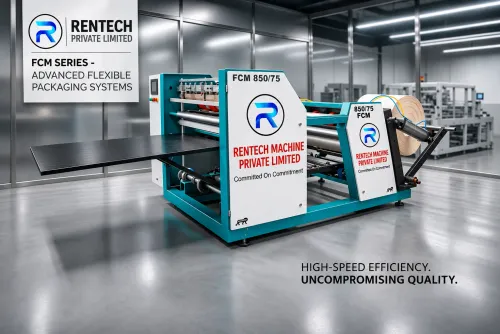
Rentech Machine Private Limited introduces advanced automatic cutting and stitching solutions designed to modernize woven bag conversion operations. Our automatic cutting and stitching machines help manufacturers transform woven fabric rolls into finished bags through an integrated and streamlined production process.
Rather than depending on multiple manual operations, manufacturers can adopt automated machinery to improve workflow management, reduce repetitive labour, and achieve greater consistency in finished bag production.
The Changing Requirements of the Woven Packaging Industry
Woven bags are widely used across industries because of their strength, flexibility, and suitability for bulk packaging. Applications include agricultural products, fertilizers, cement, chemicals, animal feed, food grains, seeds, and various industrial materials.
As packaging requirements become more demanding, bag manufacturers must focus on consistent dimensions, reliable stitching, clean cutting edges, and dependable production output.
Traditional manual cutting and stitching processes can create challenges such as inconsistent bag lengths, production delays, higher labour dependency, and variations in finished product quality.
Automation provides a practical solution to these challenges. An automatic woven bag cutting and stitching machine combines important conversion operations into a more organized production workflow, helping manufacturers improve operational control and production consistency.
How Automatic Cutting and Stitching Technology Improves Production
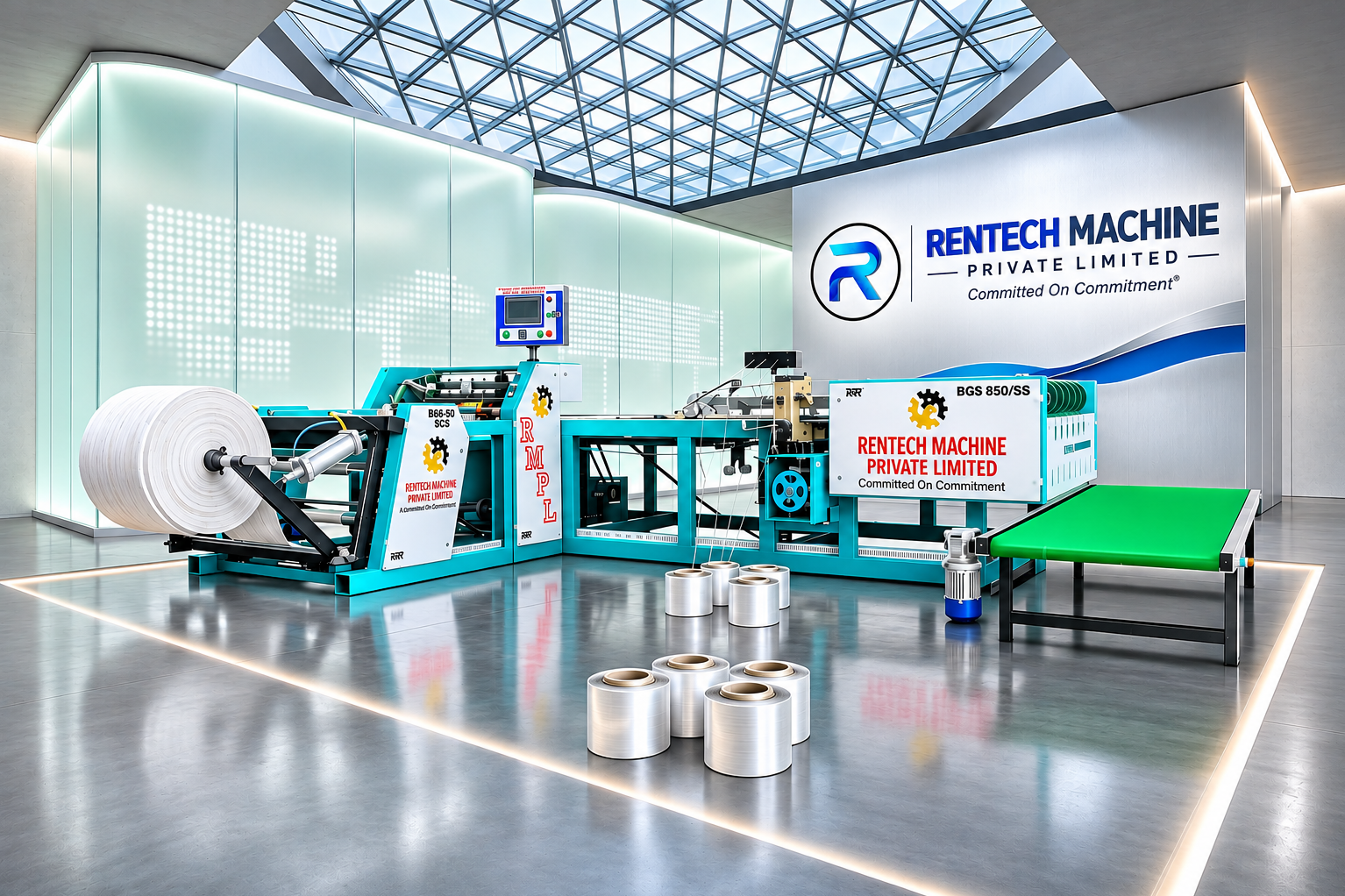
The conversion of woven fabric into finished bags involves several important manufacturing stages. Automatic machinery helps coordinate these operations and reduces the need for repeated manual handling.
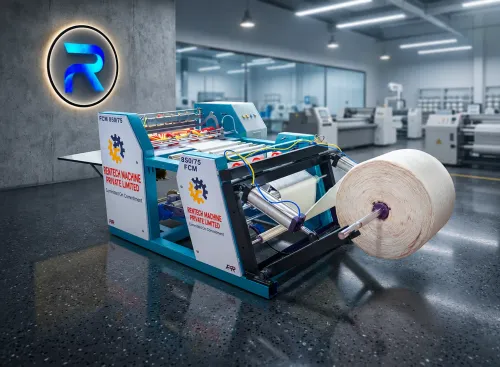
The production process generally begins with feeding woven fabric from a roll. The fabric moves through the machine according to the selected bag length and cutting requirements.
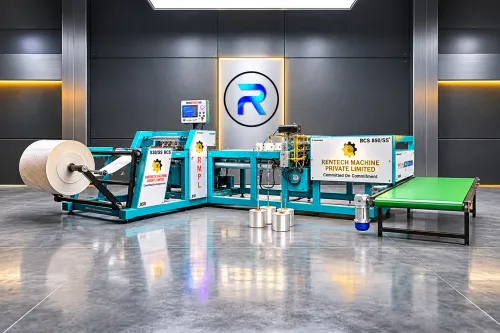
Once the required length is achieved, the cutting mechanism separates the fabric into individual bag pieces. The cut material then moves towards the stitching section, where the open end is sewn to create the finished bag structure.
This integrated approach helps maintain a continuous production workflow and reduces unnecessary movement of material between separate machines.
For manufacturers handling regular bulk orders, this type of automation can contribute to better production planning, improved consistency, and more efficient utilization of available factory space.
Why Manufacturers Are Moving Towards Automatic Bag Conversion Lines
The decision to invest in automatic machinery is not simply about increasing production speed. It is about improving the overall economics of manufacturing.
Reduced Labour Dependency
Manual cutting and stitching operations require continuous operator involvement. Automation reduces repetitive handling and allows factory personnel to concentrate on supervision, material management, and quality inspection.
Consistent Bag Dimensions
Uniform bag dimensions are important for packaging, filling, stacking, and transportation. Automated fabric feeding and cutting help manufacturers maintain consistency across production batches when the machine is correctly adjusted.
Improved Production Planning
An integrated conversion process makes it easier to organize production schedules, manage material flow, and plan manufacturing according to customer orders.
Better Manufacturing Efficiency
Reducing unnecessary material handling and manual movement between operations can improve workflow efficiency and help minimize production interruptions.
Professional Finished Bags
Proper cutting and stitching contribute to a cleaner and more uniform finished product. This is particularly important for manufacturers supplying large packaging companies and industrial customers.
Applications Across Different Woven Fabric Segments
Modern woven bag conversion machinery serves different packaging requirements depending on the fabric structure and production configuration.
PP woven bags are extensively used for packaging fertilizers, grains, sugar, cement, chemicals, and other bulk materials.
HDPE woven bags are used in industrial and agricultural packaging applications where woven fabric strength and durability are important.
PP Leno bags are commonly used for packaging onions, potatoes, garlic, vegetables, and other agricultural products requiring ventilation.
BOPP laminated woven bags are widely used where printed packaging appearance, product branding, and moisture resistance are important considerations.
The suitability of a particular machine for these materials depends on its feeding, cutting, handling, and stitching configuration. Manufacturers should evaluate their fabric type and finished bag requirements before selecting a conversion solution.
The Importance of Choosing the Right Bag Conversion Machinery
Selecting a machine is a long-term manufacturing investment. A machine that is suitable for one factory may not necessarily be the right solution for another.
Before investing in automatic cutting and stitching machinery, manufacturers should evaluate their expected daily production, fabric specifications, bag dimensions, stitching requirements, available factory space, and future expansion plans.
Another important consideration is the manufacturer's technical support capability.
Machinery is only one part of a successful manufacturing operation. Installation assistance, operator training, spare parts availability, maintenance support, and troubleshooting services are equally important for maintaining long-term production reliability.
At Rentech Machine Private Limited, we understand that every packaging manufacturer has different production requirements. Our approach focuses on providing machinery solutions that support practical manufacturing needs and long-term operational growth.
Rentech Machine Private Limited – Supporting the Future of Woven Bag Manufacturing
Rentech Machine Private Limited is engaged in the development and supply of woven bag manufacturing and conversion machinery, supporting packaging manufacturers with practical industrial automation solutions.
Our focus includes automatic bag cutting and stitching machinery, woven sack conversion equipment, and printing solutions for the packaging industry.
We understand the importance of reliable machine operation, consistent production quality, and efficient manufacturing processes.
By combining industrial machinery knowledge with a customer-focused approach, Rentech aims to support manufacturers looking to improve their production capabilities and expand their woven packaging businesses.
Whether a manufacturer is establishing a new woven bag conversion facility or upgrading an existing production unit, selecting suitable machinery is an important step towards building a competitive manufacturing operation.
Building a More Efficient Woven Bag Manufacturing Business
The future of woven packaging manufacturing will increasingly depend on automation, production consistency, operational efficiency, and the ability to respond to changing customer requirements.
Automatic cutting and stitching technology provides manufacturers with an opportunity to move beyond conventional manual processes and establish a more organized production environment.
For businesses planning to increase manufacturing capacity, improve product consistency, or modernize their existing facilities, investing in suitable automatic woven bag conversion machinery can be an important part of their long-term growth strategy.
Rentech Machine Private Limited remains committed to supporting the woven packaging industry with machinery solutions designed around manufacturing efficiency, reliability, and customer requirements.
Frequently Asked Questions (Q&A)
What is an automatic woven bag cutting and stitching machine?
An automatic woven bag cutting and stitching machine is an industrial conversion machine designed to convert woven fabric rolls into finished bags. It integrates fabric feeding, cutting, and stitching operations into an organized production process.
Which types of woven fabrics can be processed?
Depending on the machine configuration, woven bag conversion machinery can be designed for PP woven, HDPE woven, PP Leno, and BOPP laminated woven fabrics. Fabric compatibility should be confirmed before ordering.
What is the difference between manual and automatic bag cutting and stitching?
Manual systems require greater operator involvement in material handling, cutting, and stitching. Automatic systems integrate these operations into a coordinated workflow, reducing repetitive labour and improving production consistency.
Can automatic machinery manufacture bags of different sizes?
Yes. Automatic bag conversion machines can generally be configured for different bag lengths and production requirements. The available size range and adjustment method depend on the selected machine model.
Is automatic cutting and stitching suitable for bulk production?
Yes. Automatic machinery is particularly useful for manufacturers handling regular bulk orders because it helps organize production, reduce manual handling, and maintain consistent manufacturing processes.
Can this machine be used for manufacturing PP Leno bags?
Suitable machine configurations can process PP Leno fabric for agricultural packaging applications such as onion and potato bags. The feeding and stitching arrangements should be selected according to the fabric structure.
Why is automatic cutting important in woven bag manufacturing?
Accurate cutting helps maintain uniform bag dimensions, reduces variations between production batches, and supports better downstream stitching and packaging operations.
What should manufacturers consider before purchasing an automatic bag conversion machine?
Manufacturers should consider fabric type, bag dimensions, expected production volume, stitching requirements, factory layout, electrical requirements, maintenance support, and future production expansion.
Does an automatic cutting and stitching machine reduce manufacturing costs?
Automation can help reduce repetitive labour requirements, improve material handling, and minimize certain production inefficiencies. Actual cost savings depend on production volume, machine utilization, operating costs, and factory management.
Why choose Rentech Machine Private Limited for woven bag conversion machinery?
Rentech Machine Private Limited focuses on woven bag manufacturing and conversion machinery, including automatic cutting and stitching solutions. Our objective is to provide practical machinery solutions supported by technical understanding and customer-oriented service.
How can I get a quotation for an automatic woven bag cutting and stitching machine?
You can contact Rentech Machine Private Limited with your fabric type, required bag dimensions, expected production capacity, and manufacturing requirements. Our team can help identify a suitable machine configuration and provide relevant commercial details.
Contact Rentech Machine Private Limited
For enquiries about automatic woven bag cutting and stitching machines, woven sack conversion machinery, and industrial packaging solutions, contact Rentech Machine Private Limited.
Website: https://rentechmachine.com
Manufacturer and supplier of woven bag manufacturing and conversion machinery.