

Transforming Woven Bag Production with Automation
The packaging industry is moving towards faster production, consistent bag quality, and efficient manufacturing processes. For businesses producing PP woven sacks, HDPE woven bags, laminated packaging bags, and other industrial packaging products, automation has become an important factor in improving production performance. An automatic woven bag making machine helps manufacturers streamline bag conversion operations, reduce repetitive manual work, and maintain greater consistency throughout the production process.
Rentech Machine Private Limited, based in Ahmedabad, Gujarat, India, manufactures and supplies machinery designed for woven sack conversion and packaging applications. Our equipment range includes automatic bag cutting and stitching machines, woven sack conversion lines, and related machinery developed to support the requirements of modern packaging manufacturers.
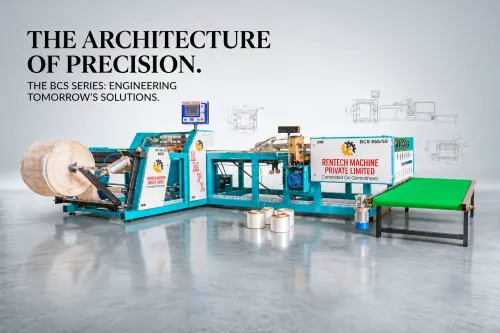
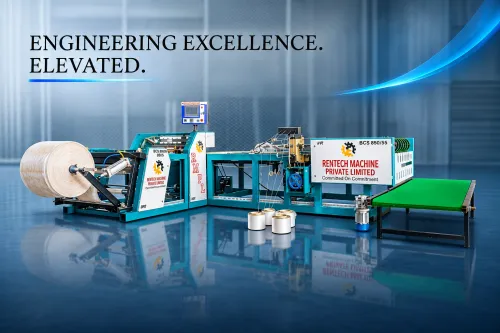
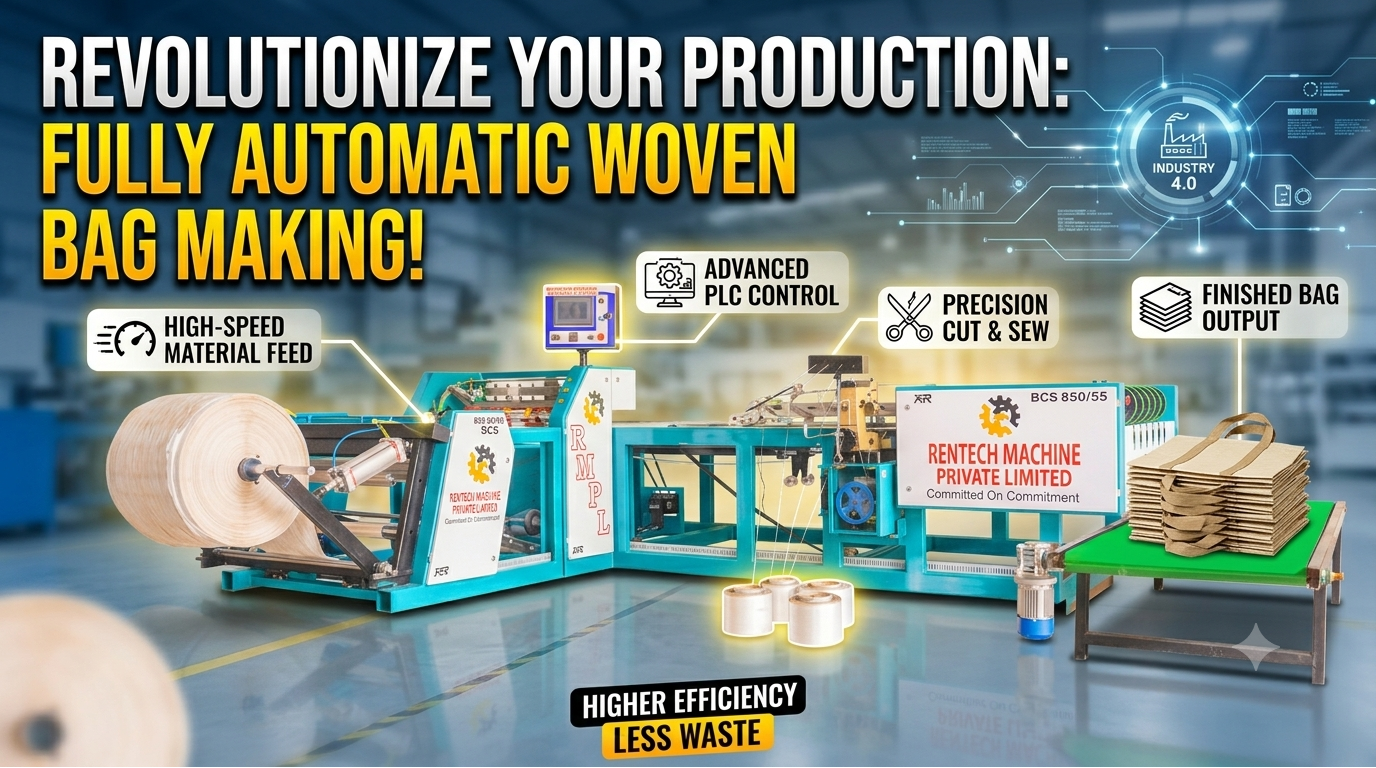
Rather than treating bag production as a series of disconnected manual activities, an automatic woven bag machine brings important conversion operations into a more organised workflow. Depending on the machine configuration, fabric feeding, length measurement, cutting, and stitching can be integrated to help manufacturers process woven fabric into finished bags with improved repeatability.
For businesses planning to expand their production capacity, establish a new woven sack manufacturing unit, or upgrade an existing facility, selecting the right machinery is an important investment decision. The ideal machine should match the required bag dimensions, fabric characteristics, production volume, finishing requirements, and available factory resources.
Transforming Woven Bag Production with Automation
The packaging industry is moving towards faster production, consistent bag quality, and efficient manufacturing processes. For businesses producing PP woven sacks, HDPE woven bags, laminated packaging bags, and other industrial packaging products, automation has become an important factor in improving production performance.
An automatic woven bag making machine helps manufacturers streamline bag conversion operations, reduce repetitive manual work, and maintain greater consistency throughout the production process.
Rentech Machine Private Limited, based in Ahmedabad, Gujarat, India, manufactures and supplies machinery designed for woven sack conversion and packaging applications. Our equipment range includes automatic bag cutting and stitching machines, woven sack conversion lines, and related machinery developed to support the requirements of modern packaging manufacturers.
Rather than treating bag production as a series of disconnected manual activities, an automatic woven bag machine brings important conversion operations into a more organised workflow. Depending on the machine configuration, fabric feeding, length measurement, cutting, and stitching can be integrated to help manufacturers process woven fabric into finished bags with improved repeatability.
For businesses planning to expand their production capacity, establish a new woven sack manufacturing unit, or upgrade an existing facility, selecting the right machinery is an important investment decision. The ideal machine should match the required bag dimensions, fabric characteristics, production volume, finishing requirements, and available factory resources.
What Makes an Automatic Woven Bag Making Machine Important for Modern Manufacturing?
An automatic woven bag making machine is designed to convert woven fabric into bags according to specified production requirements. It is particularly useful for manufacturers that need to produce bags repeatedly in standard dimensions while maintaining organised production and dependable output.
In conventional manual production, operators may need to handle several repetitive activities individually. This can create variations in cutting length, inconsistent workflow, and greater dependence on operator experience. An appropriately configured automatic machine helps reduce these challenges by controlling key operations through mechanical, electrical, or programmable systems.
The benefits extend beyond production speed. Automation can help manufacturers establish repeatable operating procedures, plan production schedules more effectively, and manage material usage with greater accuracy.
At Rentech Machine Private Limited, machinery selection is approached according to the customer's application. The requirements of a small packaging unit producing standard sacks may differ significantly from those of a large manufacturer supplying agricultural, fertiliser, cement, food-grain, or industrial packaging markets.
How Does an Automatic Woven Bag Making Machine Work?
The working process depends on the machine model and the level of automation. A typical automatic woven sack conversion line may include the following stages.
1. Woven Fabric Feeding
The production process begins with a roll of woven fabric. The feeding arrangement supplies material to the machine in a controlled manner. Correct alignment and suitable fabric tension help minimise wrinkles, uneven feeding, and unnecessary material waste.
2. Length Measurement and Positioning
The fabric is positioned according to the required bag length. Depending on the machine design, measurement and positioning may be controlled through programmed settings, electronic sensors, or mechanical systems.
Accurate positioning is important when producing large quantities of bags with consistent dimensions.
3. Automatic Cutting
The cutting mechanism separates the fabric into the required lengths. Cutting performance depends on the fabric material, thickness, machine configuration, cutting system, and operating conditions.
A suitable cutting arrangement helps maintain consistent bag dimensions and supports a smoother downstream workflow.
4. Stitching and Bag Finishing
After cutting, the fabric pieces are transferred to the stitching operation, either automatically or through an integrated handling arrangement, depending on the model.
The stitching system closes the required edge of the bag. Stitch type, stitch density, seam strength, and finishing requirements should be selected according to the intended application and customer specifications.
5. Collection and Quality Inspection
Finished bags are collected for inspection and packing. Manufacturers should check dimensions, seam quality, cutting edges, and overall appearance before dispatching the products to customers.
Integrating these stages can help establish a more consistent manufacturing process and reduce unnecessary handling between operations.
Applications Across Different Packaging Industries
Automatic woven bag making machinery can support production for several industries, depending on the fabric type and machine configuration.
- Agricultural packaging: Bags for grains, seeds, animal feed, and selected agricultural products.
- Fertiliser packaging: Woven sacks used for fertiliser and related agricultural materials.
- Food-grain packaging: Bags for rice, wheat, pulses, and other dry commodities, subject to applicable packaging requirements.
- Industrial packaging: Sacks used for industrial raw materials and selected bulk products.
- Chemical and mineral packaging: Woven sacks for compatible powders and granular materials.
- Retail and commodity packaging: Printed or unprinted bags for commercial distribution.
- Laminated packaging: Suitable woven sack applications using laminated or BOPP-laminated fabric, where supported by the selected machine.
The machine's compatibility with PP woven fabric, HDPE woven fabric, laminated material, or other substrates must be verified before purchase. Not every configuration supports every material or bag style.
Why Choose Rentech Machine Private Limited?
Choosing a machinery manufacturer involves evaluating more than the initial equipment price. Production requirements, machine construction, ease of operation, service support, and future expansion plans all influence the long-term value of the investment.
Rentech Machine Private Limited provides machinery solutions for woven bag conversion and related packaging applications, with a focus on practical manufacturing requirements.
Application-Oriented Machine Selection
Every packaging unit has different requirements for bag width, length, fabric structure, output, and finishing. Identifying these factors before finalising a machine helps ensure that the selected configuration is suitable for the intended production process.
Support for Production Planning
A machine should fit into the manufacturer's existing workflow, including fabric storage, material handling, operator arrangements, quality inspection, and finished-goods collection.
Consistency in Repetitive Operations
Automating repetitive feeding, cutting, and stitching activities can help reduce dependence on manual handling and improve production repeatability when the machine is correctly configured and maintained.
Scope for Manufacturing Expansion
Businesses planning to increase production should consider not only current demand but also expected future requirements. The appropriate level of automation can help create a more organised foundation for scaling production.
Ahmedabad-Based Manufacturing Presence
Operating from Ahmedabad, Gujarat, India, Rentech Machine Private Limited serves the woven bag machinery sector. Customers can discuss their applications, machine configurations, and technical requirements with the company before selecting a suitable solution.
The Role of Automation in Reducing Production Waste
Material utilisation is an important consideration in woven sack manufacturing because fabric represents a significant portion of the production cost. Small variations in cutting length or avoidable setup losses can accumulate when thousands of bags are produced.
An appropriately configured automatic cutting system can improve repeatability and help reduce certain forms of cutting waste. However, automation alone does not guarantee minimum wastage. Accurate machine settings, proper fabric alignment, preventive maintenance, operator training, and regular quality checks remain essential.
Manufacturers should also monitor rejected bags, incorrect dimensions, stitching defects, fabric damage, and changeover waste. Reviewing these factors alongside machine output provides a more complete picture of production efficiency.
For businesses seeking to improve profitability, measuring the cost per accepted bag is often more useful than comparing machine speeds alone.
Future Opportunities for Woven Bag Manufacturers
Demand for woven packaging is connected to agricultural supply chains, fertiliser distribution, industrial materials, construction inputs, and commodity transportation. Manufacturers that serve these markets need to balance product quality, delivery commitments, material costs, and competitive pricing.
Investing in suitable automation can help businesses improve production planning and establish more consistent manufacturing processes. It may also create opportunities to handle larger orders, introduce additional bag sizes, and improve coordination between cutting, stitching, printing, and packaging operations.
However, the right investment depends on market demand and the manufacturer's financial capacity. Before purchasing equipment, businesses should assess expected order volumes, contribution margin per bag, labour costs, utilisation rates, working capital requirements, and the time required to recover the investment.
At Rentech Machine Private Limited, customers can discuss their production objectives and identify a machine configuration that aligns with their intended woven sack manufacturing application.
Conclusion: Choose the Right Automatic Woven Bag Making Machine
An automatic woven bag making machine is an important production asset for manufacturers looking to organise their conversion processes, improve dimensional consistency, and reduce repetitive manual operations. Its effectiveness depends on selecting the right configuration for the fabric, bag specifications, required output, and factory workflow.
Rentech Machine Private Limited, Ahmedabad, Gujarat, India, offers machinery solutions for woven sack cutting, stitching, and conversion applications. By evaluating the technical requirements before purchasing, manufacturers can make a more informed decision and build a production setup suited to their business objectives.
Looking for an automatic woven bag making machine for your manufacturing unit? Contact Rentech Machine Private Limited to discuss your required bag dimensions, fabric type, production capacity, and automation preferences.
Frequently Asked Questions (Q&A)
1. What is an automatic woven bag making machine?
An automatic woven bag making machine is industrial equipment used to convert woven fabric into bags through operations such as feeding, measuring, cutting, and stitching. The exact operations performed automatically depend on the machine model and configuration.
2. Which materials can be processed on an automatic woven bag machine?
Depending on the machine design, suitable materials may include PP woven fabric, HDPE woven fabric, and selected laminated or BOPP-laminated woven materials. Compatibility should be confirmed with the manufacturer before ordering.
3. Can the machine manufacture different bag sizes?
Many machines support multiple bag sizes within their specified operating range. The available width and length adjustments, changeover procedure, and cutting limits depend on the selected model.
4. How does automation help woven bag manufacturers?
Automation can improve repeatability, reduce certain manual handling activities, support more consistent cutting, and help organise the production workflow. Actual benefits depend on machine configuration, maintenance, and operating conditions.
5. What production capacity should I expect?
Production capacity varies with bag length, fabric properties, stitching requirements, machine configuration, and operating conditions. Buyers should request a model-specific rated speed and a realistic output estimate for their required bag specifications.
6. Is an automatic woven bag machine suitable for a new manufacturing business?
It can be suitable if the planned production volume justifies the investment. New businesses should evaluate customer demand, working capital, installation costs, labour availability, and expected operating margins before selecting a machine.
7. What should I check before placing an order?
Confirm bag dimensions, fabric compatibility, cutting accuracy, stitching quality, achievable output, electrical requirements, installation arrangements, warranty, and after-sales support. A material trial can help verify suitability.
8. Does Rentech Machine Private Limited manufacture woven bag conversion machinery?
Rentech Machine Private Limited, based in Ahmedabad, Gujarat, India, manufactures and supplies woven bag machinery, including bag cutting and stitching machines and woven sack conversion equipment. Contact the company to confirm the availability and specifications of the required model.
Choosing the right automatic woven bag making machine manufacturer in India is an important step towards building a reliable, productive, and competitive packaging business. At Rentech Machine Private Limited, Ahmedabad, Gujarat, we understand the importance of consistent bag quality, efficient production, dependable machine performance, and long-term manufacturing value. Our woven bag cutting, stitching, and conversion machinery solutions are designed to support manufacturers in streamlining their production processes and meeting changing market requirements. Whether you are establishing a new woven sack manufacturing unit, upgrading your existing machinery, or planning to expand your production capacity, selecting the right equipment can help create a strong foundation for future growth. We encourage manufacturers to evaluate their production requirements carefully and choose machinery that aligns with their material specifications, bag dimensions, output targets, and business objectives. Connect with Rentech Machine Private Limited today to discuss your woven bag manufacturing requirements and explore a suitable machine solution for your business. Let us help you move towards more organised production, consistent manufacturing quality, and sustainable business growth with the right machinery for your application.