

Automatic Leno Bag Cutting Machine: Smarter Fabric Conversion for Modern Woven Bag Manufacturing
The woven packaging industry is continuously evolving as manufacturers seek better production consistency, lower material wastage, reduced manual handling, and more flexible packaging operations. Whether producing breathable Leno mesh bags for agricultural products or polypropylene woven sacks for industrial packaging, the quality of the fabric cutting process directly influences downstream production efficiency.
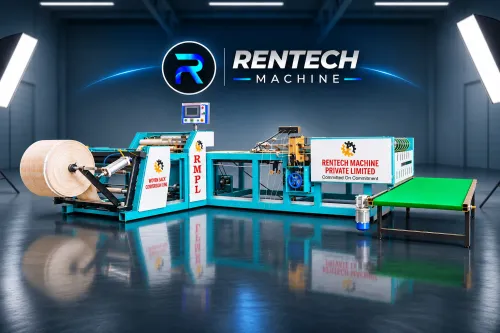
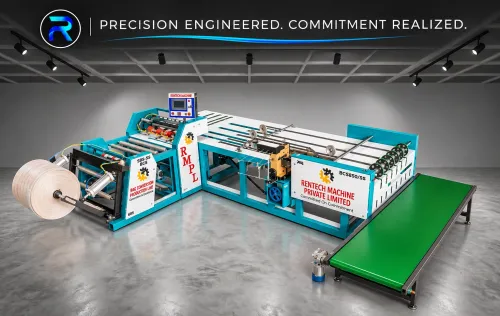
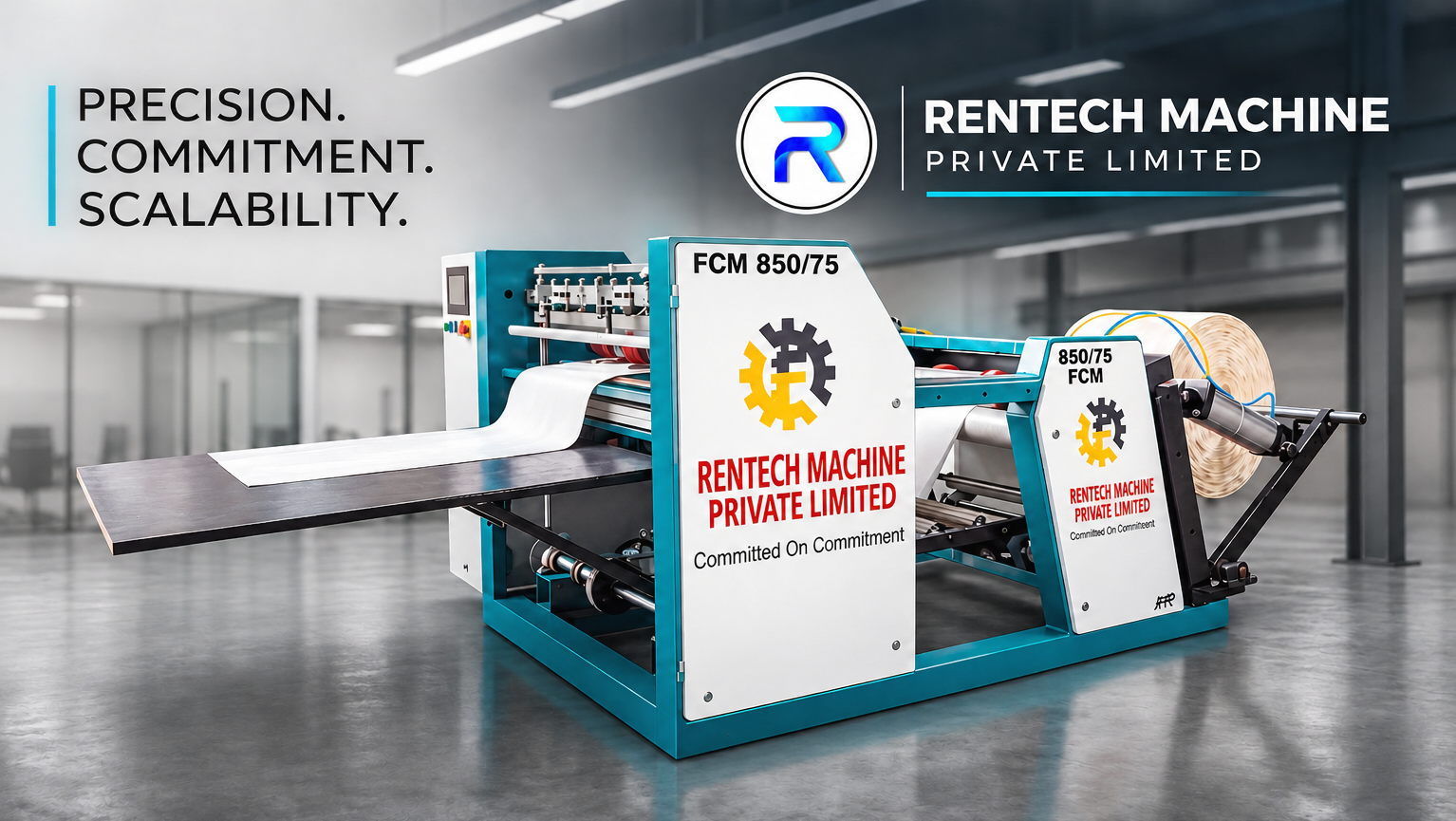
An Automatic Leno Bag Cutting Machine is an important piece of equipment for manufacturers converting woven fabric rolls into accurately cut bag-length pieces. The machine supports efficient bag production by replacing repetitive manual cutting operations with a more controlled and repeatable process.
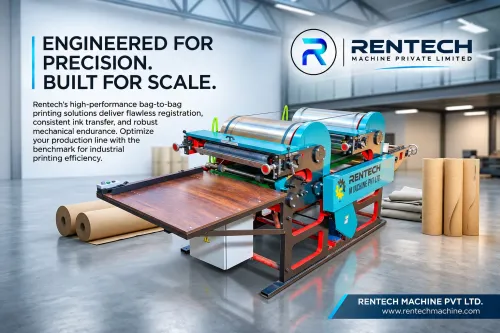
Rentech Machine Private Limited, based in Ahmedabad, Gujarat, India, provides automatic bag cutting machinery solutions for manufacturers working with Leno, PP, HDPE, and suitable BOPP woven packaging materials.
Rather than treating fabric cutting as a simple preliminary operation, modern packaging businesses increasingly recognize it as an essential stage in maintaining production quality, controlling material consumption, and improving manufacturing workflow.
Why Fabric Cutting Quality Matters in Woven Bag Manufacturing
In woven sack production, cutting accuracy affects much more than the appearance of the finished bag.
When fabric is cut inconsistently, manufacturers may encounter variations in finished bag length, difficulties during stitching, excessive trimming, and interruptions during subsequent production operations.
These problems become particularly important when manufacturing bags in large quantities or supplying customers who require consistent packaging dimensions.
An automatic woven bag cutting machine helps manufacturers establish a repeatable cutting process and reduce dependence on manual measurement.
For businesses manufacturing agricultural, industrial, and commercial packaging, reliable fabric conversion can support smoother production and more consistent finished products.
Understanding the Different Materials Used in Automatic Bag Cutting
Although Leno, PP, HDPE, and BOPP bags are frequently discussed together, their fabric structures and processing requirements are not identical.
Understanding these differences helps manufacturers select suitable machinery and operating configurations.
Leno Fabric: Designed for Breathable Agricultural Packaging
Leno fabric has an open-mesh woven structure that allows air circulation around packed products.
This makes Leno bags particularly suitable for agricultural applications where ventilation is important.
Common applications include:
- Onion packaging bags
- Potato packaging bags
- Garlic packaging bags
- Vegetable mesh bags
- Fruit packaging bags
- Other agricultural produce packaging
Because of its mesh construction, Leno fabric requires careful handling during feeding and cutting.
Uneven fabric movement can affect cut consistency and create difficulties during subsequent bag production.
An automatic Leno bag cutting machine helps manufacturers process suitable mesh fabric rolls into predetermined lengths while supporting a more organized production workflow.
PP Woven Fabric: Widely Used for Industrial and Agricultural Sacks
Polypropylene woven fabric is extensively used in packaging because of its strength, relatively low weight, and suitability for a broad range of products.
PP woven bags are commonly used for:
- Rice and grain packaging
- Fertilizer packaging
- Animal feed packaging
- Sugar packaging
- Flour packaging
- Industrial raw material packaging
Automatic PP woven bag cutting equipment supports manufacturers converting woven tubular or other compatible fabric constructions into bag-length pieces.
The required cutting arrangement depends on the fabric construction, lamination, and intended finished bag design.
HDPE Woven Fabric: Suitable for Demanding Packaging Applications
High-density polyethylene woven fabric is another material used in industrial and agricultural sack manufacturing.
HDPE woven sacks are selected for applications requiring appropriate mechanical strength, handling performance, and resistance to certain environmental conditions.
During production, consistent feeding and cutting are important for maintaining uniform bag dimensions.
A suitably configured automatic cutting machine can help HDPE woven sack manufacturers reduce repetitive manual operations and improve production consistency.
BOPP Laminated Woven Fabric: Supporting Printed Packaging Applications
BOPP laminated woven bags are widely used where packaging appearance, branding, and product presentation are important.
These bags commonly combine woven polypropylene fabric with a printed BOPP film laminate.
Applications include:
- Premium rice packaging
- Animal feed packaging
- Fertilizer bags
- Seed packaging
- Branded agricultural products
- Retail-oriented industrial packaging
Cutting laminated fabric requires attention to material handling, surface protection, and cut-edge quality.
For printed BOPP woven materials, print registration and cutting alignment may also be important.
The suitability of an automatic cutting machine for a particular BOPP laminated construction should be confirmed through material specifications and production trials.
How an Automatic Woven Bag Cutting Machine Fits into the Production Process
The cutting machine operates within a larger woven sack manufacturing workflow.
The process typically begins with fabric produced on circular looms or another suitable weaving system.
Depending on the intended packaging application, the fabric may undergo lamination, printing, or other processing before conversion.
The prepared fabric roll is then transferred to the cutting operation.
During automatic cutting, the material is fed through the machine, advanced to the required cutting position, and separated into bag-length pieces.
The cut pieces can subsequently be transferred to stitching, hemming, folding, or other finishing operations according to the bag design and production line arrangement.
For manufacturers planning a complete woven sack conversion facility, the relationship between cutting and downstream processes is particularly important.
A cutting machine should be evaluated not only for its individual operation but also for its compatibility with the overall production workflow.
The Importance of Material Handling in Leno Bag Cutting
Leno mesh fabric behaves differently from conventional woven sack fabric.
Its open construction can make fabric alignment and feeding more sensitive to material tension and handling conditions.
If fabric movement is inconsistent, the resulting cut pieces may vary in length or become misaligned.
This is especially relevant when producing agricultural bags intended for automated filling and packing operations.
Manufacturers should therefore evaluate how the machine handles their specific Leno fabric construction.
Important considerations include fabric stability, roll quality, feeding consistency, and the condition of the material entering the cutting section.
A controlled fabric handling process helps improve production reliability and reduce unnecessary interruptions.
Reducing Material Wastage Through Better Cutting Practices
Material wastage is a significant cost consideration in woven sack manufacturing.
Even relatively small differences in cutting length can influence overall fabric consumption when production volumes are high.
Excessive cutting allowances, inconsistent measurements, and repeated manual adjustments may increase material usage.
Automatic cutting equipment can help manufacturers improve repeatability and establish more consistent production practices.
However, material savings depend on correct machine setup, fabric condition, cutting method, and operator practices.
For manufacturers evaluating machinery investments, the potential reduction in fabric wastage should be considered alongside productivity and labor requirements.
Why Multi-Material Compatibility Matters for Packaging Manufacturers
Many woven sack manufacturers serve several industries rather than producing a single bag type.
A company may manufacture agricultural Leno bags during one production period and conventional PP woven sacks during another.
Other manufacturers may process HDPE woven fabric or BOPP laminated packaging materials according to customer orders.
This creates demand for flexible production equipment.
A multi-material automatic bag cutting machine can offer operational advantages when the equipment is appropriately configured for each material.
Potential benefits include improved equipment utilization, greater production flexibility, and the ability to respond to changing customer requirements.
However, compatibility should never be assumed solely because two products are described as woven bags.
Different fabric structures, coating types, thicknesses, and cutting requirements may require different machine arrangements.
Rentech Machine Private Limited works with customers to understand their material requirements and identify suitable machinery configurations.
Automatic Cutting Machines and the Growth of Agricultural Packaging
Agricultural packaging has specific functional requirements.
For example, onion and potato bags often require ventilation, while grain and fertilizer bags may prioritize containment, handling strength, and protection during transportation.
These differences influence the selection of packaging materials and manufacturing processes.
Leno mesh bags are particularly relevant to agricultural supply chains because their open structure supports airflow around fresh produce.
As agricultural packaging manufacturers expand their operations, they often seek machinery that can support consistent bag production and reduce repetitive manual work.
Automatic Leno fabric cutting equipment can form an important part of such modernization projects.
Manufacturers planning to enter the onion, potato, or vegetable bag market should evaluate the entire production process, including fabric sourcing, cutting, stitching, quality inspection, and finished bag handling.
Improving Production Planning with Automatic Bag Cutting
Reliable cutting operations can also support better production scheduling.
When manufacturers depend heavily on manual cutting, output may vary with operator availability, material handling practices, and production conditions.
Automatic equipment can make the cutting stage more repeatable.
This can help production managers coordinate cutting operations with downstream stitching and finishing activities.
For manufacturers handling multiple bag sizes or material types, proper job planning remains essential.
Material changeovers, cutting adjustments, maintenance requirements, and operator training all influence overall production efficiency.
The objective should be a balanced production line rather than maximizing the speed of one machine while creating bottlenecks elsewhere.
What Should Buyers Evaluate Before Purchasing an Automatic Bag Cutting Machine?
Selecting the right machinery requires more than comparing purchase prices.
Manufacturers should first identify the types of woven bags they intend to produce and the characteristics of the fabric they will process.
For example, a company focused on Leno mesh bags may have different requirements from a business manufacturing laminated BOPP woven sacks.
Buyers should also consider the relationship between cutting operations and downstream production.
A machine that performs well in isolation may not deliver the expected benefit if the remaining production line cannot handle its output.
Other considerations include machine construction, ease of operation, maintenance accessibility, availability of spare parts, operator training, and after-sales technical support.
A practical evaluation should include discussion of the customer's actual fabric samples and intended finished bag applications.
Rentech Machine Private Limited: Woven Bag Machinery Manufacturer in Ahmedabad, India
Rentech Machine Private Limited is an Indian machinery manufacturer and supplier serving the woven packaging industry.
Based in Ahmedabad, Gujarat, the company focuses on machinery solutions used in PP woven sack production, fabric conversion, cutting, stitching, and printing applications.
Its machinery portfolio includes solutions for manufacturers working with PP, HDPE, Leno, and BOPP woven packaging materials.
Rentech emphasizes understanding customer production requirements before recommending equipment.
This includes identifying the type of fabric, intended bag application, desired production workflow, and compatibility with existing machinery.
For manufacturers establishing new packaging operations or upgrading existing facilities, choosing suitable cutting equipment is an important step toward developing a more efficient production system.
Frequently Asked Questions About Automatic Leno, PP, BOPP and HDPE Bag Cutting Machines
What is an automatic Leno bag cutting machine?
An automatic Leno bag cutting machine is industrial equipment used to cut compatible Leno mesh fabric into predetermined bag-length pieces. It helps reduce repetitive manual cutting work and supports more consistent production.
Can the same automatic cutting machine process Leno, PP, BOPP, and HDPE materials?
Certain automatic cutting machines can be configured for multiple woven packaging materials. However, compatibility depends on fabric construction, lamination, thickness, feeding characteristics, and the cutting system. Buyers should confirm suitability for each material before purchasing.
What is the difference between a Leno bag cutting machine and a PP woven bag cutting machine?
The main difference lies in the material being processed. Leno fabric has an open-mesh structure, while conventional PP woven fabric generally has a denser construction. Their feeding and cutting requirements can differ.
Is an automatic Leno bag cutting machine suitable for onion and potato packaging?
Yes. Leno mesh fabric is commonly used for onion and potato packaging because it allows ventilation. An appropriately configured cutting machine can prepare Leno fabric pieces for subsequent bag manufacturing operations.
Can an automatic cutting machine be used for BOPP laminated woven bags?
Yes, provided the machine is designed or configured for the particular laminated fabric. Cutting quality, material handling, and print registration requirements should be evaluated before production.
Does an automatic bag cutting machine also perform stitching?
Not necessarily. A standalone automatic cutting machine performs the cutting operation, while an integrated cutting and stitching line can combine multiple conversion stages. The available functions depend on the selected machine configuration.
How does automatic cutting help reduce woven fabric wastage?
Automatic cutting can improve repeatability and reduce inconsistent manual measurements. This may help control excess cutting allowances and unnecessary fabric consumption when the equipment is correctly operated.
Is an automatic bag cutting machine suitable for a new woven sack manufacturing business?
It can be suitable for a new manufacturing operation, depending on the intended product range, production volume, investment budget, and availability of downstream equipment.
What type of fabric rolls can be processed?
The acceptable fabric roll construction and dimensions depend on the machine configuration. Buyers should share their fabric specifications with the manufacturer to confirm compatibility.
Can one machine be used for different bag lengths?
Many automatic cutting machines allow operators to adjust the required cutting length within the machine's supported operating range. The available adjustment method and range depend on the model.
What is the role of automatic cutting in a complete woven bag production line?
Automatic cutting converts prepared fabric into bag-length pieces for further operations such as stitching, folding, or finishing. It forms part of the wider woven sack conversion process.
What should manufacturers check when cutting Leno mesh fabric?
Manufacturers should evaluate fabric feeding stability, material alignment, cut consistency, and compatibility with the specific mesh construction.
Does automatic cutting completely eliminate manual labor?
No. Depending on the machine configuration, operators may still be required for roll loading, setup, inspection, material collection, and routine maintenance. Automation primarily reduces repetitive manual operations.
How can manufacturers improve the quality of cut woven bag pieces?
Good cutting quality depends on proper machine setup, stable fabric feeding, suitable cutting components, consistent material condition, and regular maintenance.
Why choose Rentech Machine Private Limited for woven bag cutting machinery?
Rentech Machine Private Limited focuses on machinery for woven packaging applications and offers equipment solutions for customers working with PP, HDPE, Leno, and BOPP materials. Customers can discuss their fabric and production requirements to identify a suitable configuration.
Building More Reliable Woven Bag Production with Automatic Cutting
Automatic cutting is an important part of modern woven sack manufacturing.
For businesses producing Leno agricultural mesh bags, PP woven sacks, HDPE packaging, or BOPP laminated woven bags, consistent fabric conversion can support improved workflow, better production planning, and more reliable downstream processing.
The right machinery selection depends on the materials being processed, the intended bag applications, and the requirements of the complete production line.
Rentech Machine Private Limited supports woven packaging manufacturers seeking suitable automatic bag cutting and conversion machinery solutions.
Whether establishing a new agricultural packaging facility or upgrading an existing woven sack production operation, manufacturers can contact Rentech to discuss their machinery requirements.
Company: Rentech Machine Private Limited
Location: Ahmedabad, Gujarat, India
Website: https://www.rentechmachine.com