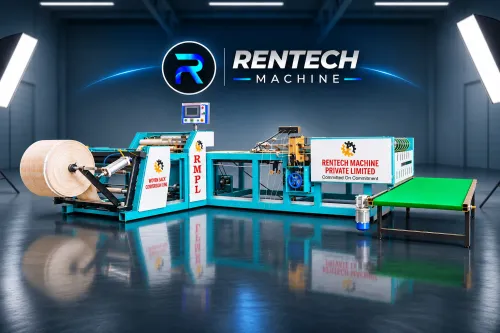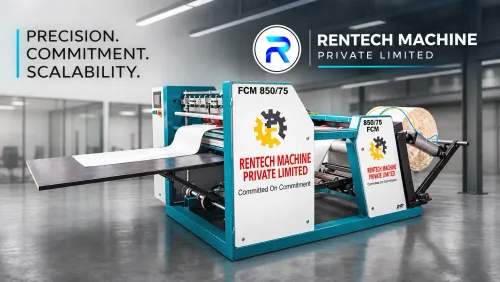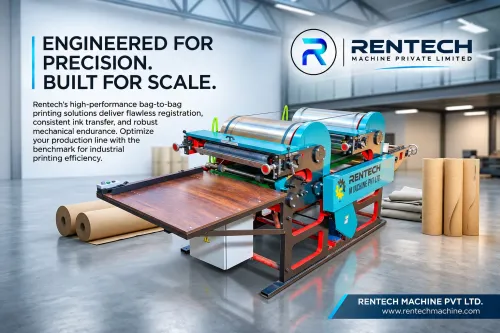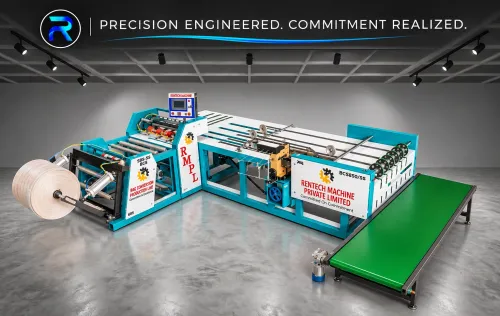


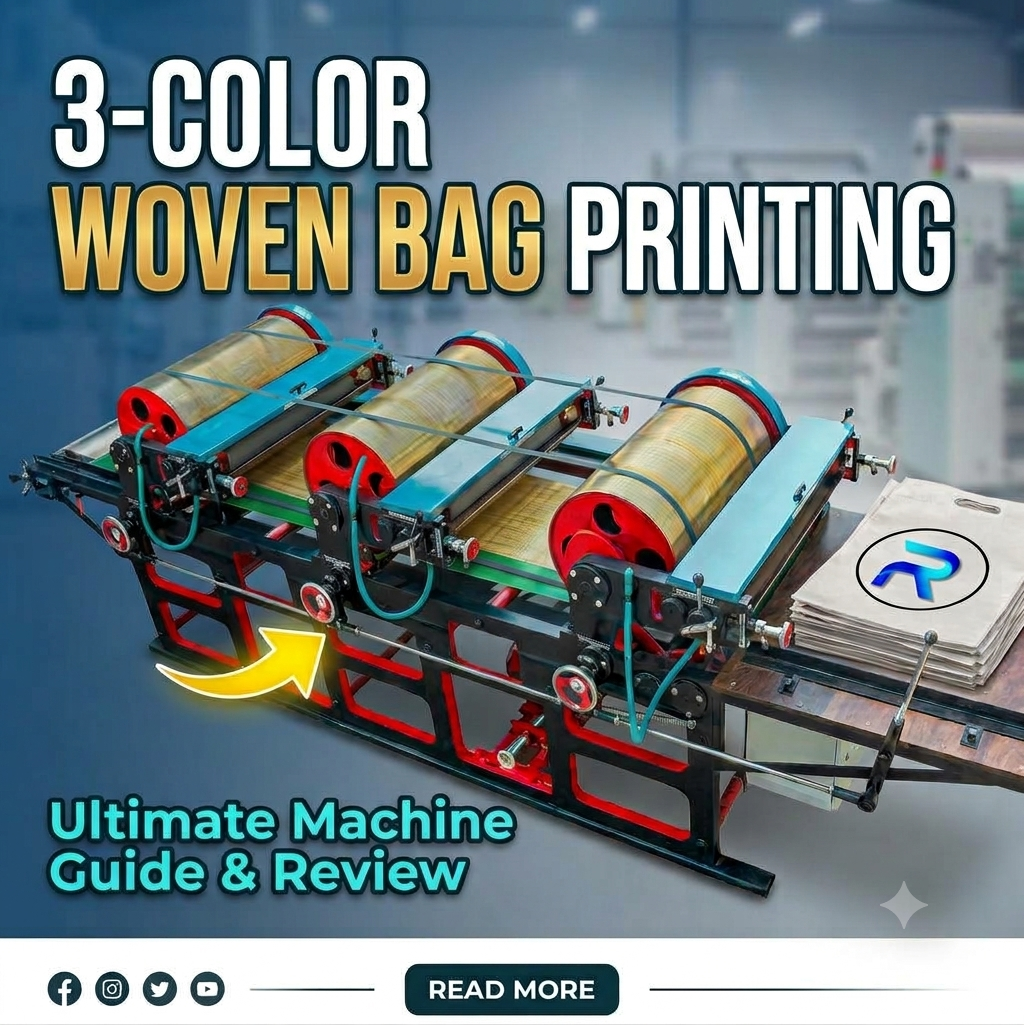
3 Colour Bag-to-Bag Printing Machine: Enhancing Print Quality and Branding for Woven Sacks
Introduction
In today's competitive packaging market, printed bags play an important role in product identification, brand recognition, and professional presentation. Manufacturers of PP woven sacks, agricultural packaging, fertilizer bags, rice bags, and industrial packaging increasingly require printing solutions that can deliver consistent results across large production batches.
A 3 Colour Bag-to-Bag Printing Machine is designed to print on individual bags or bag-shaped substrates, depending on the machine configuration. It allows manufacturers to reproduce multicolour designs, company logos, product information, handling instructions, and other printed details on suitable packaging materials.
Rentech Machine Private Limited, based in Ahmedabad, Gujarat, India, provides machinery solutions for woven bag manufacturing, printing, cutting, and stitching applications. Our equipment range serves businesses looking to develop efficient packaging production workflows and improve the presentation of their finished bags.
This article explains how three-colour bag printing works, which industries can benefit from it, and what manufacturers should evaluate before investing in a printing machine.
What Makes a 3 Colour Bag-to-Bag Printing Machine Useful?
Packaging is more than a container for a product. It also communicates essential information to distributors, retailers, and end customers. A well-printed bag can help identify the manufacturer, display product details, and differentiate one product line from another.
A three-colour printing machine enables manufacturers to reproduce designs using three separate printing colours. The final appearance depends on the artwork, ink system, substrate, printing method, and machine configuration.
1. Multicolour Branding
Three-colour printing supports logos, brand names, product identifiers, and promotional graphics that require more than a single ink colour. Artwork should be designed with the machine's available colour stations and registration capabilities in mind.
2. Consistent Printing Across Production Batches
Industrial printing equipment is intended to reproduce the same design repeatedly. Correct setup, controlled ink application, stable bag positioning, and routine quality checks help maintain consistency throughout a production run.
3. Clear Product Identification
Printed packaging can include product names, manufacturer details, weights, batch information, and handling instructions where appropriate. The legibility of fine text depends on the printing resolution, artwork, substrate, and printing conditions.
4. Integration with Bag Manufacturing Operations
A bag-to-bag printing machine can form part of a broader woven sack production workflow. Depending on the factory setup, printing may take place before or after selected conversion operations. The correct sequence depends on the machine design and the customer's manufacturing process.
5. Flexible Packaging Applications
Different customers require different bag designs. A suitable three-colour machine can support multiple approved artwork designs and bag formats within its specified operating range, helping manufacturers serve varied customer requirements.
Suitable Applications of Three-Colour Bag Printing
A 3 Colour Bag-to-Bag Printing Machine can be considered for several packaging applications, provided the bag material and printing configuration are compatible.
- Agricultural packaging: Rice, wheat, grain, seed, and animal feed bags.
- Fertilizer packaging: Printed product identification, branding, and handling information.
- Industrial packaging: Suitable woven sacks used for selected industrial products.
- Food-related packaging: Outer woven sacks for products such as flour and grains, subject to applicable packaging requirements.
- Chemical packaging: Suitable industrial sacks with appropriate material and ink compatibility.
- Retail and wholesale packaging: Bags carrying company logos, product names, and distributor information.
The suitability of a particular application must be confirmed based on the bag construction, coating or lamination, required print area, ink system, and applicable product regulations.
Important Factors to Consider Before Buying a 3 Colour Printing Machine
Selecting equipment based only on the number of colours can lead to an unsuitable investment. Manufacturers should evaluate the following technical and operational factors.
Printing Area
Confirm the maximum printable dimensions and ensure they accommodate the intended artwork and bag format.
Bag Size and Material Compatibility
Check the machine's supported bag dimensions and whether it can handle the intended PP woven, HDPE woven, laminated, or other approved substrate.
Printing Speed
Ask for the expected production rate for your specific bag size, artwork, and operating conditions. Theoretical machine speed and actual saleable output may differ.
Colour Registration
Evaluate how the machine aligns all three colours and what adjustments are available to maintain registration during production.
Ink and Drying System
Confirm the recommended ink type, drying arrangement, ventilation requirements, and compatibility with the bag material. Follow the ink supplier's safety and operating guidance.
Changeover Requirements
If your factory produces bags for multiple customers, evaluate the time and effort required to change printing plates, artwork, inks, and bag settings.
Operator Training and Maintenance
Review access to operating instructions, spare parts, technical support, and routine maintenance procedures before purchasing.
Future Production Requirements
Consider whether your business expects to require additional colours, a larger print area, higher production capacity, or integration with other conversion machinery.
How Three-Colour Printing Can Support Packaging Businesses
For woven sack manufacturers, printing quality can influence both customer satisfaction and production efficiency. A properly selected printing machine can help standardize the appearance of repeat orders and support the production of branded packaging.
Three-colour printing is particularly relevant when customers require more detailed designs than single-colour printing can provide, but do not necessarily need a larger number of colour stations.
The commercial value of the machine depends on order volume, setup time, ink consumption, labour requirements, maintenance, rejected bags, and the selling price of printed packaging. Manufacturers should assess these factors when calculating the expected return on investment.
Why Consider Rentech Machine Private Limited?
Rentech Machine Private Limited is an Ahmedabad, Gujarat-based manufacturer and supplier of machinery for woven bag manufacturing and conversion applications.
Our machinery range includes bag cutting and stitching machines, flexographic printing equipment, and woven sack conversion solutions. The appropriate equipment depends on the customer's material, bag dimensions, printing requirements, and production targets.
When evaluating a three-colour bag-to-bag printing solution, buyers should discuss their intended artwork, bag specifications, substrate, desired print area, ink requirements, and expected production volume with our team.
This information helps establish whether a particular machine configuration is appropriate for the intended application.
Company: Rentech Machine Private Limited
Product category: Bag-to-Bag Printing Machinery
Application: Printing on suitable woven bags and packaging substrates
Location: Ahmedabad, Gujarat, India
Website: https://rentechmachine.com
Conclusion
A 3 Colour Bag-to-Bag Printing Machine can be a practical option for packaging manufacturers that need multicolour branding, repeatable printing, and consistent product identification on suitable bags.
Before making a purchase, manufacturers should evaluate printing area, bag compatibility, colour registration, production speed, ink and drying requirements, and after-sales support. These factors are essential for selecting equipment that matches the factory's actual production needs.
Rentech Machine Private Limited helps woven sack manufacturers explore suitable printing and conversion machinery for their operations. Contact our team to discuss your bag specifications and printing requirements.
Frequently Asked Questions (Q&A)
1. What is a 3 Colour Bag-to-Bag Printing Machine?
It is a printing machine designed to apply three separate printing colours to individual bags or compatible bag-shaped substrates. It is used for reproducing logos, product names, graphics, and other packaging information.
2. What is the main advantage of three-colour bag printing?
The primary advantage is the ability to reproduce designs using three colours, allowing more detailed branding and product identification than a single-colour setup. The final result depends on the artwork and printing system.
3. Which materials can be printed using this machine?
Depending on its design, the machine may support PP woven bags, HDPE woven bags, and selected laminated or coated substrates. Compatibility must be confirmed for the exact material and ink combination.
4. What products are commonly packed in printed woven bags?
Applications include rice, grains, flour, animal feed, fertilizers, seeds, and selected industrial products. The suitability of the bag depends on the product and applicable packaging requirements.
5. Can a three-colour machine print company logos?
Yes. Company logos can be printed when the artwork is suitable for the machine's printing process, printable area, and colour arrangement. Artwork preparation is important for achieving a clear result.
6. How is printing quality maintained?
Printing quality is supported by correct plate preparation, accurate colour registration, suitable ink selection, stable bag positioning, proper machine settings, and routine inspection of printed samples.
7. What determines the production speed of a bag-to-bag printing machine?
Production speed depends on the machine configuration, bag dimensions, printing area, artwork complexity, ink drying requirements, material characteristics, and operator practices. Request a model-specific output estimate.
8. Is a three-colour printing machine suitable for small and large manufacturers?
It may be suitable for businesses of different sizes, provided its capacity and operating costs match their production requirements. Buyers should compare order volumes, setup times, and expected utilization.