

Automatic Woven Bag Making Machine: Modern Solutions for Efficient PP Woven Sack Manufacturing
Introduction
The packaging industry is continuously evolving, with manufacturers looking for better ways to improve production efficiency, maintain consistent bag quality, and manage increasing customer demand. In this environment, an Automatic Woven Bag Making Machine plays an important role in helping packaging manufacturers streamline their operations and improve the consistency of finished bags.
Rentech Machine Private Limited provides industrial machinery solutions for woven sack manufacturing and conversion applications. Our focus is on helping manufacturers select suitable equipment for processing PP (Polypropylene) and HDPE (High-Density Polyethylene) woven fabrics into finished bags according to their production requirements.
An automatic woven bag making machine is more than a production tool. It is an investment in process control, repeatability, and the long-term development of a packaging business. With the right machine configuration, manufacturers can improve workflow coordination, reduce repetitive manual handling, and establish a more organized production process.
Understanding the Automatic Woven Bag Making Process
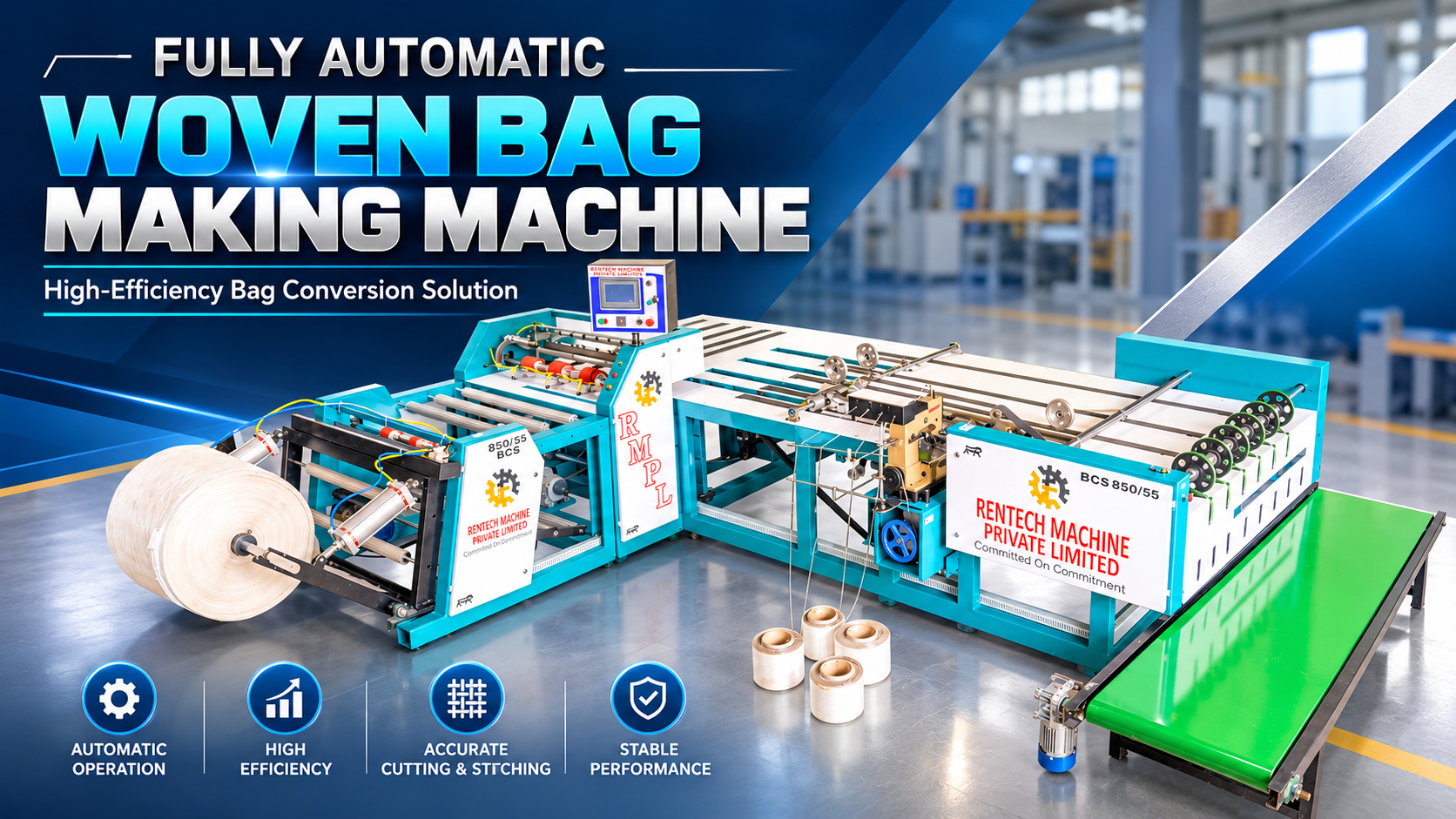
Automatic woven bag manufacturing involves converting woven fabric into bags of the required dimensions and construction. Depending on the machine configuration and production line, this process may include fabric feeding, length measurement, cutting, folding, bottom hemming, stitching, and finished-bag collection.
Different machines perform different operations. A complete woven sack manufacturing facility may use separate equipment for fabric extrusion, circular weaving, lamination, printing, cutting, and stitching. An automatic bag conversion machine generally handles selected downstream operations on fabric supplied from upstream processes.
For manufacturers, understanding this distinction is important when planning a new factory or upgrading an existing production line. Selecting equipment according to the required operations helps create a practical production setup without investing in unnecessary machinery.
Why Automatic Woven Bag Manufacturing Equipment Matters
1. Consistent Bag Dimensions
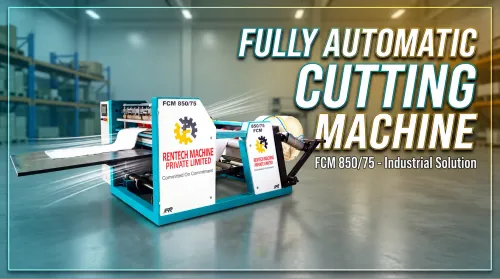
Accurate bag dimensions are important for packaging applications involving grains, fertilizers, animal feed, seeds, chemicals, and other industrial materials. A properly configured automatic cutting system can help maintain repeatable cutting lengths when the fabric, settings, and operating conditions are suitable.
Consistent dimensions can also simplify downstream printing, stacking, packing, and customer quality checks.
2. Better Production Flow
Manual handling at multiple production stages can create bottlenecks. Automation can coordinate selected operations, reduce repetitive handling, and help operators manage a more continuous workflow.
The actual production benefit depends on the machine model, bag dimensions, fabric characteristics, operator experience, and the time required for changeovers.
3. Reliable Stitching and Bag Finishing
Bag finishing is a critical part of woven sack conversion. Stitching quality, fold consistency, thread selection, and fabric handling all influence the finished product.
An appropriately configured cutting and stitching machine helps manufacturers establish a repeatable finishing process. Regular maintenance and correct machine adjustments remain essential for maintaining quality.
4. Improved Production Planning
Automation makes it easier to organize production around defined bag sizes, job quantities, and delivery schedules. Manufacturers can plan material requirements, allocate operators, and monitor production output more systematically.
This is particularly useful for businesses handling multiple customer orders with different bag dimensions and specifications.
5. Support for Business Expansion
As order volumes increase, manufacturers may need to upgrade from manual or semi-automatic operations to a more automated setup. Choosing machinery that matches present requirements while allowing for realistic future expansion can support long-term business development.
Rentech Machine Private Limited: Machinery for Woven Sack Conversion
Rentech Machine Private Limited, based in Ahmedabad, Gujarat, India, serves the woven sack machinery sector with equipment for bag cutting, stitching, printing, and conversion applications.
Our machinery portfolio includes solutions for PP woven bags, HDPE woven sacks, and selected other woven packaging materials, subject to machine configuration and material compatibility.
We understand that every manufacturer has different production priorities. Some businesses focus on standard-sized commodity bags, while others handle printed sacks, laminated materials, or specialized bag dimensions. The appropriate machinery depends on the product being manufactured, the fabric characteristics, the required output, and the finishing process.
When evaluating an automatic woven bag making machine, buyers should consider the following factors:
Required bag length and width.
Fabric type, thickness, and construction.
Laminated or unlaminated material requirements.
Cutting accuracy and stitching configuration.
Desired production speed and daily output.
Available factory space and material-handling arrangements.
Operator training, maintenance, and spare-parts support.
Compatibility with existing printing and conversion equipment.
A detailed review of these requirements helps manufacturers identify a machine configuration suited to their actual production conditions.
Applications of Automatic Woven Bag Making Machines
Automatic woven bag manufacturing and conversion machinery can support packaging production for several industries.
Agriculture: Bags used for grains, seeds, animal feed, and other agricultural products.
Fertilizer packaging: Woven sacks manufactured to meet the dimensional and construction requirements of fertilizer packaging.
Food-grain packaging: PP woven sacks used for rice, wheat, pulses, and similar products, subject to applicable food-contact and packaging requirements.
Industrial packaging: Bags used for selected raw materials, minerals, granules, and industrial products.
Retail and commodity packaging: Woven bags supplied to distributors, wholesalers, and packaging businesses.
The suitability of each machine depends on the intended application, bag design, material specifications, and relevant industry requirements.
How to Select the Right Automatic Woven Bag Making Machine
Before purchasing machinery, manufacturers should assess the entire production requirement instead of focusing only on the quoted machine speed or purchase price.
First, define the required bag sizes and expected product mix. A factory producing several bag dimensions may require convenient adjustment and changeover arrangements.
Second, identify the material specifications. PP and HDPE woven fabrics can differ in handling characteristics, while laminated materials may require specific cutting and stitching settings.
Third, determine the realistic production target. Ask the manufacturer how the stated capacity is measured and whether it applies to your actual bag size and material.
Fourth, review the cutting and stitching configuration, electrical requirements, installation arrangements, and operator training.
Finally, request a demonstration using representative material wherever possible. Evaluate finished-bag dimensions, stitch quality, production stability, and the practical steps required to change from one bag specification to another.
This approach allows buyers to compare machinery on operational suitability rather than relying on headline specifications alone.
Why Consider Rentech Machine Private Limited?
Choosing an industrial machine manufacturer is a decision that extends beyond the initial purchase. Buyers need a clear understanding of machine capabilities, installation requirements, operating procedures, and maintenance needs.
Rentech Machine Private Limited works in the woven sack machinery segment, offering equipment for cutting, stitching, printing, and bag conversion applications.
Our approach is to help customers identify machinery according to their production objectives, material requirements, and planned output. By evaluating the complete application before finalizing a machine, manufacturers can make more informed equipment-investment decisions.
For businesses planning a new woven sack conversion unit or upgrading an existing facility, discussing the required bag dimensions, material type, production capacity, and finishing requirements is a practical first step toward selecting a suitable solution.
Conclusion: Build a More Efficient Woven Bag Production Process
The future of woven sack manufacturing depends on more than production speed alone. Consistent dimensions, dependable stitching, efficient material handling, controlled operating procedures, and practical production planning all contribute to a competitive manufacturing operation.
An automatic woven bag making machine can help manufacturers organize key conversion activities and establish a more repeatable workflow when the equipment is correctly selected and operated. The right configuration can also provide a foundation for handling changing customer requirements and expanding production in a planned manner.
Rentech Machine Private Limited is committed to serving the woven sack machinery sector with solutions for bag cutting, stitching, printing, and conversion applications. If you are planning to establish a new production facility or improve your existing woven bag manufacturing process, contact our team to discuss your machine requirements and identify a suitable configuration for your business.
Choose machinery based on your actual production needs, plan for consistent quality, and build your next stage of manufacturing growth with a well-designed production process.
Frequently Asked Questions (Q&A)
Q1. What is an automatic woven bag making machine?
An automatic woven bag making machine is industrial equipment designed to perform selected bag manufacturing or conversion operations automatically. Depending on the configuration, these operations may include fabric feeding, cutting, folding, stitching, and bag collection.
Q2. Which materials can be processed on an automatic woven bag making machine?
Many woven bag conversion machines are designed for PP woven fabric and selected HDPE woven materials. Laminated, printed, or other specialized fabrics may require a compatible machine configuration. Material suitability should be confirmed before ordering.
Q3. What is the difference between a woven bag making machine and a BCS machine?
A woven bag making machine is a broad term for equipment used in bag production. BCS commonly refers to a bag cutting and stitching machine or conversion line that cuts woven fabric to size and stitches the required section to produce finished bags.
Q4. Can an automatic machine produce different bag sizes?
Many machines support multiple bag sizes through adjustments or changes to operating settings. The available size range, changeover procedure, and adjustment limits depend on the model and configuration.
Q5. What factors affect machine production capacity?
Production capacity depends on bag dimensions, fabric characteristics, cutting and stitching operations, machine settings, operator efficiency, changeover time, and stoppages. Buyers should request capacity information for their specific bag size and material.
Q6. Is an automatic woven bag making machine suitable for a new manufacturing business?
It can be suitable when the planned order volume, investment budget, available space, and technical capabilities justify automation. A new business should assess expected demand, operating costs, staffing, and the complete manufacturing process before purchasing equipment.
Q7. What should buyers check before purchasing a BCS or automatic bag conversion machine?
Buyers should confirm the supported material types, bag dimensions, cutting method, stitching arrangement, rated capacity, electrical requirements, installation needs, warranty terms, and availability of technical support and spare parts.
Q8. Does an automatic woven bag making machine include printing?
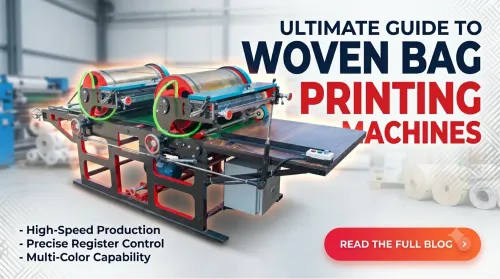
Not necessarily. Printing may require a separate flexographic printing machine or an integrated printing arrangement, depending on the production line. Buyers should confirm which operations are included in the machine quotation.