

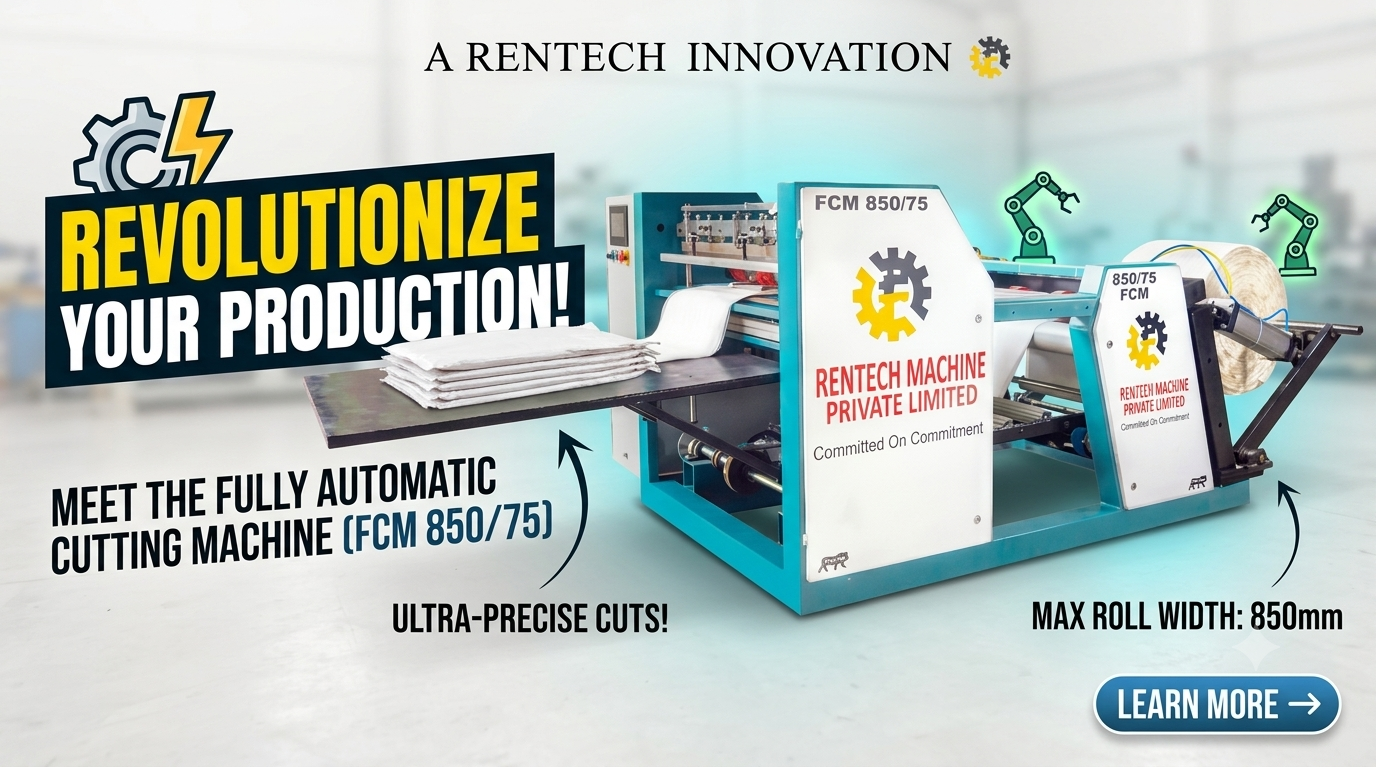
Automatic Bag Cutting Machine Manufacturer in India: Smarter Cutting Solutions for Modern Bag Manufacturing
Introduction: Why Cutting Technology Matters in Bag Production
In the woven sack manufacturing industry, cutting is not simply the process of separating fabric into pieces. It is a critical production stage that influences bag dimensions, material utilization, stitching quality, and the overall consistency of finished products. When manufacturers handle large fabric rolls and produce bags in different sizes, maintaining the same cutting accuracy throughout a production shift becomes increasingly important.
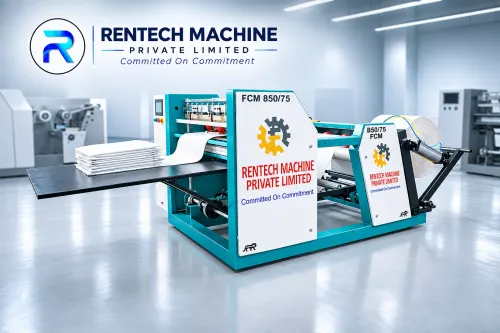
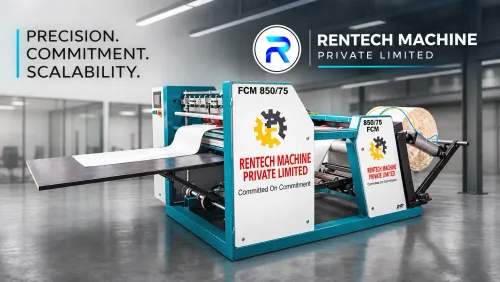
An Automatic Bag Cutting Machine helps manufacturers streamline this operation by automating key cutting activities and reducing dependence on repetitive manual handling. For businesses manufacturing PP woven sacks, HDPE woven bags, laminated sacks, and other suitable woven packaging products, automation can improve workflow organization and support more consistent output.
Rentech Machine Private Limited, based in Ahmedabad, Gujarat, India, provides machinery solutions for the woven bag manufacturing and conversion industry. Our focus is on helping bag manufacturers select practical equipment that supports their production requirements, product specifications, and long-term business objectives.
Beyond Cutting: Building a More Efficient Production Workflow
One of the biggest challenges in bag manufacturing is maintaining a consistent workflow between fabric feeding, length measurement, cutting, and stitching. When these operations are not properly coordinated, manufacturers may experience unnecessary handling, dimensional variations, production interruptions, or additional material wastage.
An automatic bag cutting machine can help organize this process by controlling fabric movement and cutting operations according to the machine configuration and selected settings.
For example, a manufacturer producing woven sacks in multiple sizes may need to change cutting lengths several times during a working day. A suitably configured automatic system can make these changes easier to manage, helping operators maintain a more organized production sequence.
The objective is not only to cut fabric faster. It is to establish a repeatable process that supports downstream stitching, printing, and bag conversion operations.
Applications in PP Woven and Industrial Packaging
Automatic bag cutting equipment can be considered for several woven packaging applications, subject to material compatibility, machine specifications, and the required cutting method.
- PP woven bags: Cutting woven polypropylene fabric into specified lengths for packaging applications.
- HDPE woven sacks: Processing compatible woven fabric used in industrial and commercial packaging.
- Laminated woven sacks: Cutting suitable laminated fabric according to the machine's material-handling capabilities.
- BOPP-laminated bags: Preparing compatible printed and laminated woven material for downstream conversion.
- Agricultural packaging: Supporting production workflows for suitable fertilizer, grain, seed, and feed bags.
- Industrial packaging: Preparing woven sack material for applications involving cement, minerals, chemicals, and other bulk products, subject to material and process requirements.
Before selecting a machine, manufacturers should confirm fabric width, thickness, roll characteristics, lamination type, cutting length, and the required production rate.
Five Production Benefits Manufacturers Should Evaluate
1. More Consistent Bag Dimensions
A controlled feeding and cutting process can help reduce variations in cut length. This is particularly useful when repeated production of the same bag size is required.
2. Reduced Repetitive Manual Work
Automation can reduce the need for operators to repeatedly measure and cut fabric manually. Operators can instead focus on machine supervision, material handling, inspection, and production coordination.
3. Better Coordination with Stitching Operations
Consistent cut pieces can make it easier to organize the next production stage. When cutting and stitching capacities are properly matched, manufacturers can reduce bottlenecks between operations.
4. Improved Production Planning
Defined cutting settings and repeatable operating cycles can support more predictable production planning. Actual output will still depend on material characteristics, operator efficiency, machine settings, and production interruptions.
5. Greater Control Over Material Utilization
Accurate length settings and proper machine adjustment can help minimize avoidable cutting errors. However, total material savings also depend on fabric defects, roll quality, bag dimensions, cutting allowances, and production planning.
Why Machine Selection Should Begin with Your Production Requirements
Not every bag manufacturer requires the same cutting solution. A small unit producing a limited range of bag sizes may have different requirements from an industrial facility running multiple shifts and handling large fabric rolls.
Before purchasing an automatic bag cutting machine, evaluate the following:
- Maximum and minimum fabric width.
- Required cutting-length range.
- Compatible fabric materials and lamination types.
- Desired production output per minute or hour.
- Cutting method and edge-finish requirements.
- Feeding and length-control arrangement.
- Operator safety and ease of adjustment.
- Electrical requirements, installation space, and maintenance access.
- Availability of spare parts and technical support.
- Compatibility with existing stitching and conversion equipment.
A machine should be selected according to the actual production requirement rather than speed claims alone. Manufacturers should request a demonstration or material trial using representative fabric whenever possible.
Integrating Cutting with a Complete Woven Bag Conversion Line
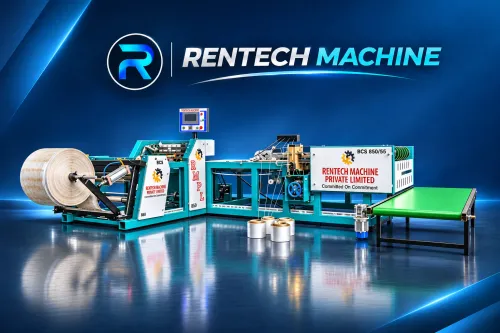
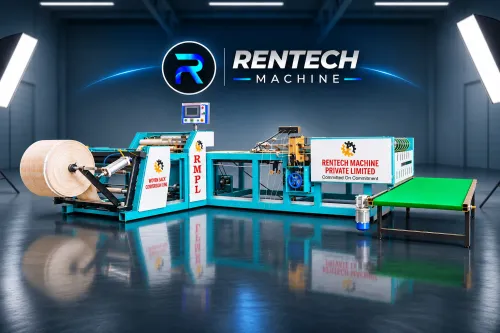
For manufacturers planning to expand capacity, an automatic cutting machine may form part of a broader bag conversion setup. The complete production workflow can include fabric unwinding, feeding, length control, cutting, stitching, and collection. Printing or other processing stages may be integrated according to the product design and manufacturing sequence.
The most effective arrangement depends on the plant layout, bag dimensions, number of operators, material flow, and the capacity of each machine.
For example, if the cutting machine can produce more pieces than the stitching machine can process, the production line may develop a queue of unfinished material. Conversely, a faster stitching operation may remain underutilized when cutting output is insufficient.
Rentech Machine Private Limited helps customers evaluate machinery requirements in the context of their intended bag applications and production workflow.
Why Consider Rentech Machine Private Limited?
Rentech Machine Private Limited is an Ahmedabad-based machinery manufacturer and supplier serving the woven sack manufacturing and conversion sector. Our product range includes bag cutting and stitching machinery, flexographic printing machines, and woven bag conversion solutions.
When evaluating an automatic bag cutting machine from Rentech, customers should discuss their fabric specifications, required cutting dimensions, expected output, and integration requirements so that the proposed configuration can be matched to the application.
Our objective is to support manufacturers in building a practical production setup with an emphasis on operational consistency, suitable machine configuration, and long-term manufacturing requirements.
Conclusion: Make Every Cut Count
In modern woven bag manufacturing, production efficiency depends on the coordination of every operation, from fabric feeding to final bag conversion. An automatic bag cutting machine can contribute to this objective by providing controlled cutting cycles, repeatable length settings, and a more organized production workflow.
For manufacturers looking to reduce repetitive manual work, improve dimensional consistency, and prepare for higher-volume production, selecting the right cutting equipment is an important investment decision.
Rentech Machine Private Limited is committed to supporting the woven packaging industry with machinery solutions designed around real production requirements. Whether you are establishing a new manufacturing unit, upgrading an existing cutting section, or planning a more integrated woven bag conversion line, start by identifying your material specifications, target output, and finished-bag requirements. Contact Rentech Machine to discuss a suitable automatic bag cutting solution for your business and take a more structured approach to production efficiency.
Frequently Asked Questions (Q&A)
1. What is an automatic bag cutting machine?
An automatic bag cutting machine is industrial equipment designed to feed material and cut it to a predetermined length with reduced manual intervention. It is used in suitable woven bag and packaging production applications.
2. Which materials can an automatic bag cutting machine process?
Depending on the machine configuration, it may process PP woven fabric, HDPE woven fabric, and compatible laminated or BOPP-laminated materials. Confirm material compatibility with the manufacturer before ordering.
3. Can the cutting length be adjusted?
Yes, many automatic models allow operators to set the required cutting length within the machine's specified operating range. The available adjustment method depends on the model.
4. Does an automatic bag cutting machine improve production efficiency?
It can improve workflow consistency and reduce repetitive manual operations. Actual productivity depends on the machine's rated capacity, material properties, setup time, operator practices, and downstream equipment.
5. Can the machine be integrated with a bag stitching machine?
Yes, a suitable cutting system can be used alongside a compatible stitching machine or as part of a bag conversion line. The equipment capacities and material-transfer arrangements should be evaluated together.
6. How do I select the right automatic bag cutting machine?
Consider fabric width, cutting-length range, material type, required output, cutting method, available space, electrical supply, maintenance needs, and compatibility with your existing machinery.
7. Is an automatic cutting machine suitable for a new bag manufacturing business?
It may be suitable for a new unit seeking a repeatable cutting process. The investment should be evaluated against expected production volume, available capital, labor requirements, and the complete manufacturing workflow.