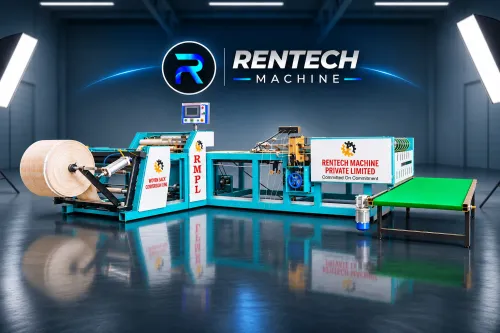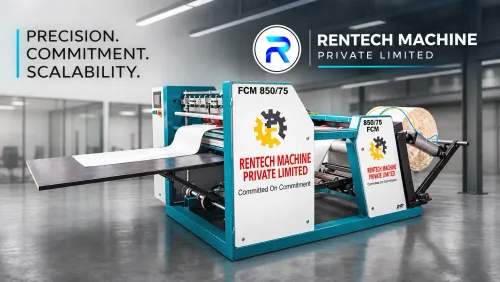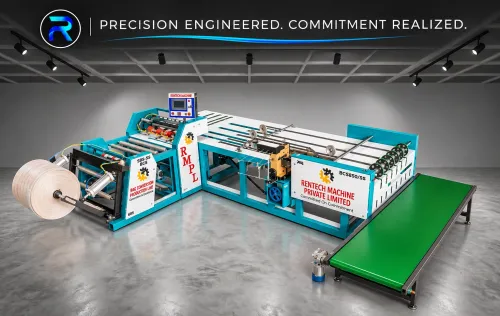


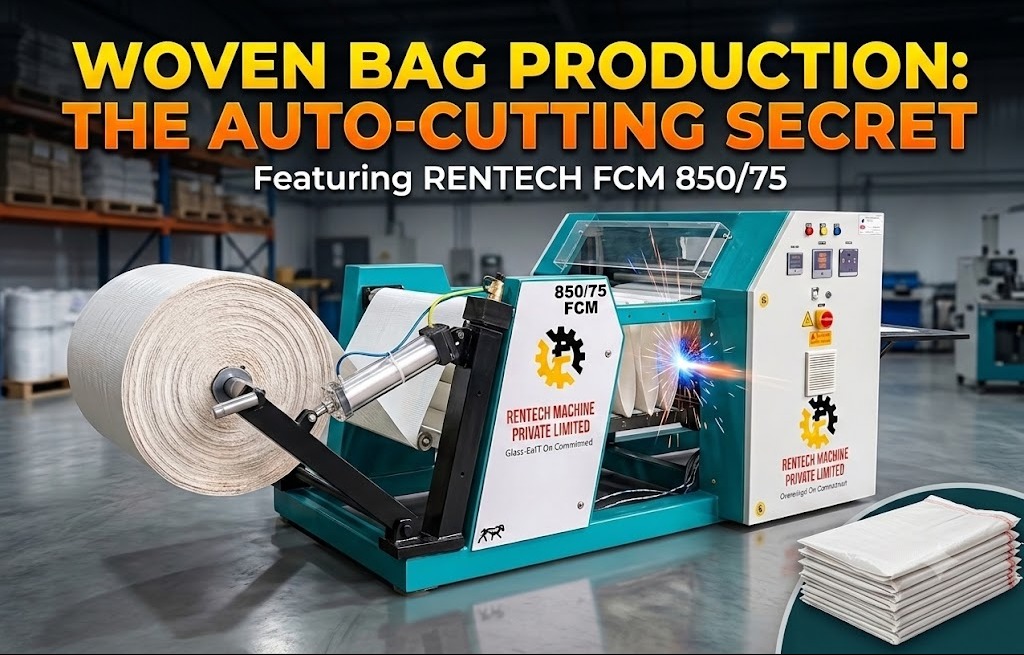
Auto Bag Cutting Machine: Improving Precision and Productivity in Woven Bag Manufacturing
Introduction
In the competitive packaging industry, manufacturers need more than just production capacity. They need consistent cutting quality, reliable machine performance, efficient material handling, and the ability to fulfil bulk orders on time. An Auto Bag Cutting Machine helps woven sack manufacturers achieve these objectives by automating the cutting stage of bag production.
Rentech Machine Private Limited provides machinery solutions designed for the requirements of the PP woven sack and packaging industry. Our automatic bag cutting solutions are developed to support manufacturers processing woven fabrics into bags of the required length, helping improve production consistency and reduce dependence on repetitive manual operations.
Whether you manufacture packaging sacks for agricultural products, fertilizers, cement, food grains, animal feed, or industrial materials, choosing a suitable automatic cutting system can improve your overall production workflow.
Why Is Automatic Bag Cutting Important for Modern Manufacturing?
Bag cutting is a critical stage in woven sack conversion. Variations in bag length, uneven edges, inconsistent feeding, and material wastage can affect subsequent processes such as printing, folding, and stitching.
An automatic bag cutting machine helps standardize this operation by controlling the feeding and cutting process according to the selected machine configuration.
1. Consistent Bag Length
Uniform bag dimensions are essential for maintaining product quality and meeting customer specifications. An automatic cutting system can help manufacturers achieve repeatable cutting lengths when properly configured and calibrated.
2. Improved Production Workflow
Automation reduces the need for continuous manual measurement and cutting. Operators can focus on monitoring the machine, checking finished pieces, and managing material supply.
3. Reduced Material Wastage
Accurate length settings and controlled feeding can help minimize unnecessary fabric consumption. Actual savings depend on fabric quality, machine adjustment, bag dimensions, and operating practices.
4. Better Production Planning
A defined cutting process makes it easier to estimate output, organize downstream stitching operations, and plan production schedules around customer orders.
5. Consistent Quality for Bulk Orders
For manufacturers supplying large quantities of woven sacks, repeatability is important. Automatic cutting supports a more standardized workflow and helps reduce dimensional variation between production batches.
Applications of an Auto Bag Cutting Machine
An automatic bag cutting machine can be used in woven sack conversion operations involving suitable fabric materials and machine configurations.
Common applications include:
- PP woven sack manufacturing
- HDPE woven bag production
- Leno bag manufacturing, where the machine is suitable for the fabric and cutting method
- Laminated and unlaminated woven sack conversion
- Packaging bags for fertilizers and agricultural products
- Rice, grain, flour, and animal feed packaging
- Industrial packaging sacks and other woven-fabric applications
Material compatibility should be confirmed before purchasing. Coated, laminated, printed, and specialty fabrics may require specific feeding, cutting, or handling arrangements.
How Does an Automatic Bag Cutting Machine Work?
The machine converts a continuous or roll-fed fabric into individual bag-length pieces through a controlled sequence of operations.
Step 1: Fabric Feeding
The woven fabric is supplied from a roll or an appropriate feeding arrangement. The feeding mechanism guides the material into the cutting section.
Step 2: Length Setting
The required bag length is entered or adjusted according to the machine's control system. The appropriate setting depends on the model and its operating mechanism.
Step 3: Fabric Positioning
The feeding system advances the fabric to the required cutting position. Correct alignment and feed calibration are important for dimensional accuracy.
Step 4: Automatic Cutting
The cutting mechanism separates the fabric at the selected interval. Depending on the configuration, the machine may use a suitable hot-cutting or cold-cutting arrangement.
Step 5: Output and Inspection
The cut pieces are collected for the next production stage, such as printing, folding, or stitching. Operators should periodically inspect dimensions and edge quality.
This sequence can vary according to the machine model, automation level, and integration with other bag-conversion equipment.
Factors to Consider Before Purchasing an Automatic Bag Cutting Machine
Selecting a machine based only on its quoted price can create difficulties later. Buyers should evaluate the following factors before making an investment.
Required cutting width: Select a machine that accommodates the maximum fabric width used in your production.
Bag length range: Confirm that the machine supports your required bag dimensions and adjustment range.
Production speed: Evaluate the expected output in relation to your fabric type, bag length, operator practices, and downstream production capacity.
Cutting technology: Choose a cutting arrangement appropriate for the fabric, coating, lamination, and required edge finish.
Automation level: Determine whether you need automatic feeding and cutting, length control, production counting, or integration with stitching equipment.
Material compatibility: Confirm suitability for the PP, HDPE, Leno, BOPP-laminated, or other materials you intend to process.
Maintenance and service: Check the availability of spare parts, technical support, operator training, and maintenance documentation.
Future expansion: If production is expected to increase, consider whether the machine can integrate with your existing or planned bag-conversion line.
Why Choose Rentech Machine Private Limited?
Rentech Machine Private Limited focuses on machinery solutions for woven bag manufacturing and conversion applications. We understand that manufacturers require equipment that aligns with their product dimensions, fabric characteristics, production targets, and available factory space.
When evaluating a bag cutting solution from Rentech Machine Private Limited, customers can discuss their application requirements, desired cutting dimensions, fabric specifications, and production expectations to identify a suitable machine configuration.
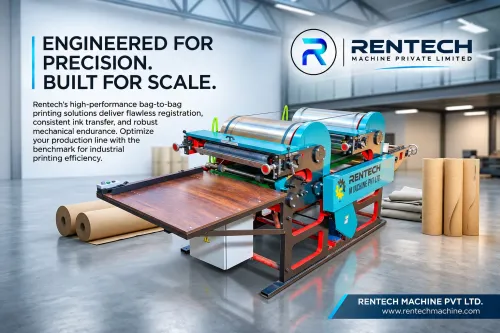
Our product range includes bag cutting and stitching machinery and other woven sack conversion and printing equipment, subject to the requirements of the particular application.
For an appropriate machine recommendation, buyers should share their fabric width, bag length, material type, expected production rate, and whether cutting needs to be integrated with stitching or other processes.
Conclusion
An Auto Bag Cutting Machine is an important investment for woven sack manufacturers seeking improved cutting consistency, a more organized production process, and reduced reliance on repetitive manual work.
The right equipment should be selected according to fabric compatibility, cutting dimensions, automation requirements, production targets, and long-term service needs.
Rentech Machine Private Limited supports woven bag manufacturers in evaluating machinery solutions for their production requirements. Contact our team to discuss your application and identify a suitable automatic bag cutting machine for your business.
Company: Rentech Machine Private Limited
Industry: Woven Bag Manufacturing and Packaging Machinery
Product: Auto Bag Cutting Machine
Location: Ahmedabad, Gujarat, India
Website: https://rentechmachine.com
Frequently Asked Questions (Q&A)
1. What is an Auto Bag Cutting Machine?
An Auto Bag Cutting Machine is industrial equipment designed to cut fabric into predetermined lengths for bag manufacturing. Depending on the model, it can automate fabric feeding, length measurement, cutting, and output handling.
2. Which materials can an automatic bag cutting machine process?
Depending on its design, the machine may process PP woven fabric, HDPE woven fabric, Leno fabric, and certain laminated or coated materials. Buyers should confirm material compatibility with the manufacturer before ordering.
3. Can an automatic cutting machine produce bags of different sizes?
Yes. Many machines support adjustable cutting lengths within a specified operating range. The available range and adjustment method depend on the selected model.
4. Does an automatic bag cutting machine reduce fabric wastage?
It can help reduce wastage through controlled feeding and repeatable cutting lengths. Results depend on material quality, machine calibration, fabric alignment, and production conditions.
5. What is the difference between manual and automatic bag cutting machines?
A manual machine requires more operator involvement in positioning, measuring, or controlling the cutting cycle. An automatic machine automates some or all of these operations, depending on its configuration.
6. Can an automatic bag cutting machine be connected to a stitching machine?
Certain cutting machines can be integrated into a larger bag-conversion line. Compatibility depends on the feeding arrangement, fabric handling, output transfer, control system, and stitching equipment.
7. What production speed should I expect?
Production speed varies according to the machine model, bag length, fabric characteristics, cutting mechanism, and operator or line conditions. Request a model-specific production estimate rather than relying on a general speed claim.
8. Is the machine suitable for laminated PP woven bags?
Some configurations can handle laminated fabrics, but suitability depends on the lamination type, fabric properties, cutting method, and required edge quality. Confirm these details before finalizing the machine.