

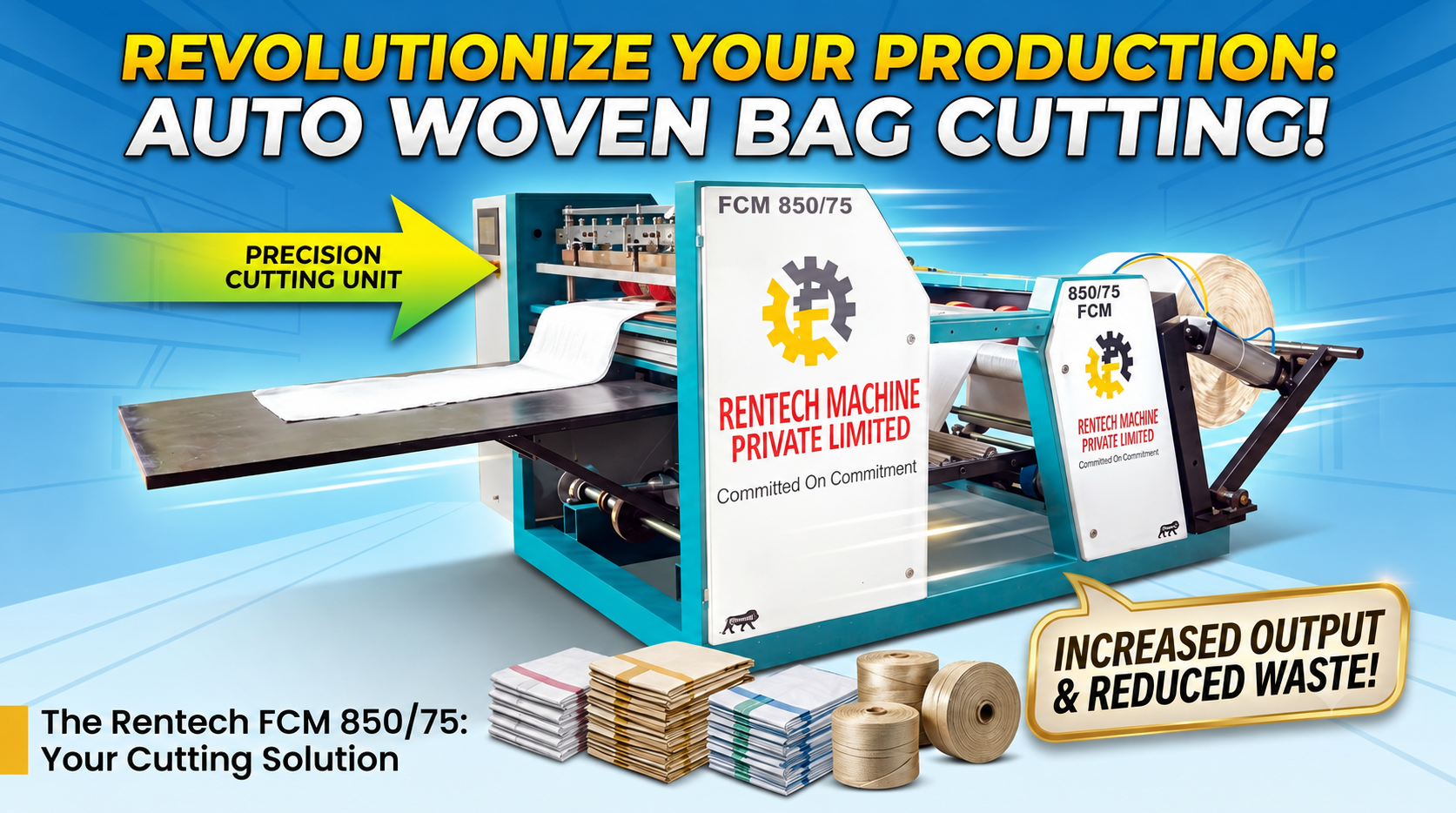
Automatic Bag Cutting Machine: Improving Precision and Productivity in Woven Sack Manufacturing
Introduction
In the woven packaging industry, cutting accuracy plays an important role in maintaining product quality, production consistency, and manufacturing efficiency. PP woven bags, HDPE woven sacks, leno bags, and other woven packaging products require controlled cutting to achieve the required dimensions before stitching, printing, or further conversion.
As packaging manufacturers handle increasing production requirements, manual cutting methods can create challenges related to dimensional consistency, operator dependency, material handling, and production planning. An Automatic Bag Cutting Machine provides a more systematic approach by automating essential cutting operations and helping manufacturers establish a consistent production process.
Rentech Machine Private Limited offers industrial machinery solutions designed for woven bag manufacturing and conversion applications. Its automatic bag cutting solutions are developed to support manufacturers seeking better cutting control, organized material handling, and a more efficient workflow.
Understanding the Role of an Automatic Bag Cutting Machine
An automatic bag cutting machine is industrial equipment used to cut woven fabric into predetermined lengths according to the required bag dimensions and machine configuration. It is commonly used in manufacturing environments where fabric rolls need to be converted into individual bag blanks for subsequent processing.
The machine can help coordinate fabric feeding, length measurement, and cutting operations. Depending on the model, configuration, and automation level, additional features may support improved process control and reduced dependence on manual handling.
For manufacturers producing large quantities of woven sacks, automation can help standardize repetitive operations and make production planning easier.
Why Cutting Accuracy Matters in Woven Bag Manufacturing
Cutting is not simply the process of separating fabric into individual pieces. It is a critical stage that influences several downstream operations.
1. Consistent Bag Dimensions
Uniform cutting lengths help manufacturers maintain consistency across production batches. Correct dimensions also make it easier to manage subsequent stitching and bag conversion operations.
2. Better Coordination with Stitching
Bag blanks with consistent dimensions can simplify handling and alignment during stitching. This is particularly relevant for manufacturers supplying bags in standardized sizes.
3. Improved Material Utilization
Accurate cutting and properly planned cutting lengths can help reduce avoidable material losses. Actual savings depend on fabric characteristics, cutting settings, production planning, and operator practices.
4. More Organized Production
Automated cutting can establish a repeatable workflow for processing woven fabric rolls. This can help production teams coordinate cutting output with stitching, printing, and packaging requirements.
Applications Across Different Woven Packaging Products
An automatic bag cutting machine can serve different segments of the packaging industry, subject to the machine's technical specifications and material compatibility.
- PP woven bags: Cutting woven polypropylene fabric into blanks for industrial and commercial packaging.
- HDPE woven sacks: Processing compatible woven fabric used for packaging applications.
- Leno bags: Preparing suitable woven mesh material for vegetable and agricultural packaging.
- Laminated woven sacks: Cutting compatible laminated fabric according to the required bag dimensions.
- Unlaminated woven bags: Processing suitable woven fabric for subsequent stitching or conversion.
- Bulk packaging production: Supporting repetitive cutting requirements where standardized bag dimensions are important.
Before selecting a machine, manufacturers should confirm the material type, fabric width, thickness, coating or lamination, and required cutting length with the machinery supplier.
Key Features to Evaluate Before Purchasing an Automatic Bag Cutting Machine
Choosing machinery based only on its advertised speed may not produce the best long-term results. Manufacturers should evaluate the complete production requirement.
Cutting Length and Width
Check whether the machine accommodates the fabric width and cutting lengths required for your product range. The working width and cutting range should match the dimensions of the bags you manufacture.
Feeding and Length Control
A suitable feeding mechanism helps maintain consistent material movement. Ask the manufacturer how the machine measures the feeding length and controls the cutting cycle.
Cutting Mechanism
The cutting arrangement should be suitable for the woven material being processed. Confirm compatibility with the intended fabric and the type of cut required.
Automation and Operation
Evaluate the available controls, operating interface, adjustment process, and level of automation. A suitable system should support repeatable operation and straightforward changeovers between compatible bag sizes.
Production Capacity
Actual output depends on cutting length, fabric properties, machine settings, handling requirements, and operating conditions. Request performance details for your specific application rather than relying only on a maximum speed figure.
Maintenance and Technical Support
Consider access to replacement parts, routine maintenance requirements, operator training, and after-sales assistance. These factors can influence the machine's long-term operational reliability.
Automatic Bag Cutting Machine from Rentech Machine Private Limited
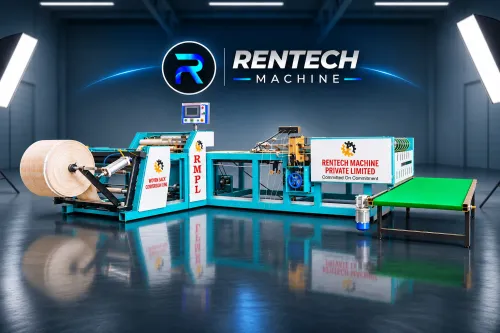
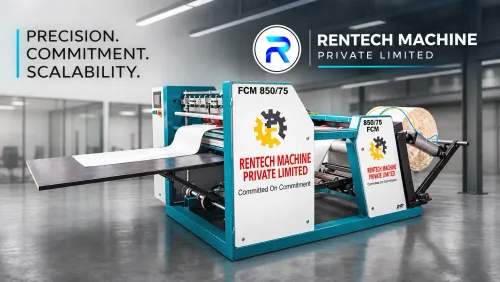
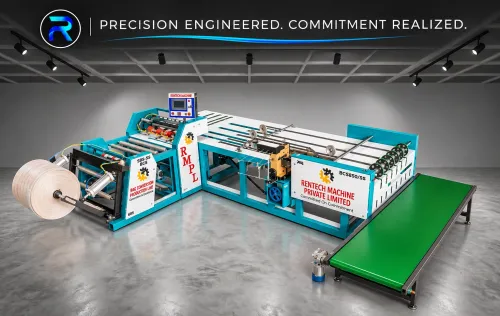
Rentech Machine Private Limited provides machinery solutions for businesses involved in PP and HDPE woven bag manufacturing and conversion. Its FCM 850/75 Automatic Woven Bag Cutting Machine is a relevant solution for manufacturers evaluating automated fabric-cutting equipment.
The suitability of a particular model depends on the required fabric width, cutting dimensions, material characteristics, production target, and desired automation level. Buyers should confirm the exact technical specifications and available configuration before finalizing their purchase.
Rentech Machine works with manufacturers to identify machinery requirements based on their intended applications. Discussing the material type, bag size, current production process, and future capacity requirements can help establish whether the proposed machine is appropriate for the business.
Factors That Influence the Return on Investment
The financial benefit of an automatic bag cutting machine depends on more than its purchase price. Manufacturers should consider the overall effect on production costs and operating efficiency.
Important factors include:
- Reduction in avoidable fabric wastage.
- Labour requirements for repetitive cutting and handling.
- Production consistency and rework levels.
- Machine utilization across available working shifts.
- Maintenance and operating expenses.
- Compatibility with existing stitching and conversion equipment.
- Ability to meet current and anticipated order volumes.
A practical investment assessment should compare the existing cutting process with the expected performance of the proposed machine. Where possible, use actual production data to estimate the potential cost per bag and payback period.
Conclusion
An automatic bag cutting machine can be an important investment for woven packaging manufacturers seeking greater process consistency and a more organized production workflow. By evaluating cutting accuracy, material compatibility, feeding control, operating requirements, and long-term support, businesses can select machinery that fits their manufacturing needs.
Rentech Machine Private Limited supports the woven bag manufacturing industry with machinery solutions for cutting and conversion applications. If your business is planning to automate woven fabric cutting or upgrade its existing production setup, contact Rentech Machine to discuss your application and identify a suitable machine configuration.
Looking for an Automatic Bag Cutting Machine Manufacturer in India? Contact Rentech Machine Private Limited to discuss your PP woven bag, HDPE sack, or compatible woven fabric cutting requirements.
Website: https://rentechmachine.com
Frequently Asked Questions (FAQs)
1. What is an automatic bag cutting machine?
An automatic bag cutting machine is industrial equipment used to cut woven fabric into predetermined lengths for manufacturing bags and sacks. Depending on its configuration, it can automate fabric feeding, length control, and cutting operations.
2. Which materials can an automatic bag cutting machine process?
Depending on the machine design and material compatibility, it may process PP woven fabric, HDPE woven fabric, leno mesh, and suitable laminated or unlaminated woven materials. Always confirm compatibility with the manufacturer.
3. What are the main benefits of automatic bag cutting?
The main benefits can include more consistent cutting lengths, reduced repetitive manual handling, improved workflow organization, and better control over fabric utilization.
4. Can an automatic cutting machine reduce material wastage?
It can help reduce avoidable waste through controlled feeding, accurate cutting, and improved production planning. Actual savings depend on the fabric, bag dimensions, cutting method, and operating practices.
5. How do I select the right automatic bag cutting machine?
Consider fabric width, cutting length, material type, lamination, required production capacity, automation level, available floor space, and integration with downstream stitching or conversion equipment.
6. Is an automatic bag cutting machine suitable for PP woven bags?
Yes, machines designed for compatible PP woven fabric can be used to cut material for PP woven bag production. The required fabric width, cutting length, and material characteristics should be confirmed before purchase.
7. Can the machine be integrated into an existing bag manufacturing unit?
Integration may be possible depending on the machine configuration, fabric feeding arrangement, available space, and the existing stitching or conversion line. Discuss your current production layout with the supplier before installation.