

Automatic Cutting and Stitching Machine for Leno Bags: Advanced Solutions for Agricultural Packaging
Rentech Machine Private Limited | Ahmedabad, Gujarat, India
Introduction
The agricultural packaging industry requires durable, ventilated, and consistently manufactured bags for handling products such as onions, potatoes, garlic, and other fresh produce. PP leno bags are widely used for these applications because their open-mesh construction allows air circulation and makes the packaged products visible.
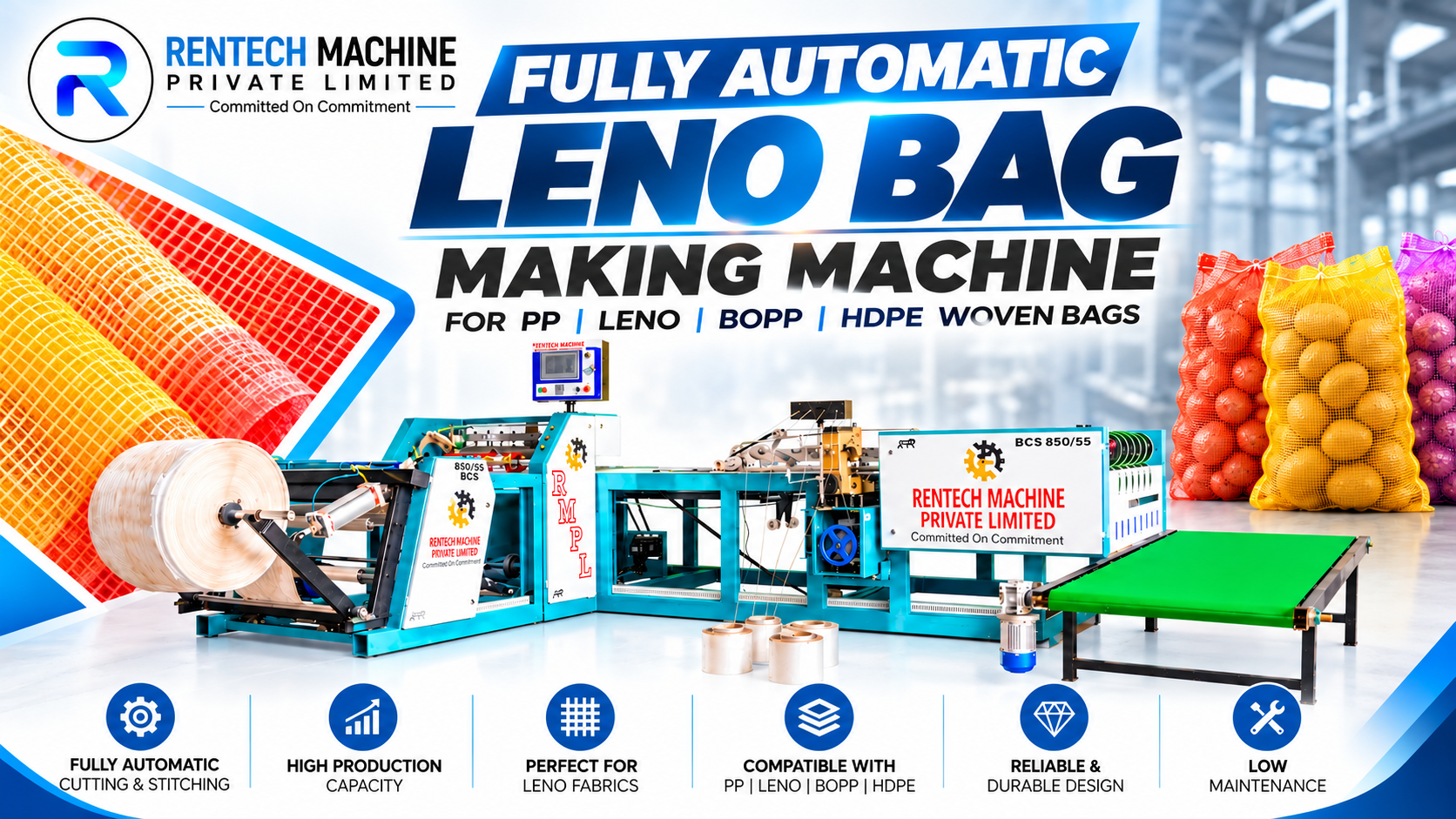
For manufacturers supplying this growing packaging segment, an Automatic Cutting and Stitching Machine for Leno Bags is an important part of the bag conversion process. This machinery helps transform leno fabric into finished bags through coordinated cutting and stitching operations, supporting consistent production and organized manufacturing workflows.
Rentech Machine Private Limited, based in Ahmedabad, Gujarat, India, provides machinery solutions for woven bag manufacturing, cutting, stitching, printing, and conversion applications. Our objective is to help packaging manufacturers identify equipment suited to their fabric requirements, bag sizes, production goals, and business needs.
In this article, we explore how leno bag cutting and stitching machinery works, its applications, important production considerations, and how manufacturers can select a suitable machine for their operations.
What Is an Automatic Cutting and Stitching Machine for Leno Bags?
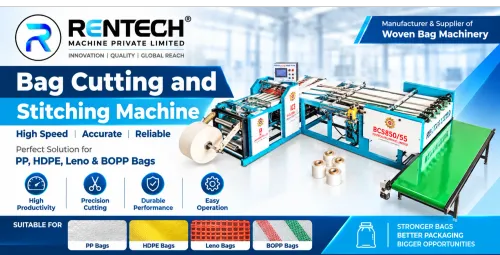
An automatic cutting and stitching machine for leno bags is industrial equipment designed to convert compatible roll-fed or tubular leno fabric into individual bags. The system coordinates fabric feeding, length control, cutting, and stitching according to the machine's configuration.
PP leno fabric is commonly used in agricultural packaging because its mesh structure promotes ventilation. This makes it suitable for products that benefit from airflow during storage, handling, and transportation.
The bag conversion process involves preparing the fabric to the required length, cutting it into individual sections, and forming the necessary stitched seams. Depending on the machine design, several of these operations can be integrated into a coordinated production sequence.
For bag manufacturers, the objective is to produce bags with consistent dimensions, reliable seams, and a finish that meets customer requirements.
How Does a Leno Bag Cutting and Stitching Machine Work?
Understanding the production process helps manufacturers evaluate how the machine will fit into their existing workflow.
1. Leno Fabric Feeding
The process begins with loading the leno fabric roll into the feeding arrangement. The fabric is guided through the machine to maintain a suitable path for subsequent operations.
Stable feeding is important because uneven material movement can affect bag dimensions and cutting consistency. Correct setup and suitable fabric compatibility help maintain reliable operation.
2. Bag Length Setting
The required bag length is selected according to the customer's packaging requirements. The feeding and control arrangement advances the fabric to the specified length before cutting.
Accurate length control helps manufacturers maintain product consistency and meet the dimensional requirements of different buyers.
3. Fabric Cutting
After the required length is reached, the cutting mechanism separates the fabric into individual bag sections. The cutting arrangement must be suitable for the fabric construction to achieve a clean and repeatable cut.
Cutting quality is particularly important for maintaining consistent bag dimensions and preparing the material for the stitching stage.
4. Stitching and Seam Formation
The cut fabric section is processed through the stitching arrangement to create the required seam. Stitch quality contributes to the bag's durability and suitability for its intended application.
The appropriate stitching method depends on the bag design, fabric properties, expected product weight, and customer requirements.
5. Finished Bag Collection and Inspection
After stitching, completed bags are collected for inspection and further handling. Manufacturers should check bag length, seam quality, cutting consistency, and general appearance to maintain production standards.
The exact sequence and degree of automation depend on the selected machine configuration.
Why Is Leno Bag Manufacturing Important for Agricultural Packaging?
Leno bags are widely used in agricultural supply chains because their construction offers several practical benefits.
Ventilation: The mesh structure allows air to circulate through the packaging, making leno bags suitable for many fresh-produce applications.
Product visibility: The open weave allows buyers and distributors to inspect the contents without opening the bag.
Convenient handling: Leno bags are available in different sizes to accommodate various packaging and distribution requirements.
Versatile applications: Depending on their design and load capacity, these bags can be used for onions, potatoes, garlic, and other compatible agricultural products.
Support for distribution: Properly manufactured bags help suppliers organize products for transportation, wholesale distribution, and retail handling.
The suitability of a particular bag depends on the packaged product, required weight, storage conditions, transportation method, and buyer specifications.
Benefits of an Automatic Leno Bag Cutting and Stitching Machine
Selecting suitable machinery can help manufacturers improve production organization and maintain consistent finished-bag quality.
Improved Production Consistency
Controlled feeding, length settings, and coordinated cutting operations can help reduce dimensional variations when the machine is correctly configured and maintained.
Reduced Repetitive Handling
Integrating cutting and stitching operations can reduce unnecessary movement of fabric between separate production stages. This can help create a more organized workflow.
Better Production Planning
A defined machine cycle allows manufacturers to estimate production requirements, plan material consumption, and schedule orders more effectively.
Actual output depends on the bag size, fabric characteristics, stitching cycle, operating conditions, and downtime.
Support for Growing Customer Demand
As orders increase, manufacturers need equipment that matches their expected production volumes and product requirements. Appropriate automation can support capacity planning while maintaining quality standards.
Consistent Finished-Bag Quality
Regular inspection, correct machine settings, and suitable maintenance help maintain consistency in bag dimensions, seams, and overall appearance.
Applications of Automatic Leno Bag Making Machinery
Automatic leno bag cutting and stitching machinery supports manufacturers producing bags for several agricultural packaging applications.
Onion Leno Bags
Onion bags are among the common applications of ventilated mesh packaging. The open structure allows airflow and provides visibility of the packaged onions during storage and distribution.
Potato Mesh Bags
Potato packaging requires bags that meet the customer's dimensions, load capacity, and handling requirements. Suitable leno bags provide ventilation and convenient product identification.
Garlic Packaging Bags
Mesh bags can be used for garlic packaging where ventilation and product visibility are desirable. Bag size and seam strength should be selected according to the intended quantity and handling conditions.
Fruit and Vegetable Packaging
Compatible mesh bags may also be used for selected fruits and vegetables, depending on the packaging requirements and characteristics of the product.
Agricultural Packaging Supply
Bag manufacturers supplying agricultural wholesalers, distributors, packhouses, and retailers can use suitable conversion machinery to produce finished bags according to customer orders.
Factors to Consider When Selecting a Leno Bag Cutting and Stitching Machine
Choosing machinery involves more than comparing advertised production speeds. Manufacturers should evaluate the complete production requirement before making an investment.
Fabric compatibility: Confirm that the machine is suitable for the specific PP leno fabric and roll construction being used.
Bag dimensions: Ensure that the machine supports the required bag lengths and fabric widths.
Cutting quality: Evaluate the consistency of the cut and the suitability of the cutting mechanism for the intended material.
Stitching quality: Check the seam formation, stitching consistency, thread requirements, and finished-bag strength.
Production requirements: Discuss the expected output using the actual bag size and fabric rather than relying only on theoretical maximum speeds.
Ease of operation: Consider the machine setup process, controls, operator training, and changeover requirements.
Maintenance and service: Review routine maintenance needs, spare-parts availability, technical support, and installation requirements.
Future production plans: Select a machine that suits current orders while allowing for realistic business growth.
Discussing these factors with the machinery supplier helps establish a suitable configuration and reduces the risk of selecting equipment that does not match the intended application.
Why Choose Rentech Machine Private Limited?
Rentech Machine Private Limited is based in Ahmedabad, Gujarat, India, and provides machinery solutions for the woven bag manufacturing and conversion industry.
Our machinery portfolio includes bag cutting and stitching equipment, flexographic printing machinery, and woven sack conversion solutions. These technologies support different stages of bag manufacturing, from fabric processing to printing and finished-bag conversion.
When discussing your leno bag production requirements with Rentech, you can explain your intended application, fabric type, required bag dimensions, production goals, and operational requirements. This information helps determine which machine configuration should be evaluated for your project.
Our approach is to understand the production application and identify a suitable machinery solution based on the requirements discussed.
For machine details and enquiries, visit:
Website: https://rentechmachine.com/
Frequently Asked Questions (FAQs)
1. What is an automatic cutting and stitching machine for leno bags used for?
It is used to convert compatible leno fabric into finished bags through cutting and stitching operations. Depending on the configuration, the machine may integrate fabric feeding, length control, cutting, stitching, and finished-bag handling.
2. Which material is commonly used for leno bags?
Polypropylene (PP) leno mesh is commonly used for agricultural packaging. Compatibility with other materials should be confirmed with the machinery supplier before production.
3. Can leno bag machinery be used for onion and potato bags?
Yes. Suitable machinery can be used to manufacture onion and potato bags from compatible leno fabric. The bag dimensions, seam quality, and load requirements should match the intended application.
4. Why is cutting accuracy important in leno bag manufacturing?
Accurate cutting helps maintain consistent bag dimensions, reduces avoidable material variation, and supports a more uniform finished product.
5. What determines the production speed of a leno bag cutting and stitching machine?
Production speed depends on bag length, fabric characteristics, feeding performance, cutting and stitching cycle times, material handling, and operating conditions. Actual output should be evaluated using the intended production material.
6. How can manufacturers maintain consistent stitching quality?
Consistent stitching requires suitable machine settings, appropriate thread, compatible fabric, routine maintenance, and regular inspection of the finished seams.
7. What should I consider before purchasing a leno bag making machine?
Review fabric compatibility, bag dimensions, cutting quality, stitching performance, required output, installation requirements, maintenance, spare parts, and after-sales support.
8. Can a leno bag cutting and stitching machine manufacture different bag sizes?
Some configurations support different bag sizes within a defined operating range. Confirm the required dimensions and available adjustment range with the supplier before ordering.
9. Is a leno bag cutting and stitching machine suitable for starting a bag manufacturing business?
It may be suitable, depending on the target market, expected order volume, available investment, material sourcing, operating costs, and customer demand. A business plan should include realistic production and sales assumptions.
10. Where can I enquire about leno bag cutting and stitching machinery in India?
You can contact Rentech Machine Private Limited in Ahmedabad, Gujarat, India, to discuss machinery for woven bag cutting, stitching, printing, and conversion applications. Visit the company website to submit your requirements.
Conclusion
Automatic cutting and stitching machinery plays an important role in converting leno fabric into finished bags for agricultural packaging. Consistent cutting, reliable stitching, suitable fabric handling, and effective quality inspection are essential for manufacturing bags that meet customer expectations.
For manufacturers producing onion bags, potato bags, garlic bags, and other compatible mesh packaging, selecting machinery according to the intended application can support a more organized and efficient production process.
Rentech Machine Private Limited provides machinery solutions for the woven bag industry, including cutting, stitching, printing, and conversion applications.
Looking for an automatic cutting and stitching machine for leno bags? Contact Rentech Machine Private Limited to discuss your production requirements and explore a suitable machine configuration.
Rentech Machine Private Limited — Machinery Solutions for Woven Bag Manufacturing and Conversion.
Website: https://rentechmachine.com/