

Automatic Cutting and Stitching Machine for Leno, PP, BOPP & HDPE Bags: A Smarter Approach to Woven Bag Manufacturing
Introduction: Moving Towards Flexible Woven Bag Manufacturing
The woven packaging industry is no longer limited to manufacturing just one type of bag. Today's manufacturers are serving different industries, including agriculture, food grains, fertilizers, animal feed, industrial packaging and retail packaging. Each application has its own requirements for fabric construction, bag appearance, durability, ventilation and finishing.
For a woven bag manufacturer, this creates an important production challenge: how can a manufacturing facility efficiently handle different types of woven fabrics without making its production process unnecessarily complicated?
This is where an advanced automatic cutting and stitching machine becomes an important part of the manufacturing setup.
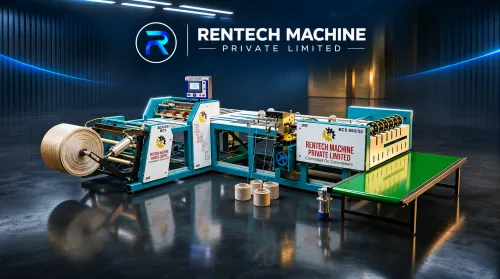
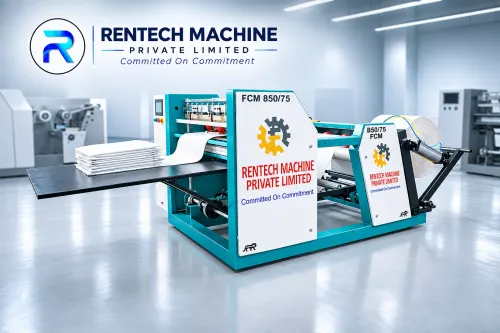
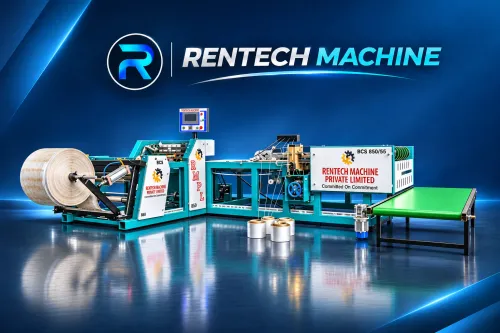
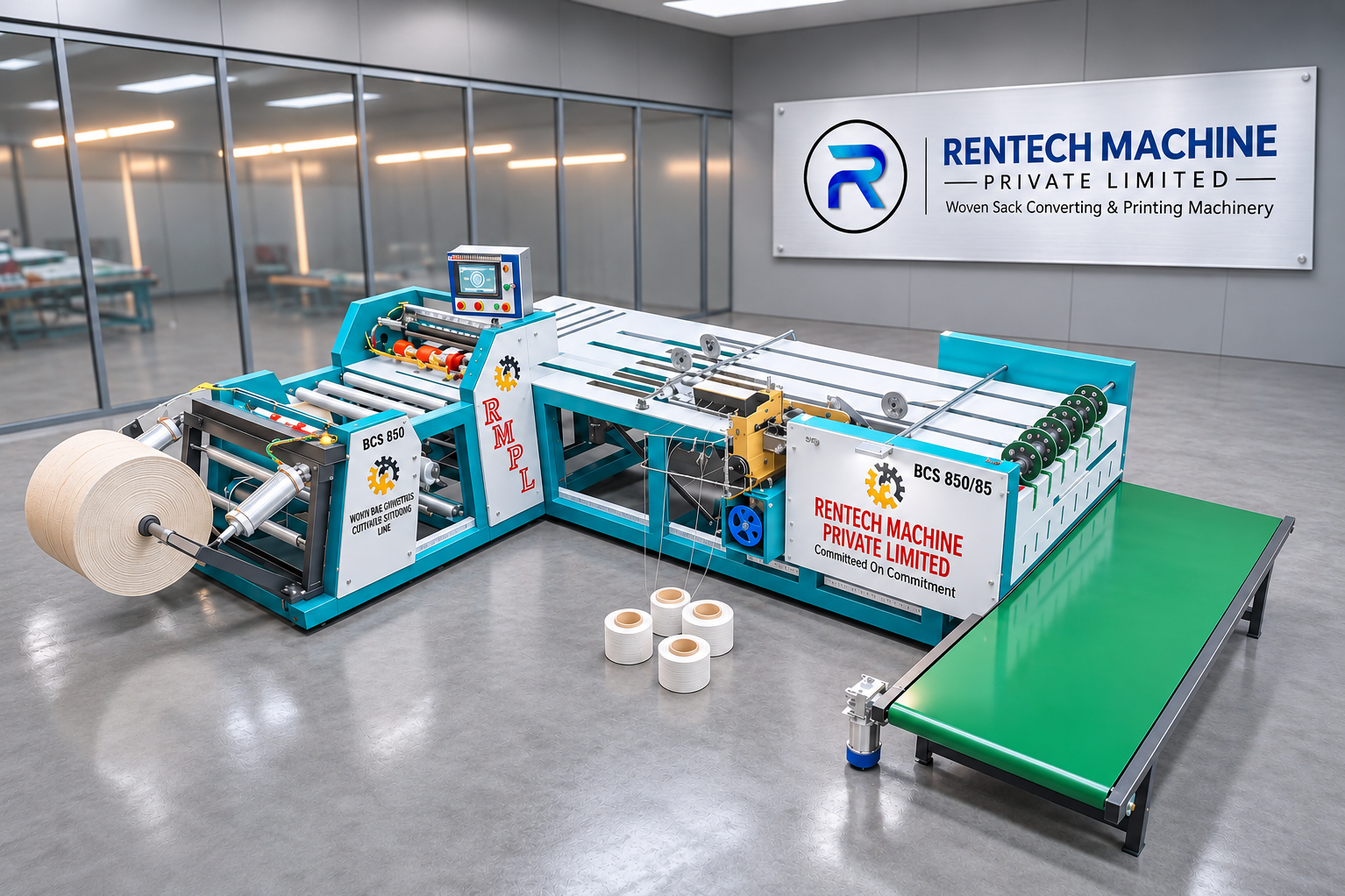
Rentech Machine Private Limited, an Ahmedabad-based manufacturer of woven sack converting and printing machinery, offers automatic cutting and stitching solutions designed for processing compatible Leno, PP woven, BOPP laminated and HDPE woven bag materials.
The machine is developed to bring important bag conversion operations together into an organised production process. Instead of depending entirely on separate manual cutting and stitching activities, manufacturers can use an integrated automatic arrangement to improve production coordination, maintain consistent bag dimensions and streamline daily operations.
One of the important advantages of a suitably configured machine is its ability to support different woven bag manufacturing applications. This provides manufacturers with greater flexibility when their product range includes agricultural mesh bags, conventional PP woven sacks, printed BOPP bags and HDPE woven packaging.
For businesses planning to expand their product portfolio, choosing the right automatic bag conversion machinery is not simply about increasing production. It is about building a manufacturing process that can respond to changing customer requirements.
Understanding the Four Major Fabric Applications
Although Leno, PP, BOPP and HDPE bags belong to the broader woven packaging industry, they have different material characteristics and end-use applications.
Understanding these differences is important before selecting an automatic cutting and stitching machine.
1. Leno Bags – Designed for Agricultural Packaging
Leno bags are widely used for packaging agricultural produce such as onions, potatoes, garlic and other vegetables.
Their open-mesh construction allows air circulation, making them suitable for products that benefit from ventilation during storage and transportation.
However, manufacturing Leno bags requires attention to the special characteristics of mesh fabric.
During the conversion process, fabric feeding, cutting and stitching must be properly coordinated to achieve the desired bag dimensions and seam quality.
Rentech's automatic Leno bag cutting and stitching machine is designed to support manufacturers involved in agricultural packaging production.
Important production considerations include:
- Consistent handling of open-mesh fabric.
- Accurate bag-length control.
- Proper alignment during fabric feeding.
- Suitable stitching arrangements for the intended bag design.
- Consistent finishing of the bag mouth and bottom seam.
For manufacturers supplying onion and potato packaging markets, a properly configured automatic conversion machine can help organise repetitive manufacturing operations and reduce dependence on manual handling.
2. PP Woven Bags – A Major Segment of Industrial Packaging
Polypropylene woven bags are used across a wide range of industries because of their practical strength, lightweight construction and versatility.
They are commonly used for:
- Rice and grain packaging.
- Wheat and flour packaging.
- Fertilizer packaging.
- Animal feed packaging.
- Sugar and agricultural products.
- Industrial raw materials.
- General-purpose bulk packaging.
PP woven fabric is produced through woven polypropylene tapes. During bag conversion, the fabric must be handled correctly to maintain consistent dimensions and suitable stitching quality.
An automatic PP woven bag cutting and stitching machine helps coordinate the movement of fabric through the conversion process.
Manufacturers can use suitable configurations to produce different bag sizes according to their customers' requirements.
For companies supplying multiple packaging industries, this flexibility can help them respond to changing orders without relying entirely on manual production arrangements.
3. BOPP Laminated Bags – Supporting Branded Packaging Requirements
BOPP laminated woven bags are widely used where packaging appearance, product presentation and printed branding are important.
These bags combine woven polypropylene fabric with a printed and laminated outer layer. They are commonly found in:
- Rice packaging.
- Animal feed packaging.
- Fertilizer packaging.
- Pet food packaging.
- Flour and food-related packaging.
- Branded agricultural packaging.
Compared with conventional unlaminated woven bags, BOPP laminated bags require additional consideration during cutting and stitching because of their layered construction and surface finish.
The conversion process should be suitable for the fabric's lamination, thickness and required finishing quality.
A suitably configured automatic cutting and stitching machine can help manufacturers achieve consistent bag dimensions and organise the production process for laminated woven materials.
For manufacturers supplying branded packaging markets, maintaining uniform bag appearance and reliable stitching is important for the overall quality of the finished product.
4. HDPE Woven Bags – Versatile Packaging for Different Industries
High-density polyethylene (HDPE) woven bags are another important category of woven packaging materials.
They are used in agricultural, industrial and general packaging applications, depending on the fabric construction and bag design.
HDPE woven bags can be manufactured for applications such as:
- Agricultural product packaging.
- Grain and seed packaging.
- Fertilizer packaging.
- Industrial material handling.
- General-purpose woven sacks.
The fabric characteristics and conversion requirements may differ from those of PP woven materials.
Consequently, manufacturers should consider material construction, fabric thickness, feeding requirements and the intended stitching arrangement when selecting machinery.
Rentech's automatic bag conversion solutions can be configured for compatible HDPE woven materials, subject to the required machine arrangement and material evaluation.
How Does an Automatic Cutting and Stitching Machine Work?
An automatic cutting and stitching machine combines important conversion operations into a coordinated manufacturing workflow.
The objective is to transform woven fabric into individual finished bags through controlled material movement, cutting and stitching.
The production process generally involves the following stages.
Fabric Unwinding and Loading
The production process begins with loading the woven fabric roll onto the machine's unwinding arrangement.
The fabric is introduced into the feeding section, where it travels through the machine towards the cutting and conversion areas.
Correct loading and alignment are important because uneven fabric movement can affect the consistency of the finished bags.
Controlled Fabric Feeding
The feeding arrangement moves the fabric through the machine according to the selected production settings.
Consistent feeding is essential for maintaining repeatable bag dimensions.
For manufacturers working with different woven materials, the feeding arrangement must be suitable for the particular fabric construction.
Bag Length Selection and Cutting
The required bag length is established according to the intended product design.
The machine then advances the fabric and performs the cutting operation at the selected length.
Consistent cutting helps maintain uniform bag dimensions and supports the subsequent stitching process.
Folding and Stitching
After cutting, the fabric proceeds through the relevant stitching arrangement.
Depending on the machine configuration and bag design, the process can include folding or hemming before stitching.
This stage is particularly important because the finished bag must have suitable seam formation for its intended application.
Finished Bag Collection
After stitching, the finished bags are discharged and collected for inspection, counting, packing or subsequent production activities.
An organised discharge arrangement helps maintain a smoother workflow between machine operation and finished-product handling.
The exact sequence and level of automation depend on the selected machine configuration.
Why Multi-Material Compatibility Matters for Bag Manufacturers
Manufacturers often start their businesses with one specific product category. However, customer requirements and market opportunities can change over time.
A company initially manufacturing Leno bags may later receive enquiries for PP woven sacks. Another manufacturer producing conventional PP bags may want to enter the BOPP laminated packaging segment.
In such situations, machinery flexibility becomes an important purchasing consideration.
A suitably configured automatic cutting and stitching machine can help manufacturers explore multiple woven bag applications without necessarily maintaining an entirely separate conversion setup for every material.
The key is to understand that material compatibility does not mean every fabric can be processed with identical settings.
Each material must be evaluated according to its construction and conversion requirements.
A manufacturer should consider:
- Fabric structure and weaving characteristics.
- Laminated or unlaminated construction.
- Fabric thickness and flexibility.
- Required cutting method.
- Bag dimensions and design.
- Stitching and seam requirements.
- Finished bag quality.
- Required production workflow.
This approach helps businesses select machinery according to actual manufacturing needs rather than making decisions based only on the number of materials mentioned in a machine description.
How Can Automatic Cutting and Stitching Improve Factory Operations?
Automation should be evaluated by its contribution to the entire manufacturing process rather than by the machine's operating speed alone.
For woven bag manufacturers, an integrated conversion system can provide several operational advantages.
Better Production Coordination
When cutting and stitching operations are integrated into an organised workflow, manufacturers can reduce unnecessary movement of material between separate production stations.
This can make production planning and shop-floor management easier.
Consistent Bag Dimensions
Repeated manual measurement and cutting can introduce variations between finished bags.
A properly configured automatic system helps standardise the cutting process and maintain more consistent bag dimensions.
Reduced Repetitive Manual Activities
Automatic material feeding, cutting and coordinated stitching can reduce certain repetitive operator activities.
This allows manufacturers to organise their workforce around machine supervision, material preparation, quality inspection and finished-product handling.
Improved Production Planning
Manufacturers handling multiple bag categories need an organised production schedule.
An automatic conversion line can support more structured production planning by bringing important operations into a coordinated process.
Support for Business Expansion
When a manufacturer wants to introduce new woven bag categories, having access to suitable multi-material conversion machinery can provide additional production flexibility.
However, the machine must be evaluated for the specific material and product requirements before introducing a new production category.
What Should You Check Before Purchasing an Automatic Bag Cutting and Stitching Machine?
Selecting industrial machinery is a long-term manufacturing decision. The lowest purchase price should not be the only deciding factor.
Before purchasing an automatic woven bag conversion machine, manufacturers should evaluate the following areas.
Material Compatibility
Clearly identify whether the machine will process PP woven, Leno, BOPP laminated or HDPE woven materials.
If multiple materials are required, share samples of each material with the manufacturer for compatibility evaluation.
Finished Bag Requirements
The required bag width, length, mouth finishing, bottom stitching and overall construction should be discussed before finalising the machine.
Production Requirements
Explain the expected production volume and the types of bags to be manufactured.
Actual production output depends on factors such as bag length, fabric characteristics, operating conditions and machine configuration.
Cutting and Stitching Quality
Ask how the machine handles the required cutting and stitching operations.
For BOPP laminated bags and open-mesh Leno fabrics, material-specific evaluation is particularly important.
Automation and Control
Understand the feeding arrangement, control system, operator interface and available automation functions.
A suitable control arrangement can make production adjustments and daily machine operation more manageable.
After-Sales Support
Industrial machinery requires dependable technical support throughout its operating life.
Consider installation assistance, operator training, maintenance guidance and spare-parts availability before finalising your purchase.
Why Choose Rentech Machine Private Limited?
Rentech Machine Private Limited is an Ahmedabad-based manufacturer specialising in woven sack converting and printing machinery.
The company focuses on developing machinery solutions for manufacturers involved in PP woven, Leno, BOPP and HDPE bag production.
Our automatic cutting and stitching solutions are designed around the practical requirements of woven bag manufacturers.
We understand that every packaging business has different production objectives. A manufacturer producing agricultural mesh bags may have different requirements from a company supplying printed BOPP laminated sacks.
For this reason, understanding the customer's fabric, bag design and intended manufacturing process is an important part of identifying a suitable machine configuration.
Rentech Machine works towards supporting manufacturers with:
- Automatic woven bag cutting and stitching solutions.
- Machinery for compatible Leno, PP, BOPP and HDPE woven materials.
- Bag conversion machinery for laminated and unlaminated applications, subject to configuration.
- Machinery solutions for different woven packaging industries.
- Technical guidance during machinery selection.
- Industrial manufacturing and conversion solutions.
- Customer support for machinery-related requirements.
Our objective is to provide practical machinery solutions that help manufacturers establish organised and efficient woven bag production facilities.
Rentech Machine Private Limited – Committed on Commitment.
The Future of Flexible Woven Bag Manufacturing
The packaging industry continues to develop as manufacturers serve an increasingly diverse range of customers and applications.
Agricultural packaging, industrial sacks, food-related packaging and branded woven bags all create different manufacturing requirements.
For woven bag manufacturers, investing in suitable automatic cutting and stitching technology can help establish a more organised production process.
The real value of a multi-material conversion solution is not simply the ability to process different fabrics. It is the opportunity to develop a production facility that can respond to different customer requirements while maintaining appropriate manufacturing standards.
Whether the application involves Leno bags for agricultural produce, PP woven sacks for industrial packaging, BOPP laminated bags for branded products or HDPE woven packaging, selecting the right machinery configuration is an important step.
Rentech Machine Private Limited continues to focus on providing automatic woven bag conversion machinery for manufacturers looking to develop and expand their packaging production capabilities.
If you are planning to establish a new bag manufacturing unit or upgrade an existing facility, contact Rentech Machine to discuss your material requirements and identify a suitable automatic cutting and stitching solution.
Frequently Asked Questions (FAQs)
1. Can one automatic cutting and stitching machine manufacture Leno, PP, BOPP and HDPE bags?
A suitably configured machine can support compatible Leno, PP woven, BOPP laminated and HDPE woven materials. However, the feeding, cutting and stitching arrangements must be suitable for each material. Material samples should be evaluated before confirming the final machine configuration.
2. Is an automatic cutting and stitching machine suitable for Leno bag manufacturing?
Yes. An appropriately configured automatic conversion machine can be used for Leno bag manufacturing. Proper fabric handling, cutting consistency and suitable stitching arrangements are important for achieving the required finished-bag quality.
3. Can the machine process BOPP laminated woven fabric?
Yes, suitable machine configurations can process compatible BOPP laminated woven fabric. The lamination, fabric thickness, cutting requirements and stitching arrangement should be evaluated before production.
4. What is the difference between PP woven bags and BOPP laminated bags?
PP woven bags are manufactured using woven polypropylene fabric. BOPP laminated woven bags use a woven base fabric with an additional printed and laminated BOPP layer. BOPP packaging is generally selected when improved printed presentation and branding are important.
5. Can HDPE woven fabric be processed on an automatic bag cutting and stitching machine?
Compatible HDPE woven fabrics can be processed using an appropriately configured conversion machine. Suitability depends on the fabric construction, thickness, bag design and required finishing.
6. What types of products are packed in Leno bags?
Leno bags are commonly used for onions, potatoes, garlic and other agricultural products. Their mesh construction allows air circulation and visibility of the packaged produce.
7. Why is automatic cutting important in woven bag manufacturing?
Automatic cutting helps maintain repeatable bag lengths and reduces dependence on repeated manual measuring and cutting. It also supports better coordination with subsequent stitching operations.
8. Does an automatic cutting and stitching machine reduce manpower?
Automation can reduce certain repetitive manual activities involved in fabric feeding, cutting and stitching. However, operators are still required for machine supervision, material preparation, quality checks and finished-bag handling.
Contact Rentech Machine Private Limited
Looking for an automatic cutting and stitching machine for Leno, PP woven, BOPP laminated or HDPE woven bags?
Connect with Rentech Machine Private Limited to discuss your manufacturing requirements and explore a suitable machinery solution.
Company: Rentech Machine Private Limited
Location: Ahmedabad, Gujarat, India
Website: https://www.rentechmachine.com/
Rentech Machine – Woven Sack Converting & Printing Machinery
Committed on Commitment.