

Automatic Woven Bag Cutting and Stitching Machine: Transforming Fabric Rolls into Market-Ready Packaging
How Rentech Machine Private Limited Helps Woven Sack Manufacturers Build a More Efficient Bag Conversion Process
The woven packaging industry has evolved significantly as manufacturers seek greater production consistency, reduced manual handling, and improved operational efficiency. From agricultural packaging to industrial bulk material handling, PP and HDPE woven bags remain essential for transporting and storing products across numerous industries.
However, manufacturing quality woven fabric is only one part of the production process. Converting that fabric into accurately cut, properly stitched, and consistently finished bags is equally important.
This is where an Automatic Woven Bag Cutting and Stitching Machine plays a critical role.
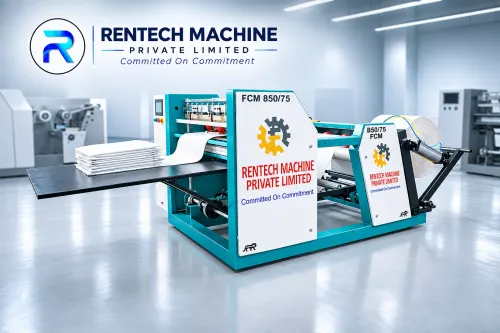
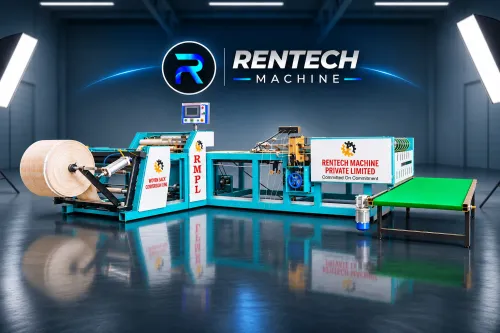
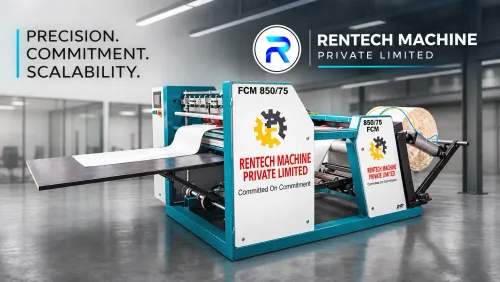
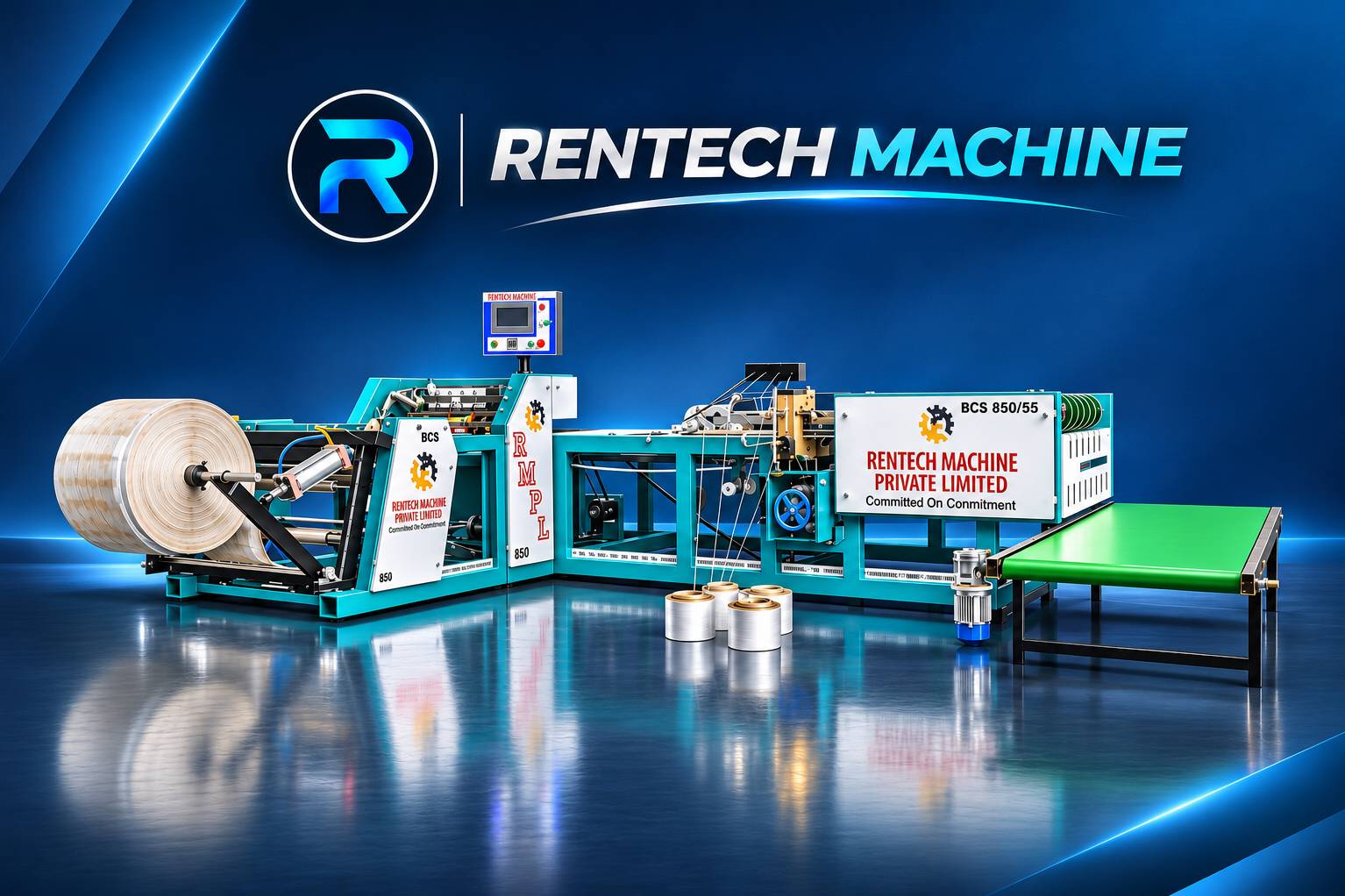
Rentech Machine Private Limited, based in Ahmedabad, Gujarat, India, provides automatic bag cutting and stitching machinery designed to support woven sack manufacturers in improving their bag conversion operations.
Rather than treating cutting and stitching as separate activities, an automatic conversion system brings these processes together into a coordinated manufacturing workflow.
Why Bag Conversion Is a Critical Stage in Woven Sack Manufacturing
A woven bag begins its journey long before it reaches the customer. Polypropylene or HDPE tapes are woven into fabric, which may undergo lamination, printing, or other processing depending on its intended application.
Once the fabric is ready, it must be converted into individual bags.
Although this may appear to be a straightforward operation, several factors determine the quality of the finished product.
An improperly cut bag may create dimensional inconsistencies. Uneven stitching can affect the reliability of the bag closure. Excessive manual handling can introduce variations between production batches.
For manufacturers supplying agricultural businesses, fertilizer companies, chemical industries, and packaging distributors, these inconsistencies may lead to customer complaints, material wastage, or additional inspection requirements.
An automatic cutting and stitching machine helps establish a more controlled and repeatable conversion process.
By coordinating fabric feeding, cutting, stitching, and finished bag handling, manufacturers can improve production discipline while reducing dependence on repetitive manual operations.
Understanding the Journey from Woven Fabric Roll to Finished Bag
The conversion of woven fabric into a finished bag involves several interconnected operations.
The process begins with a woven fabric roll mounted on the machine's unwinding arrangement.
As the fabric enters the conversion section, the feeding mechanism advances it according to the selected bag length.
The cutting system separates the required fabric section, preparing it for the next stage of conversion.
Depending on the machine configuration and bag construction, the cut material is transferred toward the stitching section, where the required bag closure is formed.
The completed bags are subsequently discharged through the output arrangement for collection, inspection, bundling, or further processing.
The effectiveness of this workflow depends not only on the individual components but also on how accurately the various operations work together.
A properly coordinated conversion line helps maintain consistent fabric movement and reduces interruptions between successive operations.
The Importance of Consistent Bag Dimensions in Commercial Packaging
Bag dimensions influence several aspects of packaging performance.
For agricultural products, appropriate bag dimensions support filling, stacking, transportation, and storage.
In industrial packaging, dimensional consistency is particularly important when bags are used with automatic filling and handling equipment.
Even relatively small variations in bag length can create difficulties during subsequent packaging operations.
An automatic woven bag cutting machine uses a controlled feeding arrangement to help maintain repeatable cutting lengths.
This allows manufacturers to produce bags according to the dimensional requirements of their customers.
However, cutting accuracy also depends on fabric tension, material condition, feeding stability, machine setup, and maintenance.
For this reason, selecting a machine should involve evaluating the complete conversion process rather than focusing exclusively on cutting speed.
Why Stitching Quality Matters Beyond Bag Appearance
The stitching operation is one of the most important stages in woven bag conversion.
A bag may have accurate dimensions and an attractive printed surface, but an unreliable stitched closure can compromise its practical usefulness.
Stitching quality affects the integrity of the bag during filling, handling, transportation, and storage.
Factors such as thread quality, needle condition, stitch formation, fabric alignment, and sewing-machine adjustment all influence the finished result.
An automatic cutting and stitching system helps manufacturers establish a more repeatable stitching process.
When correctly configured, the machine can reduce variations associated with repeated manual positioning and handling.
Nevertheless, the finished bag must still be evaluated against its intended application.
For example, bags used for agricultural produce may have different closure requirements from bags intended for fertilizers, chemicals, or industrial raw materials.
Manufacturers should therefore assess both the machine's stitching arrangement and the actual performance of sample bags.
How Automation Changes the Economics of Woven Bag Production
The financial value of automation extends beyond producing more bags in less time.
In a conventional production arrangement, multiple operators may be involved in feeding fabric, measuring lengths, cutting material, transferring pieces, stitching closures, and collecting finished bags.
Each additional handling stage introduces potential delays and variations.
An automatic woven bag conversion machine integrates several of these operations, allowing manufacturers to organize production around a more continuous process.
This can create opportunities to reduce repetitive manual handling, improve labor allocation, and establish more predictable production schedules.
Automation may also help reduce avoidable material waste caused by inconsistent cutting or handling errors.
However, actual savings depend on production volume, material quality, labor costs, equipment utilization, and the existing manufacturing process.
A realistic investment assessment should consider total conversion cost per bag rather than machine purchase price alone.
The Relationship Between Fabric Quality and Machine Performance
One aspect of automatic bag conversion that is frequently overlooked is the quality of the incoming woven fabric.
Even a well-designed machine may experience inconsistent operation when the fabric roll has significant tension variations, irregular winding, excessive wrinkles, or inconsistent material characteristics.
Fabric alignment is particularly important because the material must travel through the feeding and cutting sections in a controlled manner.
Irregular fabric movement may affect cutting consistency and subsequent stitching alignment.
Similarly, variations in lamination, fabric stiffness, or surface friction can influence how the material behaves during conversion.
For manufacturers processing PP, HDPE, Leno, or BOPP-related woven packaging materials, compatibility should be confirmed according to the actual fabric construction and machine configuration.
At Rentech Machine Private Limited, understanding the customer's material and finished bag requirements is an important part of selecting a suitable conversion solution.
Why Machine Synchronization Matters in Automatic Bag Conversion
In an automatic cutting and stitching system, multiple mechanical and electrical operations must work in sequence.
Fabric feeding must correspond with the required bag length.
The cutting operation must take place at the appropriate stage of the cycle.
The material must then move toward the stitching arrangement without creating unnecessary misalignment or interruption.
Finally, finished bag discharge must be coordinated with the next conversion cycle.
This synchronization is fundamental to stable machine operation.
If one section operates inconsistently, the resulting disturbance can affect the entire production sequence.
For example, unstable fabric feeding may create cutting variations, while incorrect transfer alignment may influence stitching quality.
A well-integrated automatic conversion system is therefore designed around the relationship between feeding, cutting, sewing, and discharge rather than treating each mechanism as an isolated component.
Reducing Production Interruptions Through Better Operating Practices
Automation improves process control, but successful production still requires proper operating practices.
Machine operators should understand the relationship between fabric characteristics, feeding adjustments, cutting conditions, and stitching performance.
Routine inspection of the fabric path can help identify alignment issues before they affect finished bag quality.
Likewise, regular maintenance of cutting components, stitching mechanisms, drive systems, and material-handling assemblies supports reliable operation.
Thread selection and needle maintenance deserve particular attention because they directly influence seam formation.
Manufacturers should also establish procedures for inspecting finished bags during production.
These checks may include bag dimensions, cut-edge condition, stitch formation, seam alignment, and overall appearance.
The objective is not simply to identify defective bags after production but to detect process variations early enough to prevent repeated defects.
Applications of Automatic Woven Bag Cutting and Stitching Machines
Automatic woven bag conversion equipment supports packaging manufacturers serving a wide variety of industries.
Agricultural Packaging
Woven bags are widely used for products such as grains, seeds, rice, animal feed, and other agricultural commodities. Consistent bag dimensions and reliable closures support efficient packaging and distribution.
Fertilizer Packaging
Fertilizer manufacturers require packaging suitable for handling and transportation. Properly converted woven sacks help support downstream filling and packing operations.
Chemical and Industrial Packaging
Woven bags are used for selected powdered, granular, and industrial materials. Bag construction must be chosen according to the product's properties and applicable packaging requirements.
Food Grain Packaging
Rice, wheat, pulses, and other dry commodities are commonly packed in woven sacks. Repeatable bag conversion can support large-volume packaging operations.
Vegetable and Produce Packaging
Leno woven bags are commonly used for produce such as onions and potatoes because their open-mesh structure provides ventilation. Suitable cutting and stitching arrangements depend on the Leno fabric and bag design.
BOPP Laminated Woven Packaging
BOPP laminated woven bags are frequently selected where attractive printed packaging and woven fabric strength are required. Their conversion may require particular attention to material handling, surface condition, and cutting method.
Choosing the Right Automatic Bag Conversion Machine for Your Factory
Every woven sack manufacturing business has different production requirements.
A manufacturer supplying agricultural bags may prioritize flexible bag sizes and dependable daily operation.
A business supplying printed laminated sacks may place greater emphasis on material handling and finished bag appearance.
An established high-volume factory may require an automatic conversion system that can be integrated into its existing production arrangement.
Before investing, manufacturers should evaluate the type of woven fabric, required bag construction, production expectations, available factory space, and operator capabilities.
It is equally important to examine after-sales support, spare parts availability, maintenance requirements, and technical assistance.
A machine should be evaluated based on its suitability for the manufacturer's actual operating conditions rather than advertised production speed alone.
Rentech Machine Private Limited: Supporting the Next Stage of Woven Packaging Manufacturing
Rentech Machine Private Limited is an Ahmedabad-based manufacturer and supplier of woven bag processing machinery.
The company focuses on machinery solutions for manufacturers involved in PP woven sacks, HDPE woven bags, Leno packaging, and related woven packaging applications.
Its product portfolio includes automatic bag cutting and stitching machinery and flexographic printing equipment.
Rentech's approach emphasizes understanding the customer's production requirements before recommending an appropriate machine configuration.
This includes discussing fabric type, finished bag dimensions, required operations, and intended production applications.
For woven sack manufacturers considering automation, these discussions help establish whether a proposed machine is technically suitable for their manufacturing process.
The objective is to help customers develop more organized, consistent, and efficient bag conversion operations.
Frequently Asked Questions About Automatic Woven Bag Cutting and Stitching Machines
What is an automatic woven bag cutting and stitching machine?
An automatic woven bag cutting and stitching machine is industrial equipment used to convert woven fabric into individual bags by coordinating fabric feeding, cutting, and sewing operations. Depending on its configuration, it can perform these processes within an integrated production workflow.
Can one machine process both PP and HDPE woven bags?
Certain automatic conversion machines can be configured for both PP and HDPE woven fabrics. However, suitability depends on the fabric structure, thickness, lamination, bag design, and machine configuration. Sample material evaluation is recommended before finalizing the equipment.
Is an automatic cutting and stitching machine suitable for Leno bags?
Automatic conversion machinery can be used for Leno bag production when the equipment is designed or configured for the relevant open-mesh fabric. Leno material requires appropriate feeding, cutting, and sewing arrangements to maintain reliable handling.
Can BOPP laminated woven bags be processed automatically?
Yes, suitable automatic conversion systems can process BOPP laminated woven fabric. The required configuration depends on the laminate structure, fabric characteristics, cutting requirements, and finished bag design.
Does automatic stitching eliminate the need for operators?
No. Automation reduces repetitive manual handling, but operators remain necessary for material loading, machine setup, thread replacement, quality inspection, monitoring, and routine maintenance.
What factors affect the quality of stitched woven bags?
Stitching quality depends on fabric alignment, thread selection, needle condition, stitch formation, machine adjustment, and material movement during sewing. Regular inspection and maintenance help maintain consistent results.
How does automatic bag cutting help reduce material waste?
Controlled feeding and repeatable cutting can reduce avoidable dimensional variations. However, actual waste reduction depends on fabric quality, machine adjustment, operator practices, and the stability of the production process.
Can an automatic bag conversion machine handle different bag lengths?
Many automatic conversion systems allow bag-length adjustments within their supported operating range. The available adjustment method and limitations depend on the machine model and control configuration.
Is automatic bag conversion suitable for small and medium manufacturers?
It can be suitable when production demand, labor availability, product consistency requirements, and operating costs justify the investment. Manufacturers should evaluate expected machine utilization and total production economics before purchasing.
Does an automatic cutting and stitching machine also print woven bags?
A standard cutting and stitching machine does not necessarily include printing. Printing is generally performed using separate flexographic printing equipment or an appropriately integrated system.
How can manufacturers improve the working life of an automatic bag conversion machine?
Routine preventive maintenance, correct machine settings, proper lubrication where specified, timely replacement of wear components, and trained operation help maintain equipment reliability.
Why is fabric roll quality important in automatic bag conversion?
Poor roll winding, irregular tension, wrinkles, and inconsistent fabric properties can interfere with feeding and alignment. Good incoming material quality supports more stable conversion and consistent finished bags.
What should a buyer check before ordering an automatic woven bag cutting and stitching machine?
Buyers should confirm fabric compatibility, bag construction requirements, expected production volume, machine configuration, sample bag quality, utility requirements, service support, and spare parts availability.
Where can I find an automatic woven bag cutting and stitching machine manufacturer in India?
Rentech Machine Private Limited, located in Ahmedabad, Gujarat, India, manufactures and supplies automatic woven bag cutting and stitching machinery for PP, HDPE, Leno, and related woven packaging applications, subject to the selected machine configuration.
Building a More Reliable Woven Bag Conversion Process
The competitiveness of a woven sack manufacturing business depends on more than the quantity of fabric it produces.
Finished bag quality, dimensional consistency, operational efficiency, and reliable delivery are equally important.
An automatic woven bag cutting and stitching machine helps manufacturers approach these requirements through a more coordinated conversion process.
By integrating fabric feeding, cutting, stitching, and finished bag handling, automation can support better production consistency and more efficient use of manufacturing resources.
For businesses planning to expand woven sack production or modernize existing conversion operations, selecting the right equipment is an important long-term decision.
Rentech Machine Private Limited offers automatic woven bag conversion machinery for manufacturers seeking suitable solutions for their packaging operations.
Contact Rentech Machine Private Limited
Manufacturer and Supplier of Woven Bag Cutting, Stitching and Printing Machinery
Location: Ahmedabad, Gujarat, India
Website: https://rentechmachine.com