

Automatic Cutting Machine for PP Leno, BOPP and HDPE Woven Fabrics: A Smarter Approach to Bag Manufacturing
In the woven packaging industry, cutting accuracy and production consistency play an important role in the quality of the finished bag. Manufacturers working with PP Leno, BOPP-laminated woven fabric, and HDPE woven materials need a cutting process that supports their production requirements while maintaining uniformity across batches.
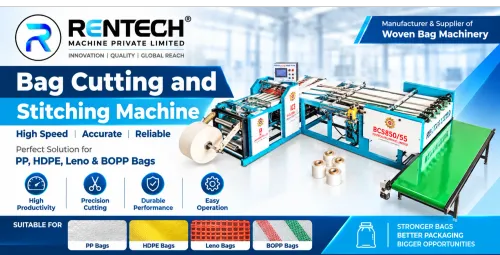
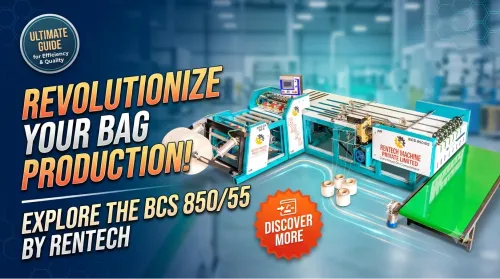
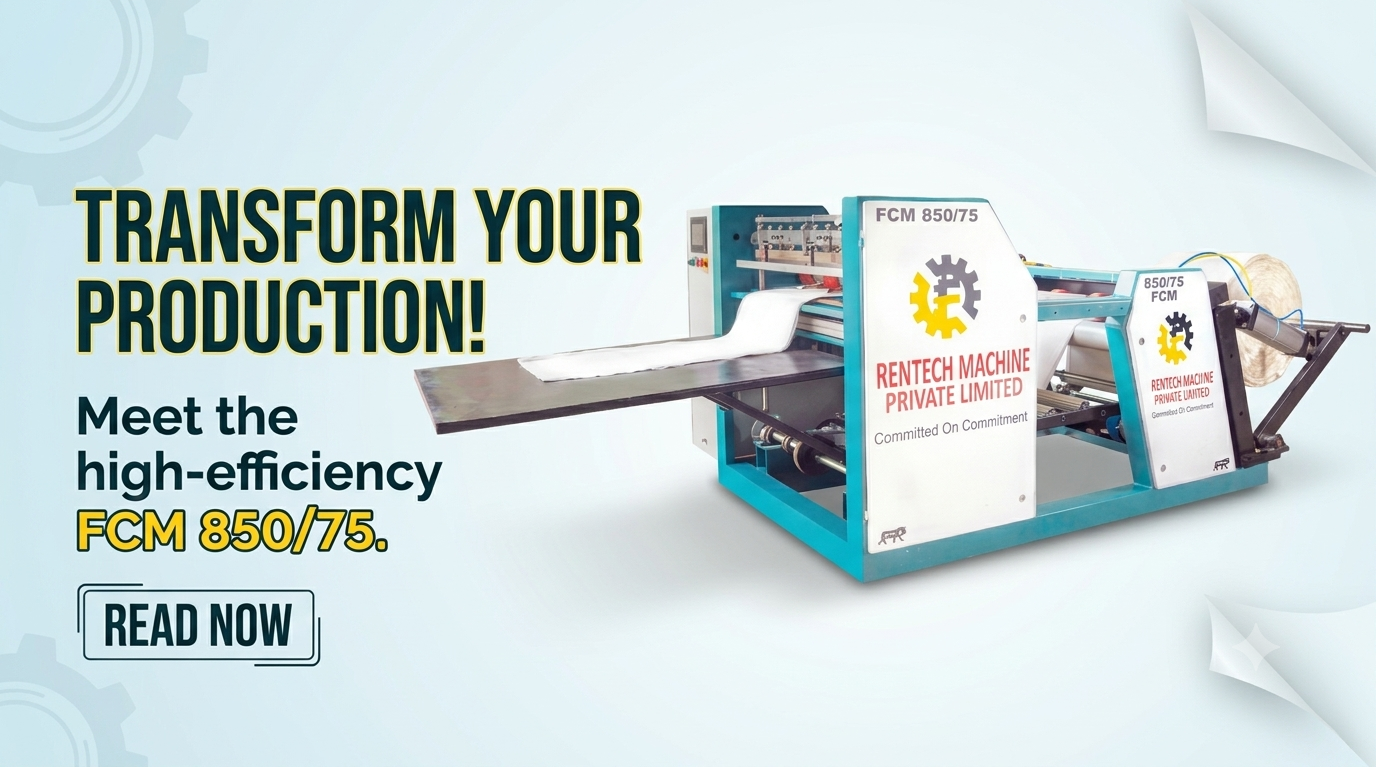
An automatic cutting machine for PP Leno, BOPP and HDPE woven fabrics helps manufacturers streamline fabric cutting, reduce repetitive manual operations, and prepare material for subsequent bag-making processes. Instead of depending entirely on manual measurement and cutting, manufacturers can adopt an organised cutting workflow that improves consistency and supports more efficient production planning.
Rentech Machine Private Limited serves the industrial packaging machinery sector with a focus on machinery for woven bag manufacturing. For manufacturers looking to improve their fabric preparation process, automatic cutting technology offers an opportunity to modernise operations and establish a more consistent production system.
Understanding the Different Fabric Requirements
Not all woven packaging materials behave in the same way during cutting. Their surface characteristics, construction, thickness, coating, and intended application can influence how the material should be handled.
1. Automatic Cutting for PP Leno Fabric
PP Leno fabric is widely used in packaging applications that require ventilation and visibility. It is commonly associated with agricultural products, including onions, potatoes, fruits, and vegetables.
Because PP Leno fabric has an open mesh construction, cutting operations must be planned carefully to achieve the required dimensions without unnecessarily disturbing the woven structure. Consistent fabric positioning and appropriate cutting arrangements help manufacturers prepare bag sections for further stitching or conversion.
An automatic cutting machine suitable for the intended PP Leno construction can help manufacturers organise repetitive cutting tasks, maintain repeatability, and reduce dependence on manual marking.
2. Automatic Cutting for BOPP-Laminated Woven Fabric
BOPP-laminated woven bags are commonly used for packaging products such as rice, flour, animal feed, fertilisers, and other industrial or agricultural materials. Their printed outer surface supports product branding, graphics, and product information.
For these bags, cutting accuracy is important not only for the overall dimensions but also for the appearance of the finished package. Incorrect positioning or inconsistent cutting may affect the relationship between printed artwork, bag edges, and downstream stitching operations.
A suitable automatic cutting arrangement can help manufacturers maintain a more repeatable cutting process. Material alignment, print positioning, lamination characteristics, and the intended bag design should be considered when selecting the machine.
3. Automatic Cutting for HDPE Woven Fabric
HDPE woven fabric is used in a range of packaging and industrial applications where woven construction is required. Depending on the product design, the material may be converted into bags, liners, covers, or other packaging components.
During cutting, manufacturers must consider fabric stability, edge quality, and compatibility with the next production stage. The cutting method should suit the particular material construction and the required finished dimensions.
An automatic cutting machine designed or configured for the relevant HDPE woven material can help create a more organised production workflow and improve consistency across repeated orders.
Why Automatic Cutting Is Becoming Important in Woven Bag Manufacturing
As packaging customers demand reliable dimensions, consistent appearance, and timely order fulfilment, manufacturers need to examine the efficiency of every stage in their production process.
Manual cutting can remain useful for prototypes, small quantities, and special-purpose jobs. However, repetitive production may create challenges involving measurement, operator fatigue, material handling, and variation between batches.
Automatic cutting can help address these challenges through a more structured and repeatable process.
Consistency Across Production Batches
When the same bag size is produced repeatedly, maintaining consistent dimensions becomes essential. Variation in the cut material can create difficulties during stitching, hemming, printing-related operations, or final bag assembly.
An appropriate automatic cutting setup helps standardise repetitive operations and supports more consistent preparation of fabric sections.
Reduced Dependence on Repetitive Manual Work
Manual measurement and cutting require repeated operator involvement. As order quantities increase, these activities can consume valuable production time.
Automation can reduce some repetitive tasks and allow operators to focus on material inspection, machine supervision, quality checks, and production coordination. Actual labour savings depend on the existing process, machine configuration, and operating practices.
Better Production Planning
A consistent cutting process makes it easier to organise fabric preparation according to production orders. Manufacturers can plan cutting jobs around bag sizes, material types, customer requirements, and the next stage of manufacturing.
This can help reduce workflow interruptions and improve coordination between cutting and bag conversion operations.
Improved Material Utilisation
Fabric waste can increase when measurements are inconsistent, material is incorrectly positioned, or cutting mistakes require components to be rejected.
Automatic cutting does not eliminate waste, but a well-planned process can help reduce avoidable errors. Manufacturers should review cutting layouts, roll handling, edge allowances, and actual material consumption to identify opportunities for improvement.
How Automatic Cutting Fits into the Bag Manufacturing Workflow
Automatic cutting is most effective when it is considered as part of the complete manufacturing process rather than as an isolated operation.
A typical workflow may include the following stages:
Fabric preparation: The required PP Leno, BOPP-laminated, or HDPE woven material is selected and checked for visible defects, roll condition, and suitability for the intended product.
Material positioning and feeding: The fabric is positioned and fed according to the machine's design. Proper alignment is important for achieving repeatable cut dimensions.
Cutting operation: The machine cuts the material to the required length or format using the cutting arrangement appropriate to its configuration.
Cut-piece inspection: Operators check dimensions, edge condition, and visible defects. Printed or laminated materials may require additional attention to alignment and surface appearance.
Downstream bag conversion: The prepared material moves to the relevant operations, such as stitching, hemming, printing-related processes, or other bag-making stages required by the product design.
The precise workflow depends on the machine model and the manufacturing application. Manufacturers should confirm whether a proposed machine is intended for roll-fed cutting, programmed-length cutting, cut-to-length production, or another specific operation.
Choosing a Cutting Solution for Different Packaging Applications
Selecting an automatic cutting machine requires more than identifying the fabric type. The intended product and the production environment should also be considered.
For Agricultural Packaging
Manufacturers producing PP Leno bags for vegetables and other agricultural products should evaluate the mesh construction, required bag length, fabric stability, and compatibility with subsequent stitching.
For Printed Packaging Bags
Manufacturers producing BOPP-laminated bags should consider the relationship between cutting accuracy and printed design placement. Where the artwork must align with bag edges or other features, the material feeding and registration arrangements deserve particular attention.
For Industrial and General-Purpose Woven Bags
Manufacturers processing HDPE woven materials should assess the fabric construction, required cut dimensions, edge requirements, and the next manufacturing operation.
For Mixed-Product Manufacturing Facilities
Some facilities process several woven materials or manufacture multiple bag sizes. In these cases, changeover arrangements, adjustment requirements, ease of operation, and suitability for the full range of intended materials should be reviewed before purchasing equipment.
A machine suitable for one material or production method should not automatically be assumed to be suitable for every type of PP Leno, BOPP-laminated, or HDPE woven fabric. Material samples and representative production trials can help establish compatibility.
Common Cutting Problems and How Manufacturers Can Address Them
Uneven Cut Lengths
Inconsistent lengths may result from feeding variation, inaccurate setup, material movement, or an unsuitable cutting arrangement.
Manufacturers should verify material alignment, feeding consistency, machine settings, and measurement procedures before increasing production volume.
Fabric Shifting During Cutting
Material movement can affect dimensions and edge quality. Appropriate fabric support, feeding arrangements, tension management, and operator practices can help reduce shifting.
Poor Edge Quality
Edge quality depends on the fabric construction and the cutting method. Some materials may require a cutting arrangement that controls fraying or edge distortion more effectively.
The correct approach should be confirmed using the actual material rather than assumed from its general category.
Inconsistent Results Between Operators
Different manual practices can lead to variation in measurement, positioning, and handling. Standard operating procedures, operator training, and consistent inspection methods can improve repeatability.
Unnecessary Material Waste
Manufacturers should investigate incorrect measurements, damaged fabric, poorly planned cutting sequences, and rejected pieces. Recording the reasons for waste provides a clearer basis for process improvement.
What Manufacturers Should Check Before Investing in an Automatic Cutting Machine
Before selecting equipment, manufacturers should define the actual production problem they want to solve.
Start by identifying the fabrics to be processed, the range of bag sizes, the required cutting format, and the current production volume. Review the number of operators involved in the existing process and identify where delays, dimensional variation, or material waste occur.
It is also important to confirm the cutting method, material feeding arrangement, changeover requirements, maintenance needs, operator training, and availability of service support.
Where printed BOPP-laminated fabric is involved, evaluate print alignment requirements. For PP Leno fabric, inspect how the mesh construction behaves during feeding and cutting. For HDPE woven fabric, verify that the proposed configuration is suitable for the specific material and finished product.
A practical machine evaluation should use representative material samples and realistic production conditions. Buyers should also clarify the scope of supply, installation requirements, training, warranty, and after-sales support before finalising the purchase.
Supporting More Efficient Production with Rentech Machine Private Limited
Rentech Machine Private Limited operates in the industrial packaging machinery sector, supporting manufacturers seeking solutions for woven bag production.
For businesses evaluating an automatic cutting machine for PP Leno, BOPP-laminated, or HDPE woven fabric, the objective should be to identify a solution that fits the existing manufacturing workflow and the intended product range.
The right selection process begins with a clear understanding of the material, cutting requirements, production volume, and downstream operations. This approach helps manufacturers evaluate equipment based on practical production needs rather than relying on general claims about automation.
Companies interested in upgrading their woven fabric cutting process can discuss their application requirements with Rentech Machine Private Limited to determine the suitability of the available machine configuration.
Conclusion
An automatic cutting machine for PP Leno, BOPP, and HDPE woven fabrics can support more consistent fabric preparation, reduce repetitive manual work, and improve coordination within woven bag manufacturing.
However, successful implementation depends on matching the cutting solution to the material construction, finished bag requirements, production workflow, and quality expectations.
By evaluating these factors before investing, manufacturers can make a more informed decision and establish a cutting process that supports dependable production.
Rentech Machine Private Limited aims to support woven packaging manufacturers in evaluating machinery solutions that meet their operational requirements and production goals.
Frequently Asked Questions (Q&A)
1. What is an automatic cutting machine for woven fabrics?
An automatic cutting machine is equipment used to cut woven fabric into predetermined lengths or formats with reduced dependence on manual cutting. The exact operation depends on the machine design and its intended application.
2. Can an automatic cutting machine process PP Leno fabric?
A suitably configured machine may be used for PP Leno fabric. Compatibility depends on the mesh construction, fabric characteristics, cutting method, and intended product dimensions. Material trials are recommended before purchase.
3. Is automatic cutting suitable for BOPP-laminated woven bags?
Yes, automatic cutting can be suitable for BOPP-laminated woven material when the machine is designed or configured for that application. Manufacturers should verify cutting accuracy, material handling, and print alignment requirements.
4. Can HDPE woven fabric be cut automatically?
HDPE woven fabric can be processed using suitable automatic cutting equipment. The correct machine configuration depends on the material construction, cutting requirements, and the type of product being manufactured.
5. How does automatic cutting help improve production efficiency?
It can reduce repetitive manual measurement and cutting tasks, support repeatability, and help organise fabric preparation. The actual improvement depends on the existing process, production volume, and machine setup.
6. Does an automatic cutting machine eliminate fabric wastage?
No. It may help reduce avoidable waste caused by inconsistent measurements or cutting errors, but waste also depends on fabric quality, cutting plans, handling, and production practices.
7. Can the same machine cut different woven materials?
Some machines may accommodate multiple materials, but compatibility should be verified for each intended fabric type. PP Leno, BOPP-laminated fabric, and HDPE woven fabric may have different handling and cutting requirements.
8. Is automatic cutting useful for small and large bag manufacturers?
It can be useful for manufacturers of different sizes, depending on their production volume, product range, labour requirements, and investment objectives. A cost-benefit assessment can help determine whether automation is appropriate.