

Bag Cutting and Stitching Machine Manufacturer in India | Rentech Machine Private Limited
Product Overview
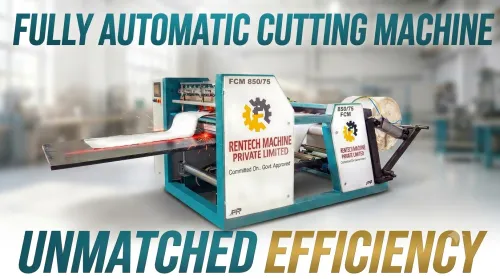
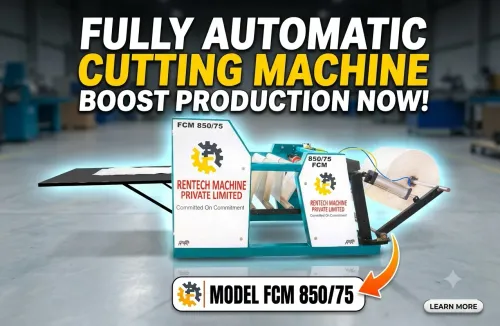
Rentech Machine Private Limited offers Bag Cutting and Stitching Machine solutions for manufacturers involved in PP woven sack production and industrial packaging. The machine is designed to convert compatible woven fabric into individual bags through controlled cutting and stitching operations.
Bag cutting and stitching are important stages in woven sack manufacturing because they influence finished bag dimensions, edge quality, stitching consistency, and production workflow. A suitable machine configuration helps manufacturers standardize these operations according to their production requirements.
Depending on the selected model, the machine can support manual, semi-automatic, or fully automatic operation. It is suitable for businesses producing packaging bags for agricultural commodities, fertilizers, grains, seeds, animal feed, and other compatible industrial applications.
Detailed Product Description
The Bag Cutting and Stitching Machine is intended to process woven fabric rolls into bag blanks of specified lengths and stitch the designated edges according to the required bag construction.
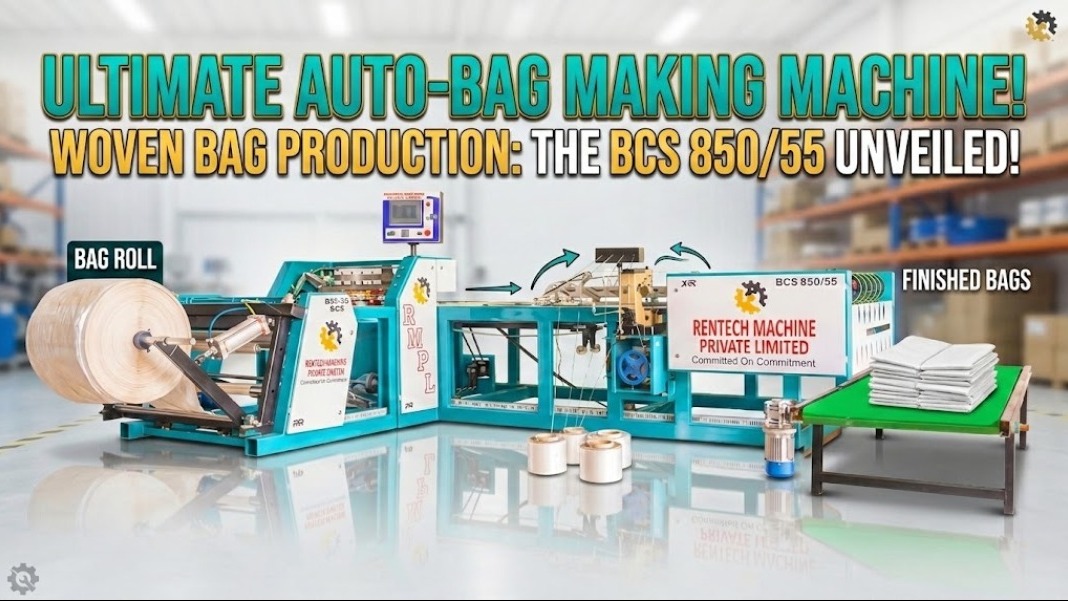
The cutting section separates fabric into individual pieces, while the stitching section sews the required edge using an appropriate industrial sewing arrangement. Depending on the machine design, cutting, feeding, transfer, and stitching may operate as separate stages or as part of an integrated conversion line.
The machine can be considered by manufacturers establishing a new woven bag production facility, expanding an existing manufacturing operation, or upgrading from manual cutting and stitching processes.
The appropriate configuration depends on fabric width, bag length, fabric construction, required production capacity, stitching requirements, and the desired level of automation.
Key Features
1. Controlled Cutting Operation
Designed to cut compatible woven fabric according to specified bag dimensions and configured operating settings.
2. Reliable Stitching Performance
The stitching section is configured to sew the required bag edge. Actual stitch quality depends on the sewing head, thread, needle, fabric characteristics, and machine adjustment.
3. Adjustable Bag Dimensions
Supported bag lengths and fabric widths depend on the selected machine model and its operating range.
4. Production-Oriented Design
Suitable for manufacturing environments requiring repeatable cutting and stitching operations during regular production.
5. Flexible Machine Configuration
Available configuration options depend on the selected model, production target, and required automation level.
6. Reduced Repetitive Manual Work
Automatic configurations can reduce repetitive fabric measuring, cutting, and handling activities.
7. Woven Packaging Applications
Primarily intended for compatible PP woven fabric, with other materials subject to technical confirmation.
8. Integration Possibilities
Depending on the design, the machine may operate independently or be incorporated into an existing bag conversion workflow.
Applications
The Bag Cutting and Stitching Machine can support manufacturing operations for:
PP woven sacks for grains and cereals
Onion and potato packaging bags
Fertilizer packaging sacks
Animal feed bags
Seed packaging bags
Agricultural commodity packaging
Industrial woven sacks
Other compatible woven packaging products
Material compatibility should be confirmed before processing HDPE woven fabric, Leno fabric, or other specialized materials.
Advantages for Bag Manufacturers
Helps maintain consistent bag dimensions
Supports repeatable cutting and stitching operations
Reduces repetitive manual activities when automation is available
Helps organize fabric conversion and material handling
Supports quality inspection and production standardization
Can be selected according to the required production capacity
Offers potential integration with existing manufacturing operations, subject to compatibility
Maintenance and Quality Control
Regular inspection and preventive maintenance are important for dependable machine operation.
Manufacturers should inspect cutting components, monitor fabric alignment, check needle and thread condition, verify stitch quality, and follow the recommended cleaning and lubrication schedule.
After changing bag dimensions or machine settings, inspect initial production samples before continuing with the full production batch. Routine checks help identify dimensional variations and stitching defects at an early stage.
Why Choose Rentech Machine Private Limited?
Rentech Machine Private Limited is an Indian manufacturer and supplier of machinery for woven sack manufacturing and industrial packaging applications.
Our machinery solutions are intended for businesses seeking equipment suited to their fabric specifications, bag dimensions, production targets, and automation requirements.
Before selecting a machine, manufacturers should evaluate technical suitability, operating requirements, maintenance needs, and compatibility with their existing production workflow.
Conclusion
The Bag Cutting and Stitching Machine is an important component of PP woven sack manufacturing. It supports the conversion of woven fabric into finished bags through cutting and stitching operations.
Selecting the correct machine configuration helps manufacturers align production requirements with bag dimensions, material compatibility, quality expectations, and operating conditions.
Frequently Asked Questions (Q&A)
Q1. What is a Bag Cutting and Stitching Machine?
It is industrial machinery used to cut woven fabric into bag blanks and stitch the required edges to manufacture packaging bags.
Q2. Which materials can the machine process?
Compatible PP woven fabric is the primary application. HDPE woven and Leno fabric suitability depends on the selected model and fabric construction.
Q3. Can different bag sizes be manufactured?
Yes, provided the required dimensions fall within the selected model's supported cutting-length and fabric-width ranges.
Q4. What affects the quality of stitching?
Stitch quality depends on the sewing head, needle, thread, fabric characteristics, stitch settings, and maintenance.
Q5. What determines production capacity?
Production capacity depends on bag dimensions, cutting cycle, stitching speed, fabric handling, automation level, and operating conditions.
Q6. Can the machine be integrated into an existing production line?
Integration may be possible after assessing the existing equipment, material transfer arrangements, available space, and required output.
Q7. Is operator training required?
Yes. Operators should understand machine settings, fabric loading, cutting and stitching checks, routine maintenance, and safety procedures.
Q8. What maintenance is required?
Routine maintenance may include cleaning, inspection of cutting components, checking needles and thread paths, lubrication where specified, and inspection of safety devices.
Contact Rentech Machine Private Limited to discuss your bag cutting and stitching requirements, technical specifications, and suitable machine configurations.
Company: Rentech Machine Private Limited
Location: Ahmedabad, Gujarat, India
Website: https://rentechmachine.com