
Ahmedabad
08048031606
+917600133435
FCM-Auto Bag Cutting Machine by Rentech

Auto Cutting Machine for Woven Bags Manufacturer | Rentech

Phone Number

08048031606

Please keep 0 before dialling the number.

Mon-Thu: 10 AM - 2 PM • Fri: 3 PM - 7AM

Address 67, Road No. 1, Gopalcharan Industrial Hub, Bakrol, (Bujrang)

Ahmedabad, Gujarat, India, 382430
Description

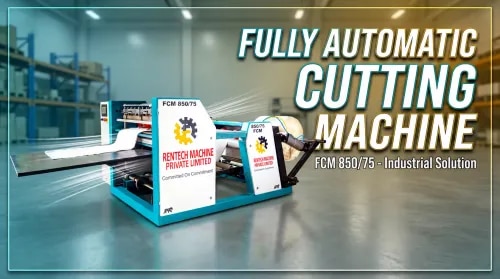
Auto Cutting Machine for Woven Bags – Advanced Fabric Cutting Equipment In modern woven packaging manufacturing, cutting accuracy and production consistency play an important role in achieving uniform bag dimensions and maintaining an organized workflow. Rentech Machine Private Limited offers an Auto Cutting Machine for Woven Bags designed to help manufacturers streamline the cutting of woven fabric for different packaging applications. This machine is intended for businesses that want to improve cutting consistency, reduce repetitive manual operations, and support a more systematic production process. The Auto Cutting Machine for Woven Bags is suitable for applications involving PP woven fabric and other compatible woven materials, subject to the selected machine configuration. It cuts fabric into predetermined lengths required for manufacturing woven sacks, industrial packaging bags, agricultural packaging bags, and other woven fabric products. Automated cutting helps maintain repeatable cutting dimensions and prepares fabric pieces for subsequent operations such as stitching, printing, folding, and finishing. For manufacturers managing regular production orders, a reliable cutting process can make a significant difference to the overall production sequence. When fabric pieces are cut consistently, operators can handle downstream stitching and finishing activities more efficiently. The machine can also help reduce dependence on repetitive hand-cutting work, improve production organization, and support better control over material handling. Designed for Practical Manufacturing Requirements Rentech Machine Private Limited understands that woven bag manufacturers may work with different fabric widths, bag lengths, material constructions, and production volumes. Therefore, selecting an appropriate cutting machine requires consideration of the intended application and the customer's operational requirements. Machine configuration should be evaluated according to the fabric type, cutting dimensions, feeding arrangement, control system, and required production output. An automatic cutting solution can be particularly useful for manufacturers supplying packaging products to agriculture, fertilizers, chemicals, construction materials, food grains, and other industrial sectors. By incorporating a suitable cutting machine into the production line, manufacturers can establish a more consistent process from fabric preparation to finished bag manufacturing. Key Advantages of an Auto Cutting Machine for Woven Bags Consistent cutting dimensions: The machine is intended to support repeatable fabric cutting lengths, helping manufacturers maintain uniformity across production batches. Reduced manual workload: Automation can minimize repetitive manual measuring and cutting activities, allowing operators to focus on monitoring the production process and handling fabric. Improved production workflow: Cut fabric pieces can be transferred to stitching and finishing operations in a more organized manner, supporting better coordination between production stages. Support for packaging applications: Depending on the machine model, it can be configured for suitable woven fabric used in the production of PP woven sacks and other packaging products. Better material management: Accurate length settings and suitable production planning can help reduce avoidable cutting errors and improve fabric utilization. Integration with manufacturing operations: The machine may be incorporated into an existing production arrangement after checking feeding requirements, operating speed, available space, and compatibility with other equipment. Applications Across Woven Packaging Industries The Auto Cutting Machine for Woven Bags can support manufacturers producing PP woven sacks, industrial packaging bags, fertilizer bags, grain bags, seed packaging bags, animal feed bags, and other compatible woven fabric products. The suitability of the machine for a specific application depends on the fabric characteristics and required cutting dimensions. For manufacturers expanding their production capacity or upgrading from manual cutting methods, an appropriately configured automatic cutting machine can help standardize an important stage of the bag-making process. Rentech Machine Private Limited provides machinery solutions for businesses seeking practical equipment for woven bag manufacturing and packaging production. Why Consider Rentech Machine Private Limited? Rentech Machine Private Limited focuses on machinery solutions for woven bag and packaging manufacturers. The company aims to help businesses identify equipment that matches their production requirements, material specifications, and manufacturing workflow. When selecting an Auto Cutting Machine for Woven Bags, buyers should consider more than the initial purchase price. Fabric compatibility, cutting accuracy, ease of adjustment, maintenance requirements, operator safety, and integration with existing equipment are all important factors. Sharing these requirements with the Rentech Machine Private Limited team helps establish a clearer basis for selecting the appropriate machine configuration. For manufacturers looking to improve the consistency and organization of woven fabric cutting, Rentech Machine Private Limited offers a solution worth evaluating for their production setup Frequently Asked Questions (Q&A) Q1. What is an Auto Cutting Machine for Woven Bags used for? An Auto Cutting Machine for Woven Bags is used to cut woven fabric into specified lengths for bag manufacturing. It helps standardize the cutting process and prepares fabric sections for stitching, folding, printing, and other production operations. Q2. Which fabric materials can this machine cut? The machine may be suitable for PP woven fabric and other compatible woven materials, depending on its design and cutting mechanism. Material thickness, weave construction, coating, and fabric properties should be confirmed before ordering. Q3. How does an automatic cutting machine help manufacturers? It can reduce repetitive manual cutting work, improve consistency between fabric pieces, and support a more organized production workflow. The actual improvement depends on the machine configuration, operator practices, and production conditions. Q4. Can the cutting length be selected according to the required bag size? The available cutting-length adjustment depends on the selected model and control system. Buyers should provide their required bag length and fabric specifications to confirm compatibility. Q5. Is the machine suitable for PP woven sack production? An appropriately configured machine can be used in PP woven sack manufacturing to prepare fabric sections before stitching and finishing. The exact application should be verified against the model's technical capabilities. Q6. Does automatic cutting help reduce material wastage? Consistent cutting lengths and proper fabric planning can help reduce avoidable cutting mistakes. Material savings depend on fabric alignment, cutting settings, production planning, and the dimensions of the finished bags. Q7. What should buyers check before purchasing this machine? Buyers should evaluate fabric width, required cutting length, material type, desired production capacity, cutting accuracy, feeding arrangement, control system, power supply, safety provisions, and maintenance requirements. Q8. Can the machine be connected to an existing woven bag production line? Integration may be possible after evaluating the existing equipment, fabric feeding arrangement, available floor space, and operating requirements. The final setup should be confirmed with the machine supplier. Q9. Which industries can benefit from this cutting equipment? Potential users include woven bag manufacturers serving agriculture, fertilizer, grain storage, animal feed, construction materials, chemicals, and industrial packaging markets, provided the fabric is compatible with the machine. Auto Cutting Machine for Woven Bags Choosing the right Auto Cutting Machine for Woven Bags is an important step toward improving production consistency, material handling, and overall manufacturing efficiency. Rentech Machine Private Limited provides machinery solutions designed to meet the evolving requirements of woven bag manufacturers and industrial packaging businesses. With a focus on practical production needs, the machine helps streamline woven fabric cutting and supports the preparation of uniform fabric sections for subsequent stitching and finishing operations. Whether you manufacture PP woven sacks, fertilizer bags, grain bags, agricultural packaging bags, or industrial packaging products, selecting a suitable automatic cutting solution can help establish a more organized production workflow. Contact Rentech Machine Private Limited to discuss your fabric specifications, required cutting dimensions, and production requirements to identify a suitable machine configuration for your business.

Specifications

Machine Name Auto Cutting Machine for Woven Bags
Machine Type Automatic Fabric Cutting Machine
Manufacturer Rentech Machine Private Limited
Primary Application Woven Bag and Woven Sack Manufacturing
Suitable Material PP Woven Fabric

Other Products

view all

6814772a5d263414004dd4a4 Card 2

product image
FCM-Auto Bag Cutting Machine

Auto Cutting Machine for Woven Bags – Advanced Fabric Cutting Equipment In modern woven packaging manufacturing, cutting accuracy and production consistency play an important role in achieving uniform bag dimensions and maintaining an organized workflow. Rentech Machine Private Limited offers an Auto Cutting Machine for Woven Bags designed to help manufacturers streamline the cutting of woven fabric for different packaging applications. This machine is intended for businesses that want to improve cutting consistency, reduce repetitive manual operations, and support a more systematic production process. The Auto Cutting Machine for Woven Bags is suitable for applications involving PP woven fabric and other compatible woven materials, subject to the selected machine configuration. It cuts fabric into predetermined lengths required for manufacturing woven sacks, industrial packaging bags, agricultural packaging bags, and other woven fabric products. Automated cutting helps maintain repeatable cutting dimensions and prepares fabric pieces for subsequent operations such as stitching, printing, folding, and finishing. For manufacturers managing regular production orders, a reliable cutting process can make a significant difference to the overall production sequence. When fabric pieces are cut consistently, operators can handle downstream stitching and finishing activities more efficiently. The machine can also help reduce dependence on repetitive hand-cutting work, improve production organization, and support better control over material handling. Designed for Practical Manufacturing Requirements Rentech Machine Private Limited understands that woven bag manufacturers may work with different fabric widths, bag lengths, material constructions, and production volumes. Therefore, selecting an appropriate cutting machine requires consideration of the intended application and the customer's operational requirements. Machine configuration should be evaluated according to the fabric type, cutting dimensions, feeding arrangement, control system, and required production output. An automatic cutting solution can be particularly useful for manufacturers supplying packaging products to agriculture, fertilizers, chemicals, construction materials, food grains, and other industrial sectors. By incorporating a suitable cutting machine into the production line, manufacturers can establish a more consistent process from fabric preparation to finished bag manufacturing. Key Advantages of an Auto Cutting Machine for Woven Bags Consistent cutting dimensions: The machine is intended to support repeatable fabric cutting lengths, helping manufacturers maintain uniformity across production batches. Reduced manual workload: Automation can minimize repetitive manual measuring and cutting activities, allowing operators to focus on monitoring the production process and handling fabric. Improved production workflow: Cut fabric pieces can be transferred to stitching and finishing operations in a more organized manner, supporting better coordination between production stages. Support for packaging applications: Depending on the machine model, it can be configured for suitable woven fabric used in the production of PP woven sacks and other packaging products. Better material management: Accurate length settings and suitable production planning can help reduce avoidable cutting errors and improve fabric utilization. Integration with manufacturing operations: The machine may be incorporated into an existing production arrangement after checking feeding requirements, operating speed, available space, and compatibility with other equipment. Applications Across Woven Packaging Industries The Auto Cutting Machine for Woven Bags can support manufacturers producing PP woven sacks, industrial packaging bags, fertilizer bags, grain bags, seed packaging bags, animal feed bags, and other compatible woven fabric products. The suitability of the machine for a specific application depends on the fabric characteristics and required cutting dimensions. For manufacturers expanding their production capacity or upgrading from manual cutting methods, an appropriately configured automatic cutting machine can help standardize an important stage of the bag-making process. Rentech Machine Private Limited provides machinery solutions for businesses seeking practical equipment for woven bag manufacturing and packaging production. Why Consider Rentech Machine Private Limited? Rentech Machine Private Limited focuses on machinery solutions for woven bag and packaging manufacturers. The company aims to help businesses identify equipment that matches their production requirements, material specifications, and manufacturing workflow. When selecting an Auto Cutting Machine for Woven Bags, buyers should consider more than the initial purchase price. Fabric compatibility, cutting accuracy, ease of adjustment, maintenance requirements, operator safety, and integration with existing equipment are all important factors. Sharing these requirements with the Rentech Machine Private Limited team helps establish a clearer basis for selecting the appropriate machine configuration. For manufacturers looking to improve the consistency and organization of woven fabric cutting, Rentech Machine Private Limited offers a solution worth evaluating for their production setup Frequently Asked Questions (Q&A) Q1. What is an Auto Cutting Machine for Woven Bags used for? An Auto Cutting Machine for Woven Bags is used to cut woven fabric into specified lengths for bag manufacturing. It helps standardize the cutting process and prepares fabric sections for stitching, folding, printing, and other production operations. Q2. Which fabric materials can this machine cut? The machine may be suitable for PP woven fabric and other compatible woven materials, depending on its design and cutting mechanism. Material thickness, weave construction, coating, and fabric properties should be confirmed before ordering. Q3. How does an automatic cutting machine help manufacturers? It can reduce repetitive manual cutting work, improve consistency between fabric pieces, and support a more organized production workflow. The actual improvement depends on the machine configuration, operator practices, and production conditions. Q4. Can the cutting length be selected according to the required bag size? The available cutting-length adjustment depends on the selected model and control system. Buyers should provide their required bag length and fabric specifications to confirm compatibility. Q5. Is the machine suitable for PP woven sack production? An appropriately configured machine can be used in PP woven sack manufacturing to prepare fabric sections before stitching and finishing. The exact application should be verified against the model's technical capabilities. Q6. Does automatic cutting help reduce material wastage? Consistent cutting lengths and proper fabric planning can help reduce avoidable cutting mistakes. Material savings depend on fabric alignment, cutting settings, production planning, and the dimensions of the finished bags. Q7. What should buyers check before purchasing this machine? Buyers should evaluate fabric width, required cutting length, material type, desired production capacity, cutting accuracy, feeding arrangement, control system, power supply, safety provisions, and maintenance requirements. Q8. Can the machine be connected to an existing woven bag production line? Integration may be possible after evaluating the existing equipment, fabric feeding arrangement, available floor space, and operating requirements. The final setup should be confirmed with the machine supplier. Q9. Which industries can benefit from this cutting equipment? Potential users include woven bag manufacturers serving agriculture, fertilizer, grain storage, animal feed, construction materials, chemicals, and industrial packaging markets, provided the fabric is compatible with the machine. Auto Cutting Machine for Woven Bags Choosing the right Auto Cutting Machine for Woven Bags is an important step toward improving production consistency, material handling, and overall manufacturing efficiency. Rentech Machine Private Limited provides machinery solutions designed to meet the evolving requirements of woven bag manufacturers and industrial packaging businesses. With a focus on practical production needs, the machine helps streamline woven fabric cutting and supports the preparation of uniform fabric sections for subsequent stitching and finishing operations. Whether you manufacture PP woven sacks, fertilizer bags, grain bags, agricultural packaging bags, or industrial packaging products, selecting a suitable automatic cutting solution can help establish a more organized production workflow. Contact Rentech Machine Private Limited to discuss your fabric specifications, required cutting dimensions, and production requirements to identify a suitable machine configuration for your business.

6814772a5d263414004dd4a4 Card 2

product image
Bag Conversion Line

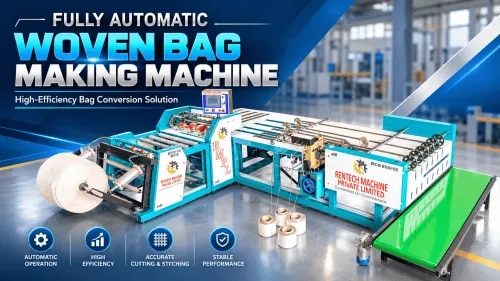
Automatic Woven Bag Making Machine Manufacturer in India – Rentech Machine Private Limited In the modern packaging industry, manufacturing woven bags requires consistent dimensions, reliable stitching, efficient material handling, and high production output. An automatic woven bag making machine helps manufacturers streamline bag conversion operations by reducing repetitive manual work and improving production consistency. Rentech Machine Private Limited is a manufacturer and supplier of woven bag conversion machinery based in Ahmedabad, Gujarat, India. Our automatic woven bag making machine solutions are designed for businesses involved in PP woven sacks, HDPE woven bags, and other compatible woven packaging products, depending on the machine configuration. The machine can be configured to perform key bag conversion operations, including fabric feeding, length measurement, cutting, and stitching. Depending on the selected model and production requirements, additional features can be incorporated to improve material handling, operational convenience, and production efficiency. Designed for packaging manufacturers, industrial bag producers, and woven sack conversion units, Rentech machinery supports businesses seeking a more organized and scalable manufacturing process. Automation helps maintain repeatable bag lengths, reduces dependence on manual handling, and supports consistent production when the machine is correctly configured and maintained. Whether you are expanding an existing woven sack manufacturing facility or establishing a new bag conversion unit, selecting the right machinery is an important step toward improving productivity and meeting customer requirements. Key Features of the Automatic Woven Bag Making Machine Automated Bag Conversion Process The machine integrates selected bag conversion operations into a coordinated workflow, helping reduce manual intervention during regular production. Consistent Cutting Accuracy A controlled cutting mechanism helps produce bags with repeatable lengths. Actual cutting accuracy depends on the machine configuration, fabric characteristics, and operating conditions. Reliable Stitching Performance The stitching section is designed to produce consistent seams suitable for compatible woven sack applications. Stitch type and sewing configuration can be selected according to customer requirements. Efficient Fabric Handling The fabric feeding arrangement supports continuous and controlled movement of woven material through the conversion process. Production Flexibility Depending on the model, the machine can be configured for different bag lengths, fabric widths, and production requirements. Reduced Manual Work Automation can reduce repetitive handling, improve workflow organization, and help manufacturers utilize their workforce more efficiently. Industrial Construction The machine is designed for industrial production environments, with configuration and components selected according to the intended application and operating requirements. Customization Options Rentech can discuss machine configurations based on fabric type, bag dimensions, desired output, stitching requirements, and available factory space. Applications of the Machine The automatic woven bag making machine is suitable for manufacturers converting compatible woven fabrics into finished bags for packaging and transportation. - PP woven bags for industrial packaging - HDPE woven sacks - Woven bags for agricultural products - Grain and feed packaging bags - Fertilizer packaging sacks - Sugar and other commodity packaging - Industrial raw material packaging - Laminated and unlaminated woven sacks, subject to the selected configuration - Selected BOPP-laminated woven bag applications, subject to material and process compatibility Note: The final suitability of laminated, coated, printed, or specialty fabrics should be confirmed before ordering. How the Automatic Woven Bag Making Machine Works The machine converts woven fabric into bags through a sequence of coordinated operations. 1. Fabric loading: The woven fabric roll or prepared fabric is positioned according to the selected machine design. 2. Fabric feeding: The feeding mechanism advances the material through the machine. 3. Length measurement: The required bag length is set through the machine's available control system. 4. Automatic cutting: The cutting unit separates the fabric into individual bag blanks at the selected length. 5. Stitching operation: Where an integrated stitching unit is provided, the designated edge is stitched according to the bag design. 6. Collection and inspection: Finished bags are collected and inspected for dimensions, stitching quality, and overall consistency. The precise operating sequence depends on whether the selected machine is a cutting-and-stitching model, a complete conversion line, or another machine configuration. Why Choose Rentech Machine Private Limited? Choosing suitable machinery involves more than comparing the initial purchase price. Manufacturers must consider production requirements, material compatibility, operator convenience, maintenance, and long-term operating costs. Rentech Machine Private Limited works with customers to identify appropriate woven bag conversion solutions based on their intended production applications. Reasons to consider Rentech: - Machinery solutions for woven bag cutting, stitching, and conversion applications. - Configurations tailored to production requirements and bag specifications. - Technical discussions before finalizing the machine model. - Options for manufacturers planning to expand their production capacity. - Support in identifying suitable machinery for PP and HDPE woven sack applications. - Manufacturer-based communication for quotations, specifications, and project requirements. Our objective is to help packaging manufacturers establish a practical, efficient, and scalable bag conversion process. Frequently Asked Questions (Q&A) Q1. What is an automatic woven bag making machine? An automatic woven bag making machine is industrial equipment used to convert compatible woven fabric into finished bags through operations such as feeding, measuring, cutting, and stitching, depending on the machine model. Q2. Which materials can be processed on this machine? The machine can be configured for PP woven and HDPE woven fabrics. Laminated, coated, printed, or BOPP-laminated materials should be checked for compatibility with the selected machine. Q3. Can the machine manufacture bags of different sizes? Yes. Bag lengths and other dimensions can generally be adjusted within the operating range of the selected model. Maximum fabric width, minimum bag length, and other limitations should be confirmed before ordering. Q4. What is the production capacity of an automatic woven bag making machine? Production capacity depends on the machine model, bag dimensions, material properties, cutting cycle, stitching arrangement, operator workflow, and required quality standards. Contact Rentech Machine Private Limited for the applicable output specification. Q5. Does the machine include both cutting and stitching? Some configurations combine automatic cutting and stitching, while others perform only selected conversion operations. The required functions should be specified when requesting a quotation. Q6. Can the machine process laminated woven fabric? Certain configurations can process compatible laminated woven fabrics. The laminate type, thickness, fabric construction, and stitching requirements should be evaluated before finalizing the machine. Q7. Is the machine suitable for a new bag manufacturing business? It can be suitable for a new woven bag conversion business, provided the selected model matches the planned production volume, available investment, bag specifications, and factory infrastructure.

6814772a5d263414004dd4a4 Card 2

product image
Bag-to-Bag Printing Machine

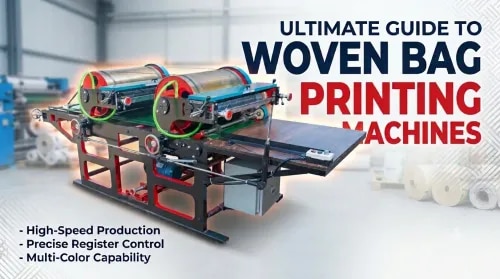
Bringing Better Printing Control to Industrial Packaging In the competitive packaging industry, printed bags do more than carry products. They communicate brand identity, display product information, and help businesses create a professional appearance in the market. For manufacturers of PP woven bags, HDPE bags, and industrial packaging materials, selecting the right printing equipment is an important step toward improving product presentation and maintaining consistent output. Rentech Machine Private Limited offers printing machinery solutions designed for the requirements of woven sack manufacturers and packaging businesses. A Two Colour Printing Machine is a practical option for manufacturers who need to print logos, company names, product details, handling instructions, and other essential graphics in two colours. Unlike single-colour printing, two-colour printing allows manufacturers to combine two ink colours within one design, creating greater visual distinction and more branding possibilities. With an appropriate machine configuration, suitable inks, and correct operating conditions, businesses can produce printed packaging that supports both commercial presentation and production requirements. Whether you are establishing a new bag manufacturing unit or upgrading your existing printing facility, understanding the working principles, applications, technical considerations, and operational benefits of a Two Colour Printing Machine can help you make a more informed investment. What Is a Two Colour Printing Machine? A Two Colour Printing Machine is an industrial printing system designed to apply two different colours to a substrate during a printing process. In woven packaging applications, it can be configured to print suitable designs on PP woven bags and other compatible packaging materials. The machine is particularly useful when a customer requires a company logo in one colour and product information, branding elements, or other graphics in a second colour. For example, a manufacturer producing fertilizer bags may print the company logo in blue and product information in red, subject to the required design and machine configuration. Depending on the model, printing method, and feeding arrangement, the equipment may be designed for roll-fed material, bag-to-bag printing, or other compatible production formats. Buyers should confirm the intended machine configuration before purchasing. The main purpose of a two-colour printing system is to provide greater design flexibility while helping manufacturers maintain repeatable printing quality and a more organized production process. Why Two-Colour Printing Is Becoming Important for Bag Manufacturers Packaging buyers increasingly expect printed bags to communicate information clearly and present their businesses professionally. Plain packaging may be sufficient for some applications, but printed packaging can help distinguish products and improve brand recognition. A two-colour printing process offers several practical advantages. 1. Improved Brand Visibility Using two colours can make logos, product names, and company details more noticeable. Manufacturers can create designs with better visual separation between the brand name and supporting information. 2. More Flexible Packaging Designs Two-colour printing supports a wider range of artwork than single-colour printing. Businesses can use contrasting colours for logos, product categories, specifications, and other printed elements. 3. Suitable for Commercial and Industrial Packaging Printed woven sacks are used across industries such as agriculture, construction, food-related packaging, chemicals, minerals, and industrial materials. The exact suitability depends on the substrate, ink system, bag construction, and end-use requirements. 4. Better Production Planning When print settings, artwork, ink selection, and material handling are standardized, manufacturers can establish repeatable production procedures. This can help reduce avoidable setup mistakes and improve consistency between batches. 5. Support for Customer-Specific Orders Many bag manufacturers produce packaging according to the branding requirements of different customers. A two-colour machine can support jobs that require two distinct printing colours, provided the design is compatible with the equipment. How Does a Two Colour Printing Machine Work? The operating process depends on the machine design and printing technology. A typical industrial printing workflow involves the following stages. Step 1: Artwork and Design Preparation The customer's logo, text, graphics, and product information are prepared for printing. Each colour must be separated and positioned correctly so that the final design appears as intended. Step 2: Printing Plate or Image Preparation For flexographic systems, suitable printing plates are prepared for the two colour stations. Plate quality, mounting accuracy, and correct alignment play important roles in achieving a clean print. Step 3: Ink Selection and Preparation The ink must be compatible with the printing process and substrate. Viscosity, drying behaviour, adhesion, and colour consistency should be checked according to the ink manufacturer's recommendations. Step 4: Material Feeding The bags or substrate are loaded according to the machine's feeding system. Correct alignment and controlled material movement help prevent skewing, wrinkles, and inconsistent print positioning. Step 5: Printing with Two Colours The two printing stations apply the selected colours according to the prepared artwork. In systems requiring colour registration, the alignment between the two colours must be adjusted carefully to avoid blurred edges or unwanted gaps. Step 6: Drying and Output Inspection The printed material is allowed to dry or cure as required by the ink system. Operators then inspect the print for colour consistency, smudging, alignment, adhesion, and overall appearance. Step 7: Quality Approval and Production After the sample is approved, production can continue using the established settings. Periodic inspection helps identify changes in ink behaviour, material feeding, or print registration before they affect a large batch. Applications of a Two Colour Printing Machine A Two Colour Printing Machine can serve multiple packaging sectors when the material and machine configuration are compatible. PP Woven Bags PP woven bags are widely used for packaging products such as grains, seeds, animal feed, fertilizers, and other bulk materials. Two-colour printing can display brand names, product details, handling information, and logos. HDPE Woven Bags HDPE woven packaging is used in applications where the bag construction and required strength suit the intended product. Suitable printing configurations can help manufacturers add identification and branding. Fertilizer Bags Manufacturers may use two-colour designs to distinguish product brands, grades, and related packaging information. All mandatory product information must remain legible and comply with applicable regulations. Agricultural Packaging Seed, grain, and agricultural input packaging can benefit from clear product identification and recognizable brand graphics. Construction Material Bags Packaging for cement-related products, minerals, and other construction materials may require bold logos, product names, and handling instructions. The chosen printing system must suit the substrate and production conditions. Industrial and Bulk Packaging Businesses producing industrial packaging may use two-colour printing for company identification, product categories, batch information, or customer-specific branding, depending on the design and traceability requirements. Important: Material compatibility should be verified before production. Not every printing machine or ink system is suitable for every woven, laminated, coated, or finished bag. Important Features to Evaluate Before Purchasing When selecting a Two Colour Printing Machine, buyers should evaluate more than the number of colours. The machine must match the intended bag format, print design, production volume, and factory workflow. Printing Quality and Registration Consistent colour placement is essential when printing two colours. Ask the manufacturer how print registration is adjusted and maintained, and request a sample using artwork similar to your actual requirements. Feeding and Material Handling The feeding arrangement should match your production format. Roll-fed printing and bag-to-bag printing are different configurations and should not be assumed to be interchangeable. Printing Width and Area The available printing width and length determine which designs can be printed. Confirm the usable printing area against the dimensions of your bags and artwork. Ink and Drying System Ink compatibility, drying capacity, ventilation, and cleaning requirements affect production quality and operating cost. Solvent-based systems require appropriate ventilation, fire-safety measures, and handling procedures. Machine Speed Rated speed alone does not establish actual production output. The achievable rate depends on bag dimensions, artwork coverage, substrate properties, drying requirements, operator skill, and changeover time. Changeover and Maintenance If the factory handles frequent customer orders, consider how easily operators can change artwork, clean ink components, adjust registration, and prepare the next job. Operator Safety The machine should be operated according to the manufacturer's instructions, with suitable guarding, emergency stops, electrical protection, and safety procedures for ink handling and cleaning How a Two Colour Printing Machine Can Improve Factory Operations The value of printing equipment should be measured by the quality and consistency of finished bags, not simply by the number of printing stations. A properly selected machine can help a factory organize its production process around repeatable print settings, standardized artwork, controlled ink preparation, and defined quality checks. For example, a woven sack manufacturer receiving repeat orders from fertilizer distributors may establish approved artwork, ink references, and registration settings for each customer. When the same order returns, these records can help the production team prepare the job more efficiently. The business benefit comes from a combination of machine suitability, operator training, preventive maintenance, and effective production planning. A two-colour system is most useful when its capabilities match the factory's actual order profile. Factors That Influence Printing Quality Even a suitable machine requires proper process control to deliver consistent results. Ink adhesion: The ink must bond correctly to the bag surface. Surface treatment, lamination, coating, contamination, and material formulation may influence adhesion. Colour consistency: Ink preparation and viscosity control help maintain a consistent appearance throughout a production run. Print registration: Both colours must align with the intended artwork. Incorrect plate mounting or material movement can create visible registration errors. Substrate tension and feeding: Inconsistent feeding or tension can affect print positioning, particularly in roll-fed applications. Drying performance: Insufficient drying may cause smudging, blocking, or transfer of ink to other surfaces. Cleaning and maintenance: Ink residue, worn components, and incorrect settings can affect print quality. Regular inspection helps maintain reliable operation. Artwork quality: Clear artwork, correct colour separation, and appropriate text sizes make it easier to achieve a professional result. How to Choose the Right Two Colour Printing Machine for Your Business Before requesting a quotation, define the production requirements as clearly as possible. Identify the material: Specify PP woven, HDPE woven, laminated woven fabric, or another substrate. Confirm the format: State whether you need to print on individual bags or continuous roll material. Provide bag dimensions: Share the bag width, length, and available printing area. Share the artwork: Provide a sample design or reference image showing the two required colours. Estimate production demand: Explain your expected daily or monthly quantity and required output. Define print quality expectations: Specify the required text clarity, logo detail, registration accuracy, and ink adhesion. Review operating costs: Consider ink consumption, plates, cleaning materials, power, labour, maintenance, and changeover time. Request a practical demonstration: Where possible, ask for a print sample using a representative substrate and design. Confirm after-sales support: Discuss installation, operator training, spare parts, maintenance, and warranty conditions. This information allows the manufacturer to recommend a configuration based on actual production requirements rather than assumptions. Why Consider Rentech Machine Private Limited? Rentech Machine Private Limited provides machinery solutions for woven sack converting and printing applications. For businesses exploring a Two Colour Printing Machine, the key step is to match the equipment configuration with the customer's bag type, printing requirements, production volume, and factory workflow. A well-planned machinery purchase should account for the complete production process, including substrate feeding, print preparation, ink handling, drying, quality inspection, and maintenance. When evaluating a suitable machine from Rentech Machine Private Limited, buyers should discuss the intended application, required printing dimensions, compatible materials, production expectations, and available configuration. Sharing a sample bag and print design can help clarify the technical requirements before a final quotation is prepared. The objective is to select equipment that supports consistent printing quality, practical operation, and the long-term needs of the packaging business. Frequently Asked Questions (Q&A) Q1. What is a Two Colour Printing Machine used for? A Two Colour Printing Machine is used to print designs containing two colours on compatible packaging materials. Applications may include company logos, product names, branding graphics, and product information on PP woven bags, HDPE woven bags, and other suitable substrates. Q2. Can a Two Colour Printing Machine print on PP woven bags? Yes, a suitably configured machine can print on PP woven bags. The printing method, surface condition, ink compatibility, and bag construction must be checked before production. Q3. What is the difference between a single-colour and a two-colour printing machine? A single-colour machine applies one printing colour in a job, while a two-colour machine is designed to apply two colours. Two-colour printing offers more flexibility for logos and designs that require colour contrast. Q4. Can the machine print on HDPE woven bags? It may be suitable for HDPE woven bags when the machine and ink system are designed for the material. The exact substrate and surface finish should be tested or approved before purchasing. Q5. Is a Two Colour Printing Machine suitable for small and medium-sized manufacturers? It can be suitable for small, medium, or larger manufacturers, depending on the model, production demand, budget, and required print quality. Buyers should compare the machine's capabilities with their expected workload. Q6. What factors affect the production speed of the machine? Production speed depends on machine design, bag size, material handling, print coverage, ink drying, registration requirements, operator experience, and changeover frequency. Actual output should be evaluated under representative operating conditions. Q7. Which ink is suitable for woven bag printing? The correct ink depends on the substrate, printing technology, surface treatment, and end-use requirements. Ink suppliers and the machine manufacturer should confirm compatibility and the recommended drying process. Make Every Printed Bag Work for Your Brand A Two Colour Printing Machine can help woven sack manufacturers create more distinctive packaging, improve brand presentation, and handle customer-specific printing requirements. However, the best results depend on selecting the right machine configuration, using compatible inks and substrates, and maintaining reliable process control. For packaging businesses planning to expand their printing capabilities, a careful assessment of material compatibility, printing area, production requirements, maintenance, and operating costs is an important first step. Rentech Machine Private Limited supports the machinery needs of woven sack and packaging manufacturers. If you are planning to introduce two-colour printing or upgrade your existing production setup, discuss your application, bag dimensions, and sample artwork with the Rentech team to identify a suitable solution for your business. Choose your printing equipment based on the requirements of your production line, the quality your customers expect, and the growth you want to achieve. Consistent printing, well-planned production, and professional packaging can help your business build stronger customer relationships and compete more effectively in the market.