
Ahmedabad
08048031606
+917600133435
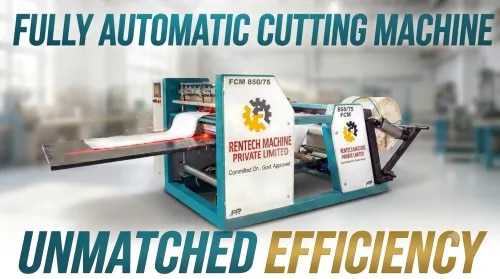
FCM-Auto Bag Cutting Machine by Rentech

Automatic Bag Cutting Machine Manufacturer - Rentech Machine

Phone Number

08048031606

Please keep 0 before dialling the number.

Mon-Thu: 10 AM - 2 PM • Fri: 3 PM - 7AM

Address Gopal Charan Industrial Hub, 67, Gopalcharan Ind. Hub, Bakrol, Gopalcharan Industrial Hub, Gopalcharan Ind. Hub, Bakrol (Bujrang)

Ahmedabad, Gujarat, India, 382430
Description

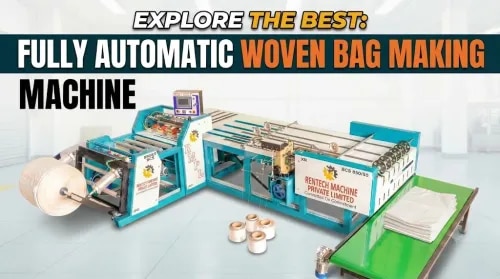
Automatic PP Woven Bag Cutting Machine Rentech Machine Private Limited | Manufacturer & Supplier of Industrial Bag Machinery 1. Product Introduction Rentech Machine Private Limited offers an Automatic Bag Cutting Machine designed for cutting woven fabric into individual bag blanks according to specified dimensions. The machine is intended for manufacturers involved in PP woven sack production and industrial packaging applications. In woven sack manufacturing, cutting is an important conversion operation that determines the length and dimensional consistency of each bag blank before subsequent stitching or finishing. An automatic cutting system helps standardize this process through controlled feeding and cutting operations, depending on the selected machine configuration. The machine is suitable for production environments where repeatable cutting lengths, organized material handling, and consistent processing are important. It can be selected according to the manufacturer's fabric width, bag length, production target, and automation requirements. Rentech Machine Private Limited provides machinery solutions for businesses producing packaging bags for agricultural products, fertilizers, animal feed, grains, seeds, and other compatible industrial materials. 2. Product Description The Automatic Bag Cutting Machine is developed for processing compatible woven fabric rolls into individual bag pieces of the required length. The machine's cutting cycle is configured according to the intended bag dimensions and operating requirements. Depending on the model, the machine may incorporate a fabric feeding arrangement, length-control mechanism, cutting assembly, operating controls, and material handling provisions. These systems work together to support a repeatable cutting process during production. The machine can be considered by manufacturers establishing a new bag manufacturing unit, expanding existing production capacity, or upgrading from manual fabric cutting operations. The actual level of automation, supported material range, cutting accuracy, and production capacity depend on the selected configuration and should be confirmed before ordering. 3. Key Machine Features Automatic Cutting Operation: Designed to carry out repeated fabric cutting cycles according to configured production settings. Adjustable Cutting Length: Supports the required bag length within the operating range of the selected model. Controlled Fabric Feeding: The feeding arrangement is designed to move fabric through the cutting section in accordance with the machine configuration. Consistent Bag Dimensions: Proper adjustment and maintenance help produce bag blanks with repeatable dimensions. Industrial Application: Intended for regular operation in woven sack manufacturing and packaging production environments. Operational Flexibility: Suitable machine configurations can be selected according to fabric specifications and manufacturing requirements. Reduced Repetitive Manual Work: Automation can reduce manual measuring and cutting activities compared with conventional manual processes. Production-Line Compatibility: Depending on the design, the machine may be incorporated into a wider bag conversion workflow that includes stitching and other finishing operations. Maintenance Accessibility: Routine inspection and maintenance of feeding, cutting, and control components are important for maintaining performance. Application-Based Configuration: The machine should be selected according to the fabric type, required dimensions, expected output, and desired automation level 4.Material Compatibility and Applications The machine is primarily intended for compatible PP woven fabric used in the production of woven packaging sacks. Additional materials should be evaluated before processing. Potential applications include: PP woven sacks for grains and cereals Onion and potato packaging bags Fertilizer packaging sacks Animal feed bags Seed packaging bags Agricultural commodity packaging Industrial woven packaging HDPE woven bags, subject to machine compatibility Leno bags, subject to fabric and cutting-system suitability Material compatibility should be confirmed with Rentech Machine Private Limited using the actual fabric construction and required bag dimensions 5.Advantages for Bag Manufacturers Improved Process Consistency: A controlled cutting cycle can help standardize bag-blank dimensions across production batches. Reduced Manual Measuring: Automatic operation can reduce repetitive measuring and cutting tasks. Organized Production Workflow: The machine can support a more structured process between fabric roll handling and subsequent stitching. Production Planning: Defined cutting settings and operating procedures help manufacturers organize recurring production runs. Quality Control: Regular inspection of cutting length and edge quality helps identify deviations before further processing. Scalable Manufacturing: The appropriate machine configuration can be selected according to current requirements and anticipated production needs. Better Process Monitoring: Standard operating procedures and routine inspection records can help supervisors monitor production quality. 6.Industries Served The machine may be suitable for businesses operating in the following segments, provided the intended fabric and bag specifications are supported: PP woven sack manufacturing Agricultural packaging Fertilizer packaging Grain and seed packaging Animal feed packaging Industrial raw material packaging Woven bag conversion units Packaging machinery and production facilities 7.Installation and Operating Requirements Before installation, the buyer should confirm the available floor space, electrical supply, machine access, fabric roll handling arrangements, and clearance for routine maintenance. Operators should be trained in fabric loading, cutting-length adjustment, machine startup and shutdown, quality inspection, and emergency-stop procedures. Regular maintenance should follow the manufacturer's instructions and may include inspection of cutting components, feeding mechanisms, electrical connections, safety devices, and other model-specific assemblies. 8.Quality and Production Considerations The final quality of a cut bag blank depends on several factors, including fabric characteristics, feeding stability, machine settings, cutting-component condition, and operating practices. Manufacturers should verify the first pieces after setup or a size change, monitor dimensions during production, and maintain records of any deviations. Production capacity should be assessed under the intended bag dimensions and actual operating conditions. Advertised maximum speed should not be treated as guaranteed output without confirming the production parameters. 9.Why Choose Rentech Machine Private Limited? Rentech Machine Private Limited is an Indian manufacturer and supplier of machinery for woven sack manufacturing and industrial packaging applications. Our machine solutions are intended to support manufacturers seeking suitable equipment for their fabric conversion processes. Machine selection can be discussed according to the buyer's material requirements, bag dimensions, production targets, available space, and desired level of automation. When evaluating an automatic cutting machine, buyers should consider its technical suitability, operating requirements, maintenance provisions, and compatibility with the wider production line 10. Frequently Asked Questions Q1. What is an Automatic Bag Cutting Machine used for? It is used to cut compatible woven fabric into individual bag blanks of specified lengths for further processing in bag manufacturing. Q2. Which fabrics can be processed? The primary application is compatible PP woven fabric. HDPE woven and Leno fabric may be supported by certain configurations, subject to technical confirmation. Q3. Can different bag lengths be produced on the same machine? Yes, if the required lengths fall within the selected model's supported adjustment range. The minimum and maximum cutting lengths should be confirmed before purchase. Q4. What determines the production capacity? Capacity depends on the cutting length, fabric characteristics, feeding system, cutting cycle, operating conditions, and material handling arrangement. Q5. Does the machine also stitch the bags? Not necessarily. A standalone cutting machine performs cutting operations. Stitching is included only if the selected configuration specifically incorporates stitching equipment. Q6. Can the machine be used in an existing production facility? Potentially, provided the machine is compatible with the existing fabric handling process, available space, electrical supply, and downstream equipment. Q7. How is cutting accuracy maintained? Correct settings, stable fabric feeding, suitable cutting components, routine inspection, and regular maintenance help maintain dimensional consistency. Q8. What maintenance is required? Maintenance depends on the model and includes the inspections, cleaning, lubrication, adjustments, and component replacement specified by the manufacturer Rentech Machine Private Limited Ahmedabad, Gujarat, India For automatic bag cutting machinery, technical specifications, model selection, and quotation enquiries, contact our team. Website: https://rentechmachine.com Rentech Machine Private Limited — Machinery Solutions for Woven Sack Manufacturing.

Specifications

Product Name Automatic Bag Cutting Machine
Manufacturer Rentech Machine Private Limited
Machine Operation Automatic cutting
Primary Application PP woven fabric cutting
Additional Material Compatibility HDPE woven or Leno fabric, subject to model suitability

Other Products

view all

6814772a5d263414004dd4a4 Card 2

product image
FCM-Auto Bag Cutting Machine

Automatic PP Woven Bag Cutting Machine Rentech Machine Private Limited | Manufacturer & Supplier of Industrial Bag Machinery 1. Product Introduction Rentech Machine Private Limited offers an Automatic Bag Cutting Machine designed for cutting woven fabric into individual bag blanks according to specified dimensions. The machine is intended for manufacturers involved in PP woven sack production and industrial packaging applications. In woven sack manufacturing, cutting is an important conversion operation that determines the length and dimensional consistency of each bag blank before subsequent stitching or finishing. An automatic cutting system helps standardize this process through controlled feeding and cutting operations, depending on the selected machine configuration. The machine is suitable for production environments where repeatable cutting lengths, organized material handling, and consistent processing are important. It can be selected according to the manufacturer's fabric width, bag length, production target, and automation requirements. Rentech Machine Private Limited provides machinery solutions for businesses producing packaging bags for agricultural products, fertilizers, animal feed, grains, seeds, and other compatible industrial materials. 2. Product Description The Automatic Bag Cutting Machine is developed for processing compatible woven fabric rolls into individual bag pieces of the required length. The machine's cutting cycle is configured according to the intended bag dimensions and operating requirements. Depending on the model, the machine may incorporate a fabric feeding arrangement, length-control mechanism, cutting assembly, operating controls, and material handling provisions. These systems work together to support a repeatable cutting process during production. The machine can be considered by manufacturers establishing a new bag manufacturing unit, expanding existing production capacity, or upgrading from manual fabric cutting operations. The actual level of automation, supported material range, cutting accuracy, and production capacity depend on the selected configuration and should be confirmed before ordering. 3. Key Machine Features Automatic Cutting Operation: Designed to carry out repeated fabric cutting cycles according to configured production settings. Adjustable Cutting Length: Supports the required bag length within the operating range of the selected model. Controlled Fabric Feeding: The feeding arrangement is designed to move fabric through the cutting section in accordance with the machine configuration. Consistent Bag Dimensions: Proper adjustment and maintenance help produce bag blanks with repeatable dimensions. Industrial Application: Intended for regular operation in woven sack manufacturing and packaging production environments. Operational Flexibility: Suitable machine configurations can be selected according to fabric specifications and manufacturing requirements. Reduced Repetitive Manual Work: Automation can reduce manual measuring and cutting activities compared with conventional manual processes. Production-Line Compatibility: Depending on the design, the machine may be incorporated into a wider bag conversion workflow that includes stitching and other finishing operations. Maintenance Accessibility: Routine inspection and maintenance of feeding, cutting, and control components are important for maintaining performance. Application-Based Configuration: The machine should be selected according to the fabric type, required dimensions, expected output, and desired automation level 4.Material Compatibility and Applications The machine is primarily intended for compatible PP woven fabric used in the production of woven packaging sacks. Additional materials should be evaluated before processing. Potential applications include: PP woven sacks for grains and cereals Onion and potato packaging bags Fertilizer packaging sacks Animal feed bags Seed packaging bags Agricultural commodity packaging Industrial woven packaging HDPE woven bags, subject to machine compatibility Leno bags, subject to fabric and cutting-system suitability Material compatibility should be confirmed with Rentech Machine Private Limited using the actual fabric construction and required bag dimensions 5.Advantages for Bag Manufacturers Improved Process Consistency: A controlled cutting cycle can help standardize bag-blank dimensions across production batches. Reduced Manual Measuring: Automatic operation can reduce repetitive measuring and cutting tasks. Organized Production Workflow: The machine can support a more structured process between fabric roll handling and subsequent stitching. Production Planning: Defined cutting settings and operating procedures help manufacturers organize recurring production runs. Quality Control: Regular inspection of cutting length and edge quality helps identify deviations before further processing. Scalable Manufacturing: The appropriate machine configuration can be selected according to current requirements and anticipated production needs. Better Process Monitoring: Standard operating procedures and routine inspection records can help supervisors monitor production quality. 6.Industries Served The machine may be suitable for businesses operating in the following segments, provided the intended fabric and bag specifications are supported: PP woven sack manufacturing Agricultural packaging Fertilizer packaging Grain and seed packaging Animal feed packaging Industrial raw material packaging Woven bag conversion units Packaging machinery and production facilities 7.Installation and Operating Requirements Before installation, the buyer should confirm the available floor space, electrical supply, machine access, fabric roll handling arrangements, and clearance for routine maintenance. Operators should be trained in fabric loading, cutting-length adjustment, machine startup and shutdown, quality inspection, and emergency-stop procedures. Regular maintenance should follow the manufacturer's instructions and may include inspection of cutting components, feeding mechanisms, electrical connections, safety devices, and other model-specific assemblies. 8.Quality and Production Considerations The final quality of a cut bag blank depends on several factors, including fabric characteristics, feeding stability, machine settings, cutting-component condition, and operating practices. Manufacturers should verify the first pieces after setup or a size change, monitor dimensions during production, and maintain records of any deviations. Production capacity should be assessed under the intended bag dimensions and actual operating conditions. Advertised maximum speed should not be treated as guaranteed output without confirming the production parameters. 9.Why Choose Rentech Machine Private Limited? Rentech Machine Private Limited is an Indian manufacturer and supplier of machinery for woven sack manufacturing and industrial packaging applications. Our machine solutions are intended to support manufacturers seeking suitable equipment for their fabric conversion processes. Machine selection can be discussed according to the buyer's material requirements, bag dimensions, production targets, available space, and desired level of automation. When evaluating an automatic cutting machine, buyers should consider its technical suitability, operating requirements, maintenance provisions, and compatibility with the wider production line 10. Frequently Asked Questions Q1. What is an Automatic Bag Cutting Machine used for? It is used to cut compatible woven fabric into individual bag blanks of specified lengths for further processing in bag manufacturing. Q2. Which fabrics can be processed? The primary application is compatible PP woven fabric. HDPE woven and Leno fabric may be supported by certain configurations, subject to technical confirmation. Q3. Can different bag lengths be produced on the same machine? Yes, if the required lengths fall within the selected model's supported adjustment range. The minimum and maximum cutting lengths should be confirmed before purchase. Q4. What determines the production capacity? Capacity depends on the cutting length, fabric characteristics, feeding system, cutting cycle, operating conditions, and material handling arrangement. Q5. Does the machine also stitch the bags? Not necessarily. A standalone cutting machine performs cutting operations. Stitching is included only if the selected configuration specifically incorporates stitching equipment. Q6. Can the machine be used in an existing production facility? Potentially, provided the machine is compatible with the existing fabric handling process, available space, electrical supply, and downstream equipment. Q7. How is cutting accuracy maintained? Correct settings, stable fabric feeding, suitable cutting components, routine inspection, and regular maintenance help maintain dimensional consistency. Q8. What maintenance is required? Maintenance depends on the model and includes the inspections, cleaning, lubrication, adjustments, and component replacement specified by the manufacturer Rentech Machine Private Limited Ahmedabad, Gujarat, India For automatic bag cutting machinery, technical specifications, model selection, and quotation enquiries, contact our team. Website: https://rentechmachine.com Rentech Machine Private Limited — Machinery Solutions for Woven Sack Manufacturing.

6814772a5d263414004dd4a4 Card 2

product image
2 Colour Printing Machine

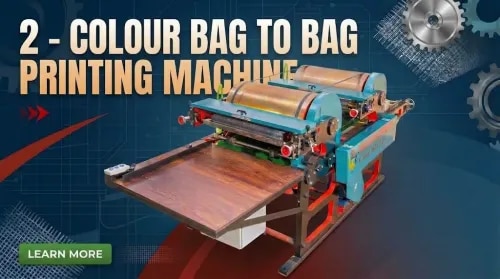
2 Colour Bag-to-Bag Printing Machine Precision Bag-to-Bag Printing Solution for PP Woven Packaging Printing is an important stage in PP woven bag manufacturing because the printed surface carries the brand identity, product information, handling instructions and commercial graphics of the final bag. For manufacturers producing large quantities of woven sacks, a dedicated 2 Colour Bag-to-Bag Printing Machine provides a practical solution for applying two-colour graphics directly onto individual bags. Rentech Machine Private Limited provides industrial printing machinery designed for applications involving PP woven bags and other compatible woven packaging substrates. Rather than focusing only on printing speed, the machine is designed around the complete printing process—bag feeding, positioning, ink transfer, colour registration, drying/setting and printed-bag delivery. What Makes Bag-to-Bag Printing Different? Unlike roll-to-roll printing, where continuous fabric is printed before the bag is converted, bag-to-bag printing works with individual finished or semi-finished bags. This provides flexibility for manufacturers who: Produce bags in different sizes Need different artwork for different customers Want to print after bag conversion Handle multiple bag specifications Require short or medium production runs Need customer-specific branding The machine therefore becomes particularly useful when production flexibility is as important as printing throughput. Why Use Two Colours? Two-colour printing provides a practical balance between visual impact and production cost. A two-colour design can be used for: Company logos Product names Brand graphics Text and symbols Contact information Product identification Agricultural branding Packaging instructions For many woven-bag applications, two colours are sufficient to create a clear and recognizable commercial print.Suitable Applications The 2 Colour Bag-to-Bag Printing Machine can be used for suitable: PP Woven Bags Rice, grain, fertilizer, sugar and industrial packaging bags. Agricultural Bags Seed, feed, onion, potato and other agricultural packaging applications. Animal Feed Bags Brand names, product information and identification graphics can be printed onto suitable woven bags. Fertilizer Bags Manufacturers can apply company branding, product details and handling information. Industrial Sacks Suitable woven industrial packaging can be printed according to customer requirements. Printing Quality Depends on More Than the Printer For woven bags, achieving a good printed result depends on several factors: Fabric surface Fabric weave Lamination Ink selection Ink viscosity Printing pressure Bag positioning Artwork preparation Colour registration Machine adjustment Drying conditions For this reason, selecting a machine should involve evaluating the complete printing application, rather than considering only the number of colours or nominal speed Key Production Advantages Flexible Artwork Two-colour printing allows manufacturers to produce different designs for different customers and products. Individual Bag Printing Bags can be printed individually rather than requiring a continuous roll-to-roll printing process. Brand Visibility Logos, product names and graphics can improve the visual identity of woven packaging. Suitable for Multiple Bag Applications The machine can support different packaging sectors depending on substrate and machine configuration. Production Consistency Controlled feeding and positioning can help maintain consistent print placement. Practical Two-Colour Configuration For applications that do not require complex multi-colour graphics, two printing units can provide a practical production solution. Frequently Asked Questions – Q&A Q1. What is a 2 Colour Bag-to-Bag Printing Machine? It is an industrial printing machine designed to print two colours directly onto individual woven bags. Q2. What materials can be printed? The machine is primarily intended for compatible PP woven and other suitable woven bag materials. Exact compatibility depends on the machine and ink configuration. Q3. Why choose a two-colour machine? A two-colour machine is suitable for manufacturers whose artwork requires two colours and who want a practical balance between printing capability and machine complexity. Q4. Can PP woven bags be printed? Yes. PP woven bags are one of the main applications for this type of printing equipment. Q5. Can laminated bags be printed? Suitable laminated bags can be printed when the machine and ink system are configured for the specific substrate. Q6. What type of information can be printed? Manufacturers can print logos, brand names, product information, text, symbols, graphics and other suitable artwork. Q7. Does the machine print individual bags? Yes. The bag-to-bag configuration is designed to handle individual bags rather than continuously printing a fabric roll. Rentech Machine – Bag Printing Technology Rentech Machine Private Limited provides machinery solutions for the woven packaging industry, including equipment for bag cutting, stitching, printing and bag conversion. Our 2 Colour Bag-to-Bag Printing Machine is intended for manufacturers seeking a dedicated solution for printing branding and product information on individual woven bags. The correct machine should be selected based on the bag dimensions, substrate, print area, artwork, colour requirement and production target. Conclusion A 2 Colour Bag-to-Bag Printing Machine provides a practical printing solution for woven-bag manufacturers that require individual bag printing with two-colour graphics. By combining controlled bag handling, two-colour printing and repeatable positioning, the machine can support a range of agricultural, food-grain, fertilizer, animal-feed and industrial packaging applications. Rentech Machine Private Limited — Engineering machinery solutions for modern woven-bag manufacturing.

6814772a5d263414004dd4a4 Card 2

product image
PP Woven Bag Cutting & Stitching Machine

Integrated Cutting and Stitching Solution for Woven Bag Manufacturers In PP woven sack manufacturing, the quality of the finished bag depends on more than just fabric quality. Accurate cutting, proper bag dimensions, consistent seam formation and controlled production flow are equally important. Rentech Machine Private Limited provides industrial Bag Cutting and Stitching Machines designed to streamline the conversion of continuous woven fabric into finished bag components. The machine is suitable for manufacturers working with PP woven, HDPE woven, Leno and compatible laminated or unlaminated woven materials. Instead of performing cutting and stitching as completely separate manual operations, an integrated machine configuration can create a more controlled production workflow. From Woven Fabric to Finished Bag The basic manufacturing sequence can be described as: Fabric Roll → Feeding → Length Control → Cutting → Bag Transfer → Stitching → Finished Bag Each stage has a direct effect on the final product. Incorrect fabric feeding can affect dimensions. Inconsistent cutting can affect bag length. Poor stitching can reduce seam strength. Uncontrolled handling can reduce overall production efficiency. The Bag Cutting and Stitching Machine is designed to coordinate these operations more efficiently Designed Around Production Requirements Every woven bag manufacturer has different production requirements. The appropriate machine configuration depends on: Bag length Bag width Fabric width Fabric thickness Material type Laminated or unlaminated construction Required production output Stitching requirements Automation level Downstream printing requirements This approach allows the machine to be specified according to the actual application rather than using one configuration for every product. Compatible Materials Depending on the selected configuration, the machine can be used for: PP Woven Fabric Widely used for rice, fertilizer, grain, feed and industrial sacks. HDPE Woven Fabric Suitable for selected industrial and agricultural packaging applications. Leno Fabric Commonly used for breathable agricultural bags such as onion and potato packaging. Laminated Woven Fabric Suitable configurations can be used for laminated PP woven materials. BOPP Laminated Woven Material The appropriate cutting and stitching configuration can be selected for compatible BOPP woven applications. Typical Bag Applications The machine can support production of: Rice Bags Wheat Bags Grain Bags Fertilizer Bags Sugar Bags Animal Feed Bags Cattle Feed Bags Seed Bags Onion Bags Potato Bags Agricultural Sacks Chemical Bags Industrial Woven Sacks General PP Woven Packaging Bags Why Cutting and Stitching Accuracy Matter Dimensional Consistency Uniform cutting helps ensure that finished bags have consistent dimensions. Stitching Quality A controlled stitching process helps create repeatable seams across production batches. Production Efficiency Combining controlled cutting and stitching operations can reduce unnecessary handling between manufacturing stages. Reduced Operator Dependency Automation reduces repetitive measuring, cutting and handling work. Improved Workflow A structured conversion process makes it easier to move from fabric roll to finished bag. Where This Machine Fits in a Complete Bag Manufacturing Line For manufacturers operating a complete PP woven bag production facility, the cutting and stitching machine can form part of a broader workflow: PP Granules → Tape Extrusion → Circular Loom → Fabric Roll → Printing → Cutting → Stitching → Inspection → Packing This makes the machine particularly relevant for manufacturers who want to improve the bag-conversion section of their manufacturing operation. Production Planning Considerations Before selecting a Bag Cutting and Stitching Machine, manufacturers should evaluate several factors. Bag Size Determine the required finished bag length and width. Material Identify whether the material is PP, HDPE, Leno, laminated or another compatible woven structure. Production Target Define the number of bags required per minute or per shift. Stitching Pattern The required seam and stitching arrangement should be considered before selecting the stitching configuration. Printing Integration If bags are printed before cutting, the cutting process should be compatible with the printed registration and production workflow. Future Expansion Manufacturers planning to increase production may consider a higher level of automation from the beginning. Frequently Asked Questions Q1. What is a Bag Cutting and Stitching Machine? It is an industrial machine used to convert continuous woven fabric into individual bag pieces and perform the required stitching operation. Q2. What is the main advantage of combining cutting and stitching? It creates a more organized conversion workflow and can reduce manual handling between cutting and stitching operations. Q3. Can the machine process PP woven fabric? Yes. PP woven fabric is one of the primary materials used in this type of bag-conversion application. Q4. Can it be used for Leno bags? Yes, suitable Leno fabric can be processed when the machine is configured for the material and required bag construction. Q5. Can HDPE woven fabric be processed? Yes, compatible HDPE woven materials can be processed according to the selected machine configuration. Q6. Can laminated PP woven fabric be used? Yes. A suitable machine configuration can be selected for compatible laminated woven materials. Q7. Can the bag length be changed? Yes. The cutting length can generally be adjusted within the operating range of the selected machine model. Rentech Machine – Woven Bag Conversion Solutions Rentech Machine Private Limited provides industrial machinery solutions for manufacturers producing PP woven, HDPE, Leno and other woven packaging bags. Our Bag Cutting and Stitching Machines are designed to help manufacturers establish a more controlled production process—from fabric roll handling and cutting through to stitching and finished-bag collection. For machine selection, customers should evaluate their material, bag dimensions, required output, stitching specification and automation requirements before finalizing the machine configuration. Rentech Machine Private Limited PP Woven Bag Machinery | Bag Cutting Machines | Bag Stitching Machines | Woven Sack Conversion Solutions