
Ahmedabad
08048031606
+917600133435
Bag Conversion Line by Rentech

Automatic Woven Bag Making Machine Manufacturer in India

Phone Number

08048031606

Please keep 0 before dialling the number.

Mon-Thu: 10 AM - 2 PM • Fri: 3 PM - 7AM

Address 67, Road No. 1, Gopalcharan Industrial Hub, Bakrol, (Bujrang)

Ahmedabad, Gujarat, India, 382430
Description

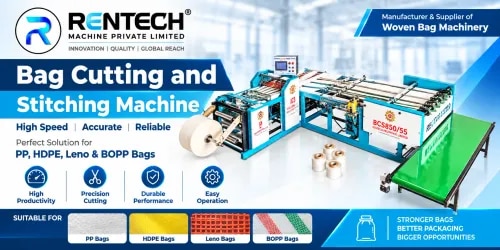
Advanced Woven Bag Conversion Solutions by Rentech Machine Private Limited Transform Woven Fabrics into Finished Bags with Greater Production Efficiency In today's competitive packaging industry, manufacturers need machinery that can convert woven fabrics into finished bags with consistent dimensions, reliable stitching, and an efficient production workflow. Rentech Machine Private Limited offers automatic bag-making and woven bag conversion machinery designed to meet the requirements of packaging manufacturers handling PP woven, Leno, BOPP-laminated and compatible HDPE woven materials. Our automatic bag-making machine solutions are intended to streamline key production operations such as fabric feeding, length measurement, cutting, and stitching, depending on the selected machine configuration. By integrating suitable operations into a coordinated production process, manufacturers can improve workflow consistency, reduce repetitive manual handling, and manage regular production orders more efficiently. Whether your business supplies agricultural packaging, onion and potato bags, fertilizer sacks, rice bags, animal feed packaging, or industrial woven sacks, selecting the right bag conversion system is essential for achieving the required bag dimensions, finishing quality, and production output. Rentech Machine Private Limited provides woven bag machinery solutions tailored to the practical needs of bag manufacturers, with machine selection based on fabric type, bag size, stitching requirements, and production targets. Machine Overview The Automatic Bag Making Machine is designed for converting suitable woven fabric into finished bags through an organised sequence of feeding, cutting and stitching operations. Depending on the selected model, the machine can incorporate automatic length control, fabric guidance, cutting mechanisms, stitching equipment and other production features. The machine configuration can be selected according to the material being processed, required bag dimensions, seam style, production volume and degree of automation. Key Machine Features 1. Automated Fabric Feeding A suitable feeding arrangement helps move woven fabric through the conversion process at a controlled rate. Correct fabric alignment and tension are important for maintaining consistent bag dimensions and stable operation. 2. Accurate Bag-Length Control The cutting system can be configured for the required bag length. Proper adjustment and calibration help reduce dimensional variation and unnecessary fabric waste. 3. Integrated Cutting and Stitching Options Depending on the selected model, cutting and stitching operations can be coordinated to reduce material handling between production stages and support a more organised manufacturing workflow. 4. Multi-Material Application Potential The machine can be configured for compatible PP woven, Leno and HDPE woven fabrics, as well as suitable BOPP-laminated woven materials. Processing capability depends on fabric construction, coating or lamination, material thickness and the selected equipment configuration. 5. Consistent Seam Formation A correctly selected and adjusted stitching system supports uniform seam formation and reliable bag finishing. Stitch type, thread selection and stitching settings should be matched to the intended bag application. 6. Production-Focused Operation Automation can help reduce repetitive manual work and improve production consistency. Actual output depends on bag dimensions, fabric characteristics, stitching requirements, machine configuration and operating conditions. 7. Configuration According to Production Requirements Machine options can be evaluated according to the manufacturer's required bag width, length, cutting method, stitching arrangement, fabric roll specifications and expected production capacity. Suitable Bag Types and Applications The appropriate machine configuration can support production of the following bag types: PP Woven Bags: General-purpose packaging for grains, fertilizers, seeds and industrial products. Leno Mesh Bags: Suitable for compatible mesh fabrics used for onions, potatoes, garlic and other agricultural produce. BOPP-Laminated Woven Bags: Woven sacks with a printed and laminated outer layer for improved packaging presentation. HDPE Woven Bags: Packaging made from compatible high-density polyethylene woven fabric. Agricultural Sacks: Bags for seeds, animal feed and agricultural commodities. Industrial Packaging Bags: Woven packaging for selected industrial and commercial applications. Material handling, cutting method, stitching quality and the required seam design must be verified for each application before finalising the machine.How the Automatic Bag-Making Process Works The production sequence varies by machine model, but a typical woven bag conversion workflow includes the following stages: Fabric Loading: The woven fabric roll or prepared fabric is loaded into the appropriate feeding arrangement. Fabric Alignment: The material is guided into the processing area to maintain the required position. Length Measurement: The required bag length is set according to the production specification. Cutting Operation: The fabric is cut into individual bag blanks using the configured cutting system. Stitching Operation: The required seam is formed using the selected stitching arrangement. Quality Inspection: Finished bags are checked for dimensions, seam quality, cutting consistency and visible defects. Collection and Packing: Accepted bags are collected, counted and prepared for the next production stage. Some configurations combine multiple stages in one line, while others require separate equipment for particular operations. Benefits for Woven Bag Manufacturers Better Production Planning A defined machine workflow helps manufacturers plan production according to bag size, fabric availability, order quantities and delivery schedules. Reduced Repetitive Manual Handling Automation can reduce the amount of manual intervention required for repetitive operations, depending on the selected machine design. Improved Dimensional Consistency Controlled feeding, measurement and cutting help manufacturers maintain more consistent bag dimensions when the machine is correctly set up. Flexible Product Planning Manufacturers handling different bag sizes or compatible fabric types can evaluate suitable settings and configurations for their production requirements. More Organised Manufacturing Coordinated conversion operations can support a cleaner production flow from fabric preparation to finished bag inspection. Support for Growing Production Requirements The correct machine configuration can help manufacturers plan for increased demand while maintaining appropriate quality-control procedures. Quality Checks Before Dispatch For dependable finished-bag quality, manufacturers should establish inspection procedures covering: Bag length and width Cutting-edge consistency Stitch formation and seam strength Thread tension and thread consumption Fabric alignment and surface condition Lamination integrity, where applicable Finished-bag appearance and dimensional tolerances Actual tolerances and acceptance criteria should be defined according to the customer's bag specification and intended application. Frequently Asked Questions (Q&A) Q1. What is an Automatic Bag Making Machine? An Automatic Bag Making Machine converts suitable fabric into finished bags through operations such as feeding, measuring, cutting and stitching. The exact functions depend on the selected machine model and production configuration. Q2. Can this machine manufacture PP woven bags? Yes, suitable configurations can process PP woven fabric for applications such as fertilizer bags, rice sacks, seed bags and other woven packaging. The machine should be selected according to fabric specifications and bag dimensions. Q3. Is the machine suitable for Leno mesh bags? A compatible configuration can be used for Leno mesh bag production, including agricultural packaging for onions and potatoes. Mesh structure, cutting requirements and the required seam must be checked before confirming suitability. Q4. Can it process BOPP-laminated woven bags? Suitable configurations may process BOPP-laminated woven materials. The lamination structure, fabric thickness, cutting method and stitching requirements should be evaluated to ensure that the finished bag meets the required quality standards. Q5. Can HDPE woven bags be manufactured on this machine? Yes, subject to compatibility between the HDPE woven fabric and the selected feeding, cutting and stitching arrangements. The fabric specification should be provided when requesting a quotation. Q6. What determines the production speed? Production speed depends on bag length, fabric type, cutting cycle, stitching speed, machine configuration, material handling and the operator's ability to maintain continuous production. Ask for the rated output under your intended operating conditions. Q7. Can the machine produce different bag sizes? Different sizes may be possible within the machine's specified operating range. Maximum and minimum bag dimensions, adjustment procedures and changeover time should be confirmed for the selected model. Q8. What information is required to select the right machine? Provide the fabric type, bag length and width, fabric thickness or GSM, required seam style, expected output, roll dimensions and details of any existing production equipment. A sample bag or technical drawing can also help with machine selection. Q9. Does an automatic machine eliminate manual inspection? No. Automation can reduce repetitive handling, but quality inspection remains necessary to check bag dimensions, seam strength, material defects and finished-product consistency. Q10. Can the machine be integrated into an existing production line? Integration may be possible after checking the existing line layout, fabric supply arrangement, electrical requirements, output rate and compatibility with upstream and downstream equipment. Q11. Which industries use automatic woven bag-making machinery? Common applications include agricultural packaging, fertilizer packaging, grain and rice bags, animal feed sacks, seed bags and selected industrial packaging products. Q12. How can I obtain a quotation from Rentech Machine Private Limited? Contact Rentech Machine Private Limited with your bag specifications, material type, required production capacity and preferred machine configuration. These details help the technical team assess suitability and prepare a relevant quotation. Choose the Right Bag Conversion Solution Efficient woven bag production begins with selecting machinery that matches your fabric, bag dimensions, finishing requirements and production targets. Rentech Machine Private Limited provides machinery solutions for manufacturers working with PP woven, Leno, BOPP-laminated and compatible HDPE woven packaging materials. Our focus is on helping customers evaluate practical machine configurations for cutting, stitching and woven bag conversion. Contact Rentech Machine Private Limited today to discuss your manufacturing requirements, request technical specifications and explore a suitable automatic bag-making solution for your production facility. Rentech Machine Private Limited — Your Machinery Partner for Woven Bag Manufacturing, Cutting, Stitching and Conversion.

Specifications

Machine Name Automatic Bag Making Machine
Manufacturer Rentech Machine Private Limited
Machine Category Woven Bag Making
Compatible Fabric PP woven, Leno, HDPE woven and suitable BOPP-laminated fabric

Other Products

view all

6814772a5d263414004dd4a4 Card 2

product image
Bag Conversion Line

Advanced Woven Bag Conversion Solutions by Rentech Machine Private Limited Transform Woven Fabrics into Finished Bags with Greater Production Efficiency In today's competitive packaging industry, manufacturers need machinery that can convert woven fabrics into finished bags with consistent dimensions, reliable stitching, and an efficient production workflow. Rentech Machine Private Limited offers automatic bag-making and woven bag conversion machinery designed to meet the requirements of packaging manufacturers handling PP woven, Leno, BOPP-laminated and compatible HDPE woven materials. Our automatic bag-making machine solutions are intended to streamline key production operations such as fabric feeding, length measurement, cutting, and stitching, depending on the selected machine configuration. By integrating suitable operations into a coordinated production process, manufacturers can improve workflow consistency, reduce repetitive manual handling, and manage regular production orders more efficiently. Whether your business supplies agricultural packaging, onion and potato bags, fertilizer sacks, rice bags, animal feed packaging, or industrial woven sacks, selecting the right bag conversion system is essential for achieving the required bag dimensions, finishing quality, and production output. Rentech Machine Private Limited provides woven bag machinery solutions tailored to the practical needs of bag manufacturers, with machine selection based on fabric type, bag size, stitching requirements, and production targets. Machine Overview The Automatic Bag Making Machine is designed for converting suitable woven fabric into finished bags through an organised sequence of feeding, cutting and stitching operations. Depending on the selected model, the machine can incorporate automatic length control, fabric guidance, cutting mechanisms, stitching equipment and other production features. The machine configuration can be selected according to the material being processed, required bag dimensions, seam style, production volume and degree of automation. Key Machine Features 1. Automated Fabric Feeding A suitable feeding arrangement helps move woven fabric through the conversion process at a controlled rate. Correct fabric alignment and tension are important for maintaining consistent bag dimensions and stable operation. 2. Accurate Bag-Length Control The cutting system can be configured for the required bag length. Proper adjustment and calibration help reduce dimensional variation and unnecessary fabric waste. 3. Integrated Cutting and Stitching Options Depending on the selected model, cutting and stitching operations can be coordinated to reduce material handling between production stages and support a more organised manufacturing workflow. 4. Multi-Material Application Potential The machine can be configured for compatible PP woven, Leno and HDPE woven fabrics, as well as suitable BOPP-laminated woven materials. Processing capability depends on fabric construction, coating or lamination, material thickness and the selected equipment configuration. 5. Consistent Seam Formation A correctly selected and adjusted stitching system supports uniform seam formation and reliable bag finishing. Stitch type, thread selection and stitching settings should be matched to the intended bag application. 6. Production-Focused Operation Automation can help reduce repetitive manual work and improve production consistency. Actual output depends on bag dimensions, fabric characteristics, stitching requirements, machine configuration and operating conditions. 7. Configuration According to Production Requirements Machine options can be evaluated according to the manufacturer's required bag width, length, cutting method, stitching arrangement, fabric roll specifications and expected production capacity. Suitable Bag Types and Applications The appropriate machine configuration can support production of the following bag types: PP Woven Bags: General-purpose packaging for grains, fertilizers, seeds and industrial products. Leno Mesh Bags: Suitable for compatible mesh fabrics used for onions, potatoes, garlic and other agricultural produce. BOPP-Laminated Woven Bags: Woven sacks with a printed and laminated outer layer for improved packaging presentation. HDPE Woven Bags: Packaging made from compatible high-density polyethylene woven fabric. Agricultural Sacks: Bags for seeds, animal feed and agricultural commodities. Industrial Packaging Bags: Woven packaging for selected industrial and commercial applications. Material handling, cutting method, stitching quality and the required seam design must be verified for each application before finalising the machine.How the Automatic Bag-Making Process Works The production sequence varies by machine model, but a typical woven bag conversion workflow includes the following stages: Fabric Loading: The woven fabric roll or prepared fabric is loaded into the appropriate feeding arrangement. Fabric Alignment: The material is guided into the processing area to maintain the required position. Length Measurement: The required bag length is set according to the production specification. Cutting Operation: The fabric is cut into individual bag blanks using the configured cutting system. Stitching Operation: The required seam is formed using the selected stitching arrangement. Quality Inspection: Finished bags are checked for dimensions, seam quality, cutting consistency and visible defects. Collection and Packing: Accepted bags are collected, counted and prepared for the next production stage. Some configurations combine multiple stages in one line, while others require separate equipment for particular operations. Benefits for Woven Bag Manufacturers Better Production Planning A defined machine workflow helps manufacturers plan production according to bag size, fabric availability, order quantities and delivery schedules. Reduced Repetitive Manual Handling Automation can reduce the amount of manual intervention required for repetitive operations, depending on the selected machine design. Improved Dimensional Consistency Controlled feeding, measurement and cutting help manufacturers maintain more consistent bag dimensions when the machine is correctly set up. Flexible Product Planning Manufacturers handling different bag sizes or compatible fabric types can evaluate suitable settings and configurations for their production requirements. More Organised Manufacturing Coordinated conversion operations can support a cleaner production flow from fabric preparation to finished bag inspection. Support for Growing Production Requirements The correct machine configuration can help manufacturers plan for increased demand while maintaining appropriate quality-control procedures. Quality Checks Before Dispatch For dependable finished-bag quality, manufacturers should establish inspection procedures covering: Bag length and width Cutting-edge consistency Stitch formation and seam strength Thread tension and thread consumption Fabric alignment and surface condition Lamination integrity, where applicable Finished-bag appearance and dimensional tolerances Actual tolerances and acceptance criteria should be defined according to the customer's bag specification and intended application. Frequently Asked Questions (Q&A) Q1. What is an Automatic Bag Making Machine? An Automatic Bag Making Machine converts suitable fabric into finished bags through operations such as feeding, measuring, cutting and stitching. The exact functions depend on the selected machine model and production configuration. Q2. Can this machine manufacture PP woven bags? Yes, suitable configurations can process PP woven fabric for applications such as fertilizer bags, rice sacks, seed bags and other woven packaging. The machine should be selected according to fabric specifications and bag dimensions. Q3. Is the machine suitable for Leno mesh bags? A compatible configuration can be used for Leno mesh bag production, including agricultural packaging for onions and potatoes. Mesh structure, cutting requirements and the required seam must be checked before confirming suitability. Q4. Can it process BOPP-laminated woven bags? Suitable configurations may process BOPP-laminated woven materials. The lamination structure, fabric thickness, cutting method and stitching requirements should be evaluated to ensure that the finished bag meets the required quality standards. Q5. Can HDPE woven bags be manufactured on this machine? Yes, subject to compatibility between the HDPE woven fabric and the selected feeding, cutting and stitching arrangements. The fabric specification should be provided when requesting a quotation. Q6. What determines the production speed? Production speed depends on bag length, fabric type, cutting cycle, stitching speed, machine configuration, material handling and the operator's ability to maintain continuous production. Ask for the rated output under your intended operating conditions. Q7. Can the machine produce different bag sizes? Different sizes may be possible within the machine's specified operating range. Maximum and minimum bag dimensions, adjustment procedures and changeover time should be confirmed for the selected model. Q8. What information is required to select the right machine? Provide the fabric type, bag length and width, fabric thickness or GSM, required seam style, expected output, roll dimensions and details of any existing production equipment. A sample bag or technical drawing can also help with machine selection. Q9. Does an automatic machine eliminate manual inspection? No. Automation can reduce repetitive handling, but quality inspection remains necessary to check bag dimensions, seam strength, material defects and finished-product consistency. Q10. Can the machine be integrated into an existing production line? Integration may be possible after checking the existing line layout, fabric supply arrangement, electrical requirements, output rate and compatibility with upstream and downstream equipment. Q11. Which industries use automatic woven bag-making machinery? Common applications include agricultural packaging, fertilizer packaging, grain and rice bags, animal feed sacks, seed bags and selected industrial packaging products. Q12. How can I obtain a quotation from Rentech Machine Private Limited? Contact Rentech Machine Private Limited with your bag specifications, material type, required production capacity and preferred machine configuration. These details help the technical team assess suitability and prepare a relevant quotation. Choose the Right Bag Conversion Solution Efficient woven bag production begins with selecting machinery that matches your fabric, bag dimensions, finishing requirements and production targets. Rentech Machine Private Limited provides machinery solutions for manufacturers working with PP woven, Leno, BOPP-laminated and compatible HDPE woven packaging materials. Our focus is on helping customers evaluate practical machine configurations for cutting, stitching and woven bag conversion. Contact Rentech Machine Private Limited today to discuss your manufacturing requirements, request technical specifications and explore a suitable automatic bag-making solution for your production facility. Rentech Machine Private Limited — Your Machinery Partner for Woven Bag Manufacturing, Cutting, Stitching and Conversion.

6814772a5d263414004dd4a4 Card 2

product image
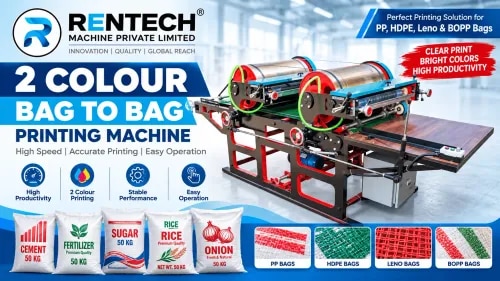
Bag-to-Bag Printing Machine

Advanced Two Colour Printing Technology for Woven Sack Manufacturing Rentech Machine Private Limited offers a Two Colour Bag-to-Bag Printing Machine designed for printing logos, product information, brand names, handling instructions, and other essential details directly onto finished bags. Developed for woven sack manufacturers and packaging businesses, this machine supports efficient printing operations where consistent image placement, clear text, and professional branding are important. The machine is suitable for businesses manufacturing PP woven bags, HDPE woven sacks, laminated and unlaminated woven bags, and other compatible packaging materials, subject to the machine configuration and substrate requirements. With a focus on practical operation, repeatable print quality, and production efficiency, Rentech's two-colour printing solution helps packaging manufacturers improve the appearance of their finished products while reducing dependence on manual printing methods. Whether you supply agricultural packaging, fertilizer bags, animal feed sacks, cement packaging, rice bags, or industrial packaging, two-colour printing can help present product information and brand identity clearly on the finished bag. Key Features and Advantages 1. Two-Colour Printing Capability Print designs using two colours in a single production setup, subject to the selected machine configuration. This is suitable for company logos, product names, text, symbols, and simple multicolour branding layouts. 2. Bag-to-Bag Printing Operation Designed to print on individual bags rather than requiring a roll-to-roll printing process for the finished printing operation. This makes the machine relevant for manufacturers who need to print branding or product information on pre-cut bags. 3. Consistent Print Positioning A properly adjusted feeding and registration system helps maintain consistent print placement across successive bags. Actual registration accuracy depends on machine configuration, bag dimensions, material condition, and operating settings. 4. Improved Packaging Presentation Clear printing improves the visual identity of finished packaging and helps customers identify product information, manufacturer details, and brand markings. 5. Suitable for Multiple Packaging Applications Depending on the selected configuration, the machine can be used for compatible PP woven, HDPE woven, laminated, and other suitable packaging bags. 6. Production-Oriented Design The machine is intended to support repetitive printing work in packaging production environments. Output depends on bag size, artwork, material characteristics, operator skill, and the selected operating speed. 7. Customisation According to Production Needs Machine specifications can be discussed according to the required bag dimensions, printing area, number of colours, material type, and expected production capacity. Applications Across Packaging Industries Rentech's two-colour bag-to-bag printing solution can serve manufacturers supplying: Fertilizer and agricultural input bags Rice, grain and flour packaging Animal feed and poultry feed sacks Sugar and other food commodity packaging Seeds and agricultural product bags Industrial raw material packaging Laminated and unlaminated PP woven sacks Compatible HDPE woven packaging bags Material suitability should be confirmed before production, particularly for laminated, coated, printed, or treated bag surfaces. Why Choose Rentech Machine Private Limited? Rentech Machine Private Limited provides machinery solutions for woven sack conversion and printing applications, with a focus on the practical requirements of packaging manufacturers. Application-focused solutions: Machine selection based on bag dimensions, substrate, artwork, and production requirements. Printing flexibility: A two-colour configuration for suitable logos, text, and packaging designs. Manufacturing expertise: Machinery solutions for woven bag cutting, stitching, printing, and conversion applications. Technical consultation: Assistance in evaluating machine suitability for your intended production process. Customised machine selection: Specifications can be discussed according to your operational requirements. Domestic and international enquiries: Support for packaging manufacturers evaluating machinery for their facilities. Frequently Asked Questions (Q&A) Q1. What is a Two Colour Bag-to-Bag Printing Machine? A Two Colour Bag-to-Bag Printing Machine prints designs using two colours on individual bags. It is used to apply branding, logos, product names, handling instructions, and other printed information to compatible packaging bags. Q2. Which materials can be printed on this machine? The intended applications include compatible PP woven and HDPE woven bags. Laminated bags and other substrates may also be suitable depending on surface characteristics, ink compatibility, and machine configuration. Q3. What is the advantage of two-colour printing? Two-colour printing allows manufacturers to combine two colours in a design, improving the visual presentation of logos, product information, and brand identity without requiring a more complex multicolour setup. Q4. Can this machine print company logos and product details? Yes. Suitable artwork can include company logos, brand names, product descriptions, symbols, and other packaging information, subject to the available printing area and printing method. Q5. What production speed can I expect? Production speed depends on bag dimensions, print coverage, artwork complexity, material handling, and machine settings. Contact Rentech Machine Private Limited for the rated output of the specific model you require. Q6. Can the machine print on laminated PP woven bags? It may be suitable for compatible laminated bags. The surface finish, lamination type, ink adhesion, and curing requirements should be evaluated before confirming suitability. Q7. How do I select the correct machine? Provide your bag length and width, material type, printing area, required colours, artwork, and target production output. These details help determine the appropriate machine configuration. Q8. Is the machine suitable for small and large packaging manufacturers? The suitability depends on the required output, production layout, product mix, and budget. Rentech can assess these requirements and recommend a configuration accordingly. Q9. What information should I provide when requesting a quotation? Please share your bag dimensions, substrate, required printing area, sample artwork, number of colours, target bags per hour, installation location, and any special operating requirements. Q10. Why choose Rentech Machine Private Limited for bag printing machinery? Rentech Machine Private Limited offers woven bag machinery solutions and technical consultation to help manufacturers identify equipment appropriate for their printing and production needs. Upgrade Your Bag Printing Process with Rentech Give your packaging a more consistent and professional appearance with a suitable two-colour bag-to-bag printing solution from Rentech Machine Private Limited. Contact Rentech Machine Private Limited to discuss your bag specifications, printing requirements, production targets, and machine configuration. Share your application details to receive technical guidance and a quotation tailored to your manufacturing needs. Rentech Machine Private Limited — Machinery Solutions for Woven Bag Printing, Conversion and Packaging Production.

6814772a5d263414004dd4a4 Card 2

product image
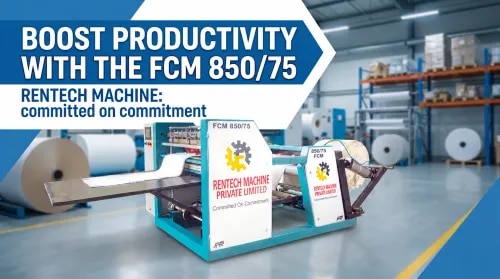
FCM-Auto Bag Cutting Machine

Automatic Cutting Machine for PP Leno, BOPP & HDPE Bags Precision Cutting Technology for Modern Woven Packaging Manufacturing Manufactured by Rentech Machine Private Limited Product Overview The Automatic Cutting Machine for PP Leno, BOPP Laminated, and HDPE Woven Bags is designed to support accurate, consistent, and efficient cutting operations in woven packaging manufacturing units. Developed for industrial production environments, this machine helps convert woven fabric rolls into predetermined bag lengths while reducing repetitive manual work and improving production consistency. Suitable configurations can be selected for PP leno fabric, PP woven fabric with BOPP lamination, and HDPE woven materials, depending on fabric construction, thickness, roll width, and cutting requirements. The machine is intended for manufacturers seeking better control over bag dimensions, improved cutting repeatability, and streamlined material handling. It can be integrated into existing bag-converting operations according to the production layout and downstream stitching or finishing process. Key Machine Features Automatic Length Control: Set the required cutting length according to the bag size and production specification. Consistent Cutting Accuracy: Supports repeatable bag dimensions when material feeding, tension, and cutting parameters are properly adjusted. Multi-Material Capability: Configurable for suitable PP leno, BOPP laminated woven, and HDPE woven materials. Controlled Fabric Feeding: Helps maintain smooth material movement and reduces feeding inconsistencies. Production-Oriented Operation: Designed to reduce repetitive manual cutting and support a more organized workflow. Operator-Friendly Controls: Allows convenient adjustment of cutting length and operating settings according to the supplied configuration. Industrial Construction: Built for routine operation in bag manufacturing and packaging production facilities. Flexible Production Setup: Cutting specifications can be configured to suit different bag formats and customer requirements. Technical Applications The machine can be used in manufacturing operations involving: PP leno bags used for agricultural produce, onions, potatoes, and other ventilated packaging applications. BOPP laminated PP woven bags used for branded packaging, printed packaging, and retail-oriented products. HDPE woven bags used for industrial packaging and suitable woven-sack applications. Woven fabric rolls requiring controlled cutting before stitching, sealing, or other downstream conversion operations. Why Choose Rentech Machine Private Limited? Rentech Machine Private Limited focuses on industrial machinery solutions for woven bag manufacturing and converting applications. Selecting an appropriate cutting system can help manufacturers improve dimensional consistency, organize production flow, and reduce dependence on manual cutting operations. Our machine configuration can be discussed according to fabric type, required cutting length, working width, production target, and the downstream bag-making process. For technical selection and quotation, share your material specifications, required cutting dimensions, and expected production output with our team. Frequently Asked Questions (Q&A) Q1. Which materials can the automatic cutting machine process? The machine can be configured for compatible PP leno, BOPP laminated PP woven, and HDPE woven materials. Suitability should be confirmed based on the fabric structure, thickness, coating, and cutting method. Q2. Can the cutting length be adjusted for different bag sizes? Yes, the required cutting length can be specified according to the supplied control system and machine configuration. The available length range should be confirmed for the selected model. Q3. Is the machine suitable for BOPP laminated woven bags? A suitable configuration can be used for BOPP laminated woven fabric. The cutting system should be selected to accommodate the laminate construction and achieve the required edge quality. Q4. Can it be used for PP leno bags? Yes, a compatible configuration can process PP leno fabric used for ventilated agricultural packaging. Fabric tension and feeding settings are important for maintaining consistent cutting dimensions. Q5. What factors affect cutting accuracy? Cutting accuracy depends on the feed-control system, fabric tension, material slippage, cutting mechanism, fabric properties, and machine settings. Q6. Does the machine reduce manual labour? Automatic feeding and cutting functions can reduce repetitive manual handling compared with manual cutting processes. Actual labour savings depend on the production layout and level of automation. Q7. Can the machine be integrated into an existing bag manufacturing line? Integration may be possible depending on available floor space, fabric roll handling, required output, and compatibility with downstream stitching or finishing equipment. Q8. What information is required to select the right machine? Customers should provide the fabric type, maximum fabric width, required cutting-length range, material thickness or GSM, target production rate, and available electrical supply. Q9. Can the machine be customized? Selected specifications may be customized according to technical feasibility, production requirements, and the final machine design. Contact Rentech Machine Private Limited For machine specifications, configuration options, and pricing, contact Rentech Machine Private Limited for a solution tailored to your woven bag manufacturing requirements.