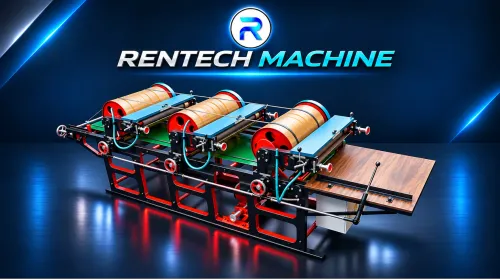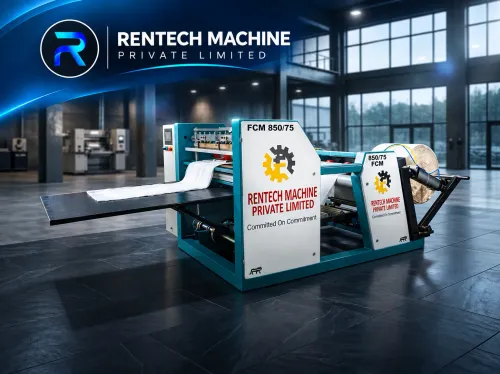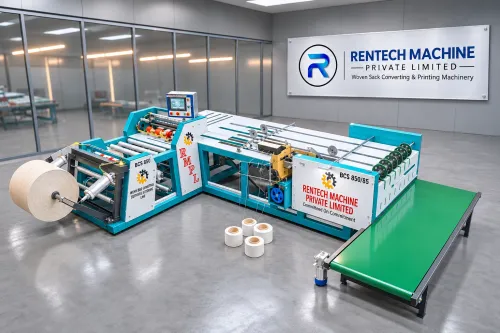


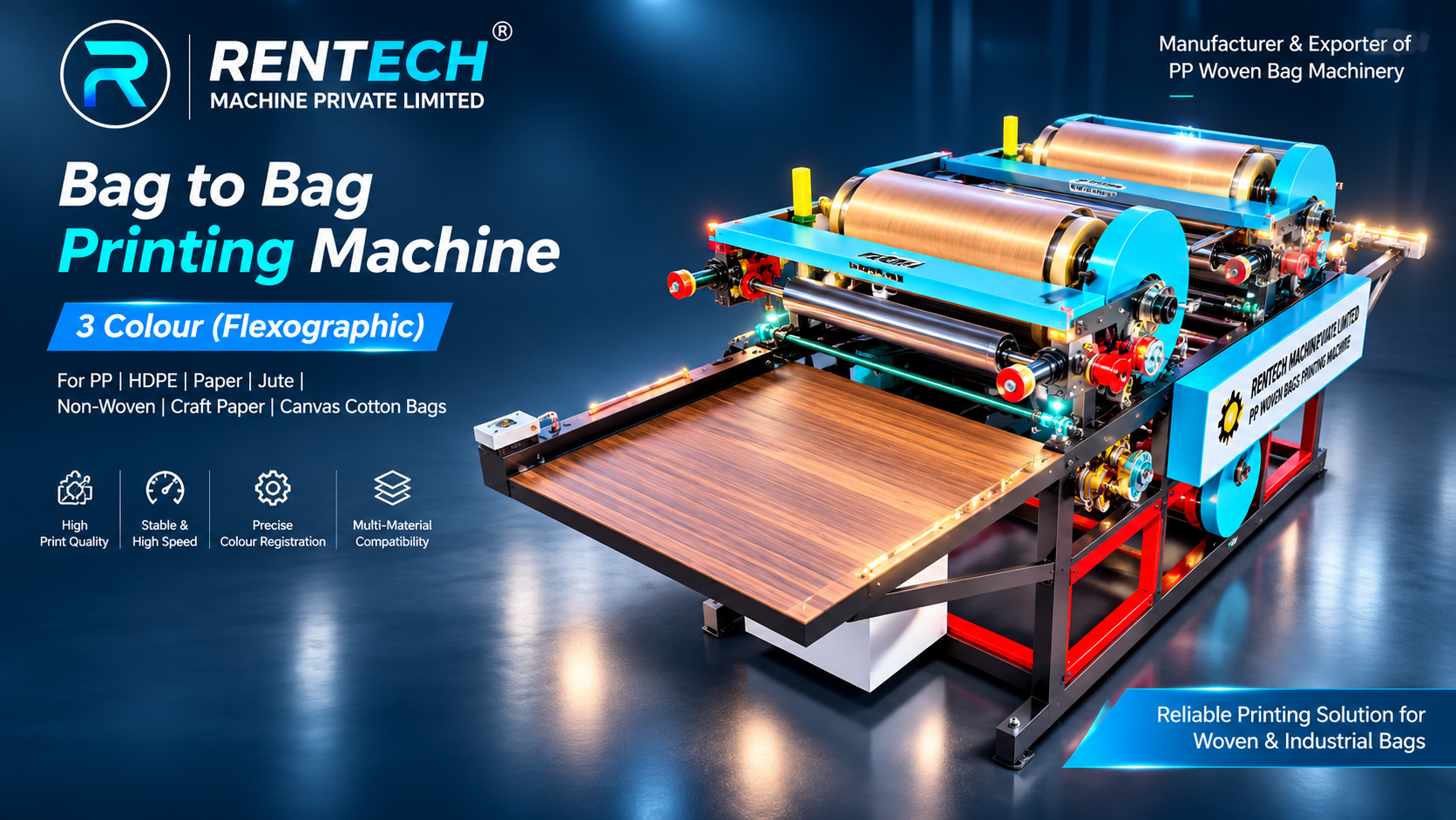
2 Colour Bag-to-Bag Printing Machine: A Practical Printing Solution for Modern Packaging Manufacturers
Introduction: Why Bag Printing Matters in Modern Packaging
In today's competitive packaging industry, a bag is more than just a container used for storing and transporting products. It is also an important medium for brand recognition, product identification, business communication and customer engagement.
Packaging manufacturers are increasingly focusing on the appearance and presentation of their bags. Clear company logos, product descriptions, brand names, handling instructions and promotional graphics help businesses create a professional identity in the marketplace.
To meet these requirements, the 2 Colour Bag-to-Bag Printing Machine offers a practical industrial printing solution for manufacturers who need to print designs directly onto individual bags.
Rentech Machine Private Limited manufactures industrial bag printing machinery designed to support the requirements of packaging manufacturers. Its two-colour bag-to-bag printing solution is intended for businesses looking for a suitable balance between printing capability, production requirements and operational practicality.
Instead of printing on continuous fabric rolls before bag conversion, bag-to-bag printing allows manufacturers to print directly onto individual bags. This approach can be particularly useful for manufacturers whose production process involves purchasing or producing ready-made bags that require branding or additional printed information.
Understanding the 2 Colour Bag-to-Bag Printing Process
A two-colour bag-to-bag printing machine is an industrial printing system designed to transfer two separate colours onto individual bags.
The machine uses a flexographic printing approach in which prepared printing plates transfer ink onto the bag surface through the printing arrangement.
Each colour performs a separate role in reproducing the required artwork. For example, one colour can be used for a company logo or primary design, while the second colour can be used for product information, supporting graphics or additional branding elements.
The printing process generally involves feeding individual bags into the machine, positioning them correctly, transferring the required artwork and delivering the printed bags for collection.
The objective is to achieve a repeatable printing process with consistent positioning and suitable print quality throughout production.
Why Choose a Two-Colour Printing Configuration?
Not every packaging manufacturer requires a four-colour or multi-colour printing arrangement.
Many industrial packaging applications use simple artwork consisting of a company name, logo, product description, identification marks or two-colour branding.
For these requirements, a two-colour printing configuration can be a commercially practical choice.
It allows manufacturers to select a printing arrangement according to their actual artwork requirements rather than investing in additional colour stations that may not be necessary for their regular production.
A two-colour machine can be considered by:
- PP woven bag manufacturers printing company branding.
- HDPE bag manufacturers requiring product identification.
- Packaging converters supplying printed industrial bags.
- Agricultural packaging manufacturers producing sacks for different products.
- Fertilizer and chemical packaging suppliers.
- Industrial packaging businesses handling bulk material bags.
- Printing businesses offering customised bag printing services.
The final machine selection should always be based on the required artwork, substrate, production volume and printing requirements.
Bag-to-Bag Printing vs Roll-to-Roll Printing: Understanding the Difference
One of the most important decisions for a packaging manufacturer is selecting the appropriate printing method.
Both bag-to-bag and roll-to-roll printing have important roles in the packaging industry, but they serve different production requirements.
Bag-to-Bag Printing
Bag-to-bag printing is designed to print on individual bags rather than on a continuous fabric roll.
This approach is useful when the bags are already converted or when the manufacturing process requires printing at the individual bag stage.
It can help manufacturers manage different bag designs, customer-specific branding and product identification requirements.
Roll-to-Roll Printing
Roll-to-roll printing is performed on continuous fabric or substrate before the material is converted into individual bags.
It is generally considered for applications where printing needs to be completed across continuous material before cutting, stitching or other conversion operations.
Which Printing Method Is Better?
There is no single answer for every manufacturer.
A business producing large quantities of the same printed fabric design may find roll-to-roll printing more suitable.
On the other hand, a manufacturer handling ready-made bags, customised branding requirements or different bag batches may find bag-to-bag printing more appropriate.
The correct decision depends on the production workflow, bag specifications, artwork and overall manufacturing requirements.
Applications Across Different Packaging Industries
The demand for printed bags comes from several industrial and commercial sectors. Different industries use printing to communicate product details, identify manufacturers and improve packaging presentation.
A two-colour bag-to-bag printing machine can be considered for the following applications, subject to machine configuration and material compatibility.
PP Woven Bags
PP woven bags are extensively used in industrial and commercial packaging. They are commonly used for packaging agricultural commodities, grains, seeds, animal feed, fertilizers and various industrial products.
Printing can include company logos, product names, manufacturer details, handling information and other required graphics.
HDPE Bags
HDPE bags are used in different packaging applications where product identification and branding are required. Printing requirements depend on the bag construction, surface properties and ink compatibility.
Leno Bags
Leno bags are widely used in agricultural packaging, particularly for products such as onions, potatoes, garlic and other vegetables.
Printing can help identify the supplier, product category and brand. Because leno fabrics have an open mesh structure, the printing arrangement and sample quality should be evaluated before production.
BOPP Laminated Bags
BOPP laminated woven bags are used in packaging applications where product presentation and branding are important.
Printing requirements depend on the actual surface being printed, lamination construction and compatibility with the selected printing process.
Paper and Kraft Paper Bags
Paper and kraft paper packaging are used in retail, industrial and commercial applications. Printing helps communicate product details and brand identity.
Non-Woven Bags
Non-woven bags are used in promotional packaging, shopping applications and different commercial sectors. Printing suitability depends on fabric weight, surface characteristics and ink selection.
Jute, Canvas and Cotton Bags
Jute, canvas and cotton bags are used in specialised packaging, agricultural and promotional applications.
Due to their surface texture and absorbency, these materials may require specific printing arrangements and suitable ink selection. Actual sample testing is recommended.
Important Factors for Achieving Consistent Printing Quality
For packaging manufacturers, printing quality is not determined by the number of colours alone. Several factors influence the final printed result.
Bag Feeding and Positioning
Correct bag feeding is essential for maintaining consistent print placement. Bags should enter the printing area in a controlled manner to minimise alignment variations.
Printing Plate Preparation
The printing plate must be prepared according to the required artwork. Plate quality, artwork dimensions and mounting accuracy influence the final printed design.
Colour Registration
In two-colour printing, the two printing colours must align correctly to reproduce the intended design.
Proper registration helps prevent unwanted colour displacement, overlapping and misalignment.
Ink Selection
Ink selection should be based on the bag material, surface treatment, printing method and required drying or setting characteristics.
Using unsuitable ink can affect adhesion, appearance and print durability.
Surface Condition of the Bag
Dust, contamination, surface treatment and material characteristics can influence ink transfer and adhesion.
Before finalising a printing setup, manufacturers should evaluate actual bag samples.
Operator Skills and Process Control
Correct machine operation, cleaning, printing plate maintenance and process monitoring contribute to consistent production.
A properly managed printing process can reduce avoidable material wastage and improve operational efficiency.
How a Bag-to-Bag Printing Machine Supports Manufacturing Businesses
Investing in a dedicated bag printing machine is not simply about adding another piece of equipment to a factory. It is about improving the way a manufacturer manages branding and printing requirements.
A suitable two-colour printing solution can offer several business advantages.
Better control over printing operations: Manufacturers can manage printing activities within their own production facility instead of depending entirely on outside printing services.
Support for customer-specific branding: Different customers may require different logos, product descriptions and printed information. A bag-to-bag process can be useful for handling individual production batches.
Practical colour configuration: Businesses whose regular artwork requires two colours can select a machine configuration suited to those requirements.
Production workflow flexibility: Printing individual bags can be incorporated into manufacturing operations where ready-made or converted bags require additional printing.
Value-added manufacturing services: Packaging manufacturers can expand their service offerings by supplying branded bags to customers across different industries.
The actual financial benefit depends on production volume, labour costs, consumable expenses, machine utilisation and the cost of alternative printing arrangements.
Why Choose Rentech Machine Private Limited?
Rentech Machine Private Limited is an Ahmedabad, Gujarat-based manufacturer of industrial machinery for the woven packaging and bag conversion industry.
The company focuses on machinery solutions for bag cutting, stitching, printing and woven sack conversion applications.
With an understanding of the requirements of packaging manufacturers, Rentech aims to provide machinery solutions that address practical production needs.
Its bag printing solutions are developed for manufacturers looking to manage printing operations for different packaging applications.
When selecting a two-colour bag-to-bag printing machine from Rentech, buyers can discuss their specific requirements, including:
- Type of bag material.
- Bag dimensions and construction.
- Required printing artwork and number of colours.
- Printing area and design placement.
- Expected production volume.
- Ink and printing requirements.
- Factory layout and production workflow.
This information helps identify a suitable machine configuration for the intended application.
Making the Right Investment in Bag Printing Machinery
Before purchasing an industrial bag printing machine, manufacturers should evaluate their current production requirements and future business plans.
The number of colours required is only one part of the purchasing decision.
Buyers should also consider the types of bags they manufacture, the printing surface, the complexity of artwork, the expected production volume and the compatibility of the printing process with their materials.
Requesting a sample printing trial is an important step, particularly when working with different woven fabrics, laminated bags or textured materials.
A well-matched machine can help businesses improve their printing workflow, maintain a consistent brand presentation and expand their packaging capabilities.
Conclusion
The 2 Colour Bag-to-Bag Printing Machine is a practical option for packaging manufacturers who require two-colour printing directly on individual bags.
From PP woven and HDPE bags to other compatible packaging materials, the right printing arrangement can help manufacturers meet branding, product identification and commercial packaging requirements.
Rentech Machine Private Limited provides industrial printing and woven bag machinery solutions for businesses looking to strengthen their manufacturing capabilities.
If you are planning to install a two-colour bag printing machine or upgrade your existing printing operations, contact Rentech Machine Private Limited to discuss your bag material, printing artwork and production requirements.
Rentech Machine Private Limited – Your Manufacturing Partner for Bag Cutting, Stitching, Printing and Conversion Machinery.
Frequently Asked Questions (FAQs)
Q1. What is a 2 Colour Bag-to-Bag Printing Machine?
A 2 Colour Bag-to-Bag Printing Machine is an industrial printing machine designed to print two colours directly onto individual bags. It is used for printing logos, company names, product information and branding graphics.
Q2. What is the difference between a two-colour and a three-colour bag printing machine?
A two-colour machine is designed for artwork requiring two printing colours, while a three-colour machine supports artwork requiring three separate colours. The right selection depends on the customer's design and production requirements.
Q3. Can a two-colour printing machine print on PP woven bags?
Yes, PP woven bags are an important application for bag-to-bag printing. Actual printing quality depends on the bag surface, surface treatment, ink compatibility and machine configuration.
Q4. Can this machine print on HDPE bags?
HDPE bags can be considered for printing, subject to their construction, surface properties, printing process and ink compatibility.
Q5. Is bag-to-bag printing different from roll-to-roll printing?
Yes. Bag-to-bag printing applies artwork to individual bags, whereas roll-to-roll printing applies artwork to continuous fabric or substrate before bag conversion.
Q6. Why should a manufacturer select a two-colour printing machine?
A two-colour configuration is suitable for manufacturers whose regular designs require two colours. It can provide the required printing capability without selecting a higher-colour configuration that may not be necessary.
Q7. Can the machine print company logos and product information?
Yes. Company logos, product names, branding elements, identification details and other suitable graphics can be printed according to the prepared printing artwork.