

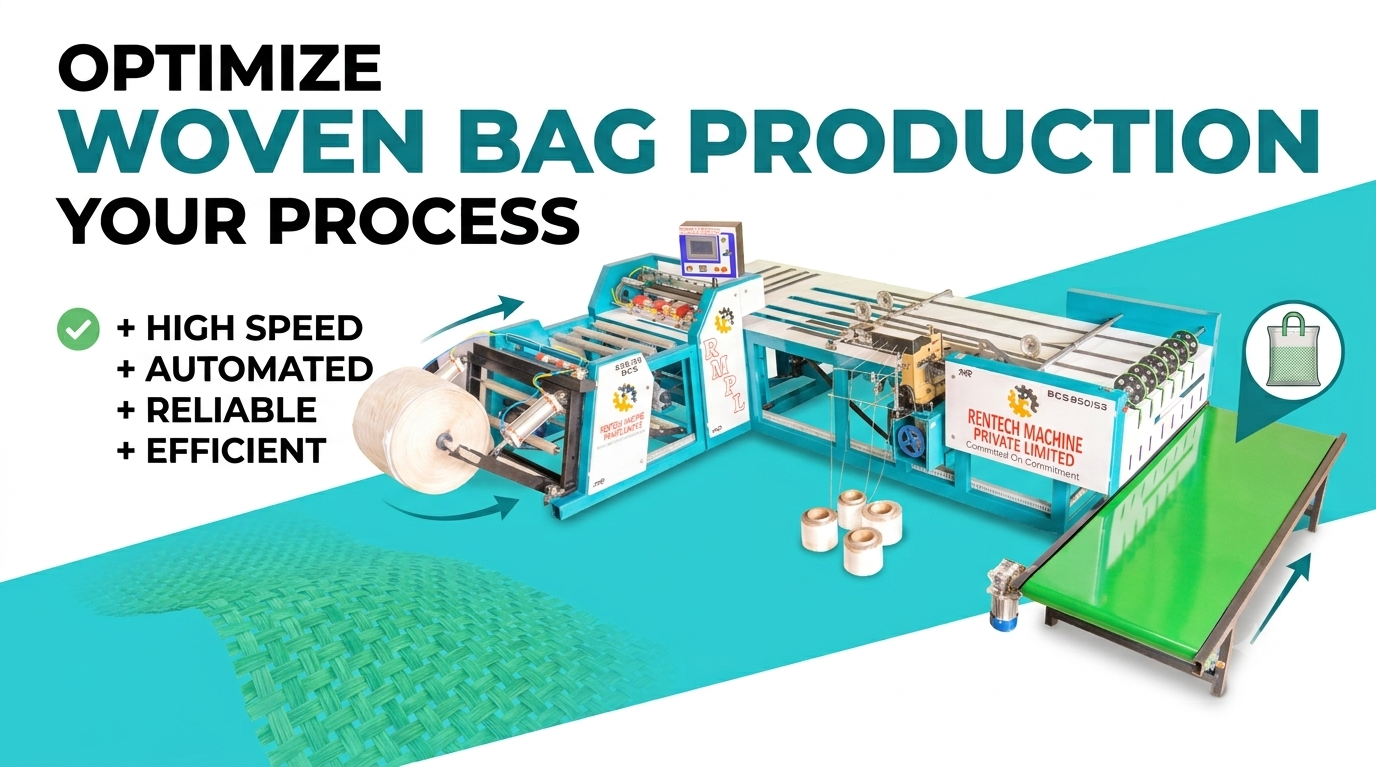
Introduction: A Smarter Approach to Woven Bag Conversion
In today's competitive packaging industry, manufacturers need more than just high-speed production. They need consistency, efficient material utilization, dependable stitching quality, and a production process that can handle changing customer requirements. This is where an Auto Bag Cutting and Stitching Machine becomes an important part of modern woven sack manufacturing.
Rentech Machine Private Limited provides machinery solutions for manufacturers who want to improve the way woven fabric is converted into finished packaging bags. By combining cutting and stitching operations within a coordinated production workflow, an automatic machine can help reduce repetitive manual work, maintain uniform bag dimensions, and simplify day-to-day factory operations.
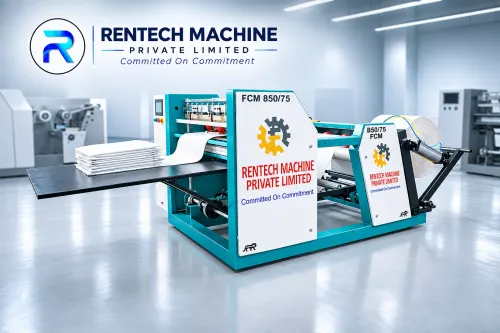
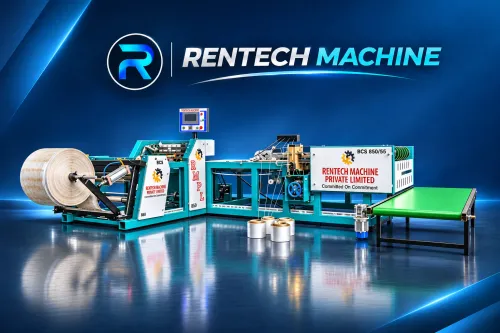
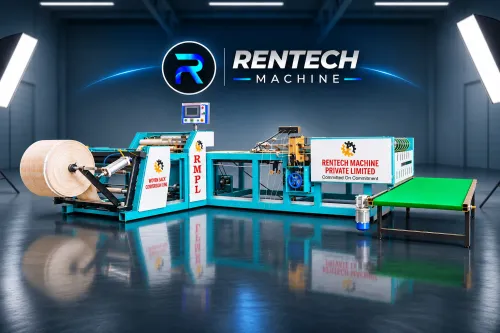
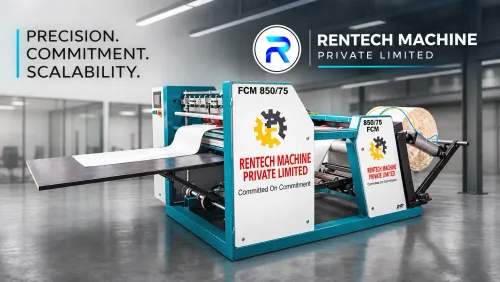
Unlike a production setup that relies heavily on separate manual operations, an integrated cutting and stitching system is designed to coordinate essential conversion stages. Fabric is fed into the machine, measured according to the required bag length, cut, and directed through the stitching process according to the machine configuration.
For businesses producing PP woven and compatible HDPE woven sacks, this approach can support better production planning and more consistent manufacturing results. The actual performance depends on fabric characteristics, bag specifications, operating settings, and the selected machine model.
Why Are Manufacturers Moving Towards Automatic Bag Cutting and Stitching?
The real value of automation is not limited to producing more bags. It also lies in creating a repeatable manufacturing process.
When bag cutting and stitching are managed through coordinated machinery, manufacturers can improve control over several production variables. Consistent cutting measurements help maintain bag dimensions, while a suitable stitching arrangement supports uniform seam formation. Reduced manual handling can also simplify the movement of fabric between production stages.
Another important consideration is production planning. When a factory receives orders for different bag sizes, the ability to adjust machine settings within the specified operating range can help organize production batches more effectively.
For manufacturers planning to expand their woven sack business, an automatic cutting and stitching machine can therefore be evaluated as a productivity investment rather than simply a replacement for manual labour.
Important Factors to Consider Before Purchasing an Automatic Machine
Selecting machinery based only on advertised production speed can lead to a mismatch between the equipment and the factory's actual requirements. Manufacturers should evaluate the complete production application before making a purchase.
- Bag dimensions: Confirm the required bag width and cutting length range.
- Fabric specifications: Check material type, GSM, thickness, coating, lamination, and roll characteristics.
- Production target: Define the expected output per minute or per shift, based on the actual bag size and material.
- Stitching quality: Consider seam strength, stitch type, thread requirements, and compatibility with the intended application.
- Changeover requirements: Evaluate how easily operators can adjust the machine for different bag sizes.
- Operator convenience: Review the control system, machine accessibility, adjustment procedure, and maintenance requirements.
- Future production plans: Select a configuration that matches current demand while considering realistic future expansion.
These factors help manufacturers choose equipment that supports their actual production process instead of paying for features they may not need.
Rentech Machine Private Limited: Machinery Solutions for Woven Packaging
Rentech Machine Private Limited focuses on machinery for woven sack cutting, stitching, printing, and conversion applications. We understand that packaging manufacturers require equipment that fits their material specifications, production targets, and operating conditions.
Our approach emphasizes application-based machine selection. Whether a customer is upgrading an existing production line or establishing a new woven bag manufacturing unit, the machine configuration should be assessed according to bag dimensions, fabric characteristics, required output, and finishing requirements.
An automatic bag cutting and stitching solution can help establish a more organized production workflow, with greater consistency across repetitive manufacturing operations.
For businesses planning to improve their woven sack production capabilities, Rentech Machine Private Limited offers an opportunity to discuss the technical and commercial requirements of a suitable machine configuration.
Frequently Asked Questions (Q&A)
Q1. What is the difference between a manual and an automatic bag cutting and stitching machine?
A manual setup requires greater operator involvement in repetitive feeding, measuring, cutting, and material handling tasks. An automatic configuration coordinates selected operations through the machine, helping improve process consistency and reduce manual intervention.
Q2. Can the machine be used for fertilizer and agricultural bags?
It can be suitable for compatible woven bags used in fertilizer, seed, grain, animal feed, and other industrial packaging applications. The material construction, bag dimensions, and required seam must be checked before confirming suitability.
Q3. How does automatic cutting help reduce bag-size variation?
Controlled feeding and length measurement help the machine repeat the selected cutting length. Actual accuracy depends on the measurement system, fabric tension, material properties, calibration, and machine condition.
Q4. Does the machine improve stitching quality?
A properly adjusted stitching system can provide more consistent seam formation. However, seam strength also depends on the sewing mechanism, thread, stitch settings, fabric construction, and regular maintenance.
Q5. Can one machine handle different bag sizes?
Many configurations allow adjustments within a defined operating range. Buyers should confirm the minimum and maximum cutting lengths, working width, and changeover procedure for the specific model.
Q6. What information should I provide when requesting a quotation?
Provide the fabric type, GSM or thickness, bag width, bag length, required production capacity, stitching specifications, and expected operating hours. Sharing a sample bag or fabric details can also help the manufacturer assess the application.
Q7. Is the machine suitable for a factory planning to increase production?
It can be suitable when the existing cutting and stitching process limits production consistency or creates excessive manual handling. The decision should be based on actual demand, required output, available space, staffing, and the expected return on investment.
Q8. How can I select the correct production capacity?
Estimate the required finished bags per shift and consider the number of working hours, planned changeovers, maintenance time, and acceptable production losses. Compare this requirement with verified machine output under comparable bag and fabric conditions.
The development of woven packaging manufacturing increasingly depends on repeatable processes, effective material handling, and consistent finished-bag quality. An Auto Bag Cutting and Stitching Machine can support these objectives by coordinating two essential conversion operations within a production workflow.
For manufacturers, the key is to choose machinery that matches the actual fabric, bag dimensions, stitching requirements, and production target. A well-matched configuration can simplify operations and provide a foundation for future production improvements.
Rentech Machine Private Limited works with woven packaging manufacturers to identify machinery solutions suited to their production requirements. Contact us to discuss your automatic bag cutting and stitching machine application.