

Automatic PP Woven Bag Cutting and Stitching Machine: Improving Manufacturing Efficiency and Production Quality
Introduction: The Growing Need for Automation in PP Woven Bag Manufacturing
The packaging industry is continuously evolving, with manufacturers looking for better ways to improve production efficiency, maintain consistent product quality, and manage increasing customer requirements. PP woven bags have become an important packaging solution across industries such as agriculture, food grains, fertilizers, cement, chemicals, animal feed, and industrial materials.
As demand for PP woven packaging increases, manufacturers must focus not only on producing woven fabric but also on converting that fabric into finished bags efficiently. This is where an Automatic PP Woven Bag Cutting and Stitching Machine plays an important role.
Traditional bag manufacturing processes often involve multiple manual operations, including fabric measurement, cutting, material handling, and stitching. These operations can create production bottlenecks, increase dependency on manual labour, and make it difficult to maintain uniformity across large production batches.
An automatic cutting and stitching machine brings these essential manufacturing operations into a more organised production process. It helps manufacturers convert PP woven fabric into finished bags with controlled cutting, consistent dimensions, and reliable stitching.
Rentech Machine Private Limited develops industrial machinery solutions for woven sack manufacturing and bag conversion applications, helping manufacturers move towards more efficient and organised production systems.
Why Is Automation Becoming Important for PP Woven Bag Manufacturers?
The competitiveness of a PP woven bag manufacturing business depends on several factors beyond the quality of its raw materials. Production planning, labour management, manufacturing consistency, delivery commitments, and operational expenses all influence business performance.
When cutting and stitching operations depend heavily on manual processes, manufacturers may face difficulties maintaining consistent production standards.
Automation addresses several of these challenges.
Maintaining Consistent Bag Dimensions
Bag dimensions are an important part of packaging quality. Variations in bag length or cutting alignment can create difficulties during filling, stacking, transportation, and packaging operations.
An automatic cutting system helps maintain controlled cutting lengths according to the required production settings. This supports better dimensional consistency across production batches.
Reducing Manual Dependency
Manual handling at different production stages requires continuous operator involvement. An automated system helps reduce repetitive manual activities and allows operators to focus on supervision, material management, and production monitoring.
This can improve workforce utilisation and make production operations easier to organise.
Improving Production Planning
A manufacturing unit needs predictable production processes to fulfil customer orders on time.
Automatic cutting and stitching operations help establish a more structured workflow. Manufacturers can organise fabric feeding, bag conversion, stitching, inspection, and finished-product handling more effectively.
Supporting Consistent Stitching Quality
The stitching operation directly affects the usability and durability of a finished woven bag.
Consistent stitching is important for maintaining bag strength and reducing the possibility of defective products. An industrial automatic stitching arrangement helps manufacturers establish a repeatable production process.
The Role of an Automatic Cutting and Stitching Machine in the Manufacturing Process
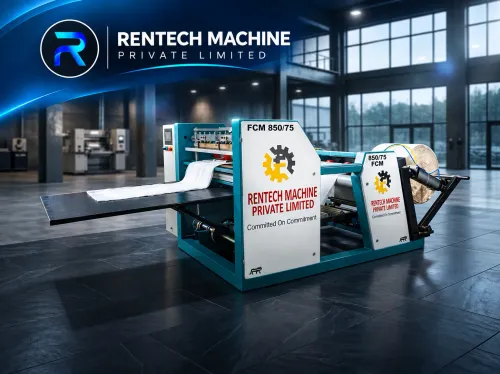
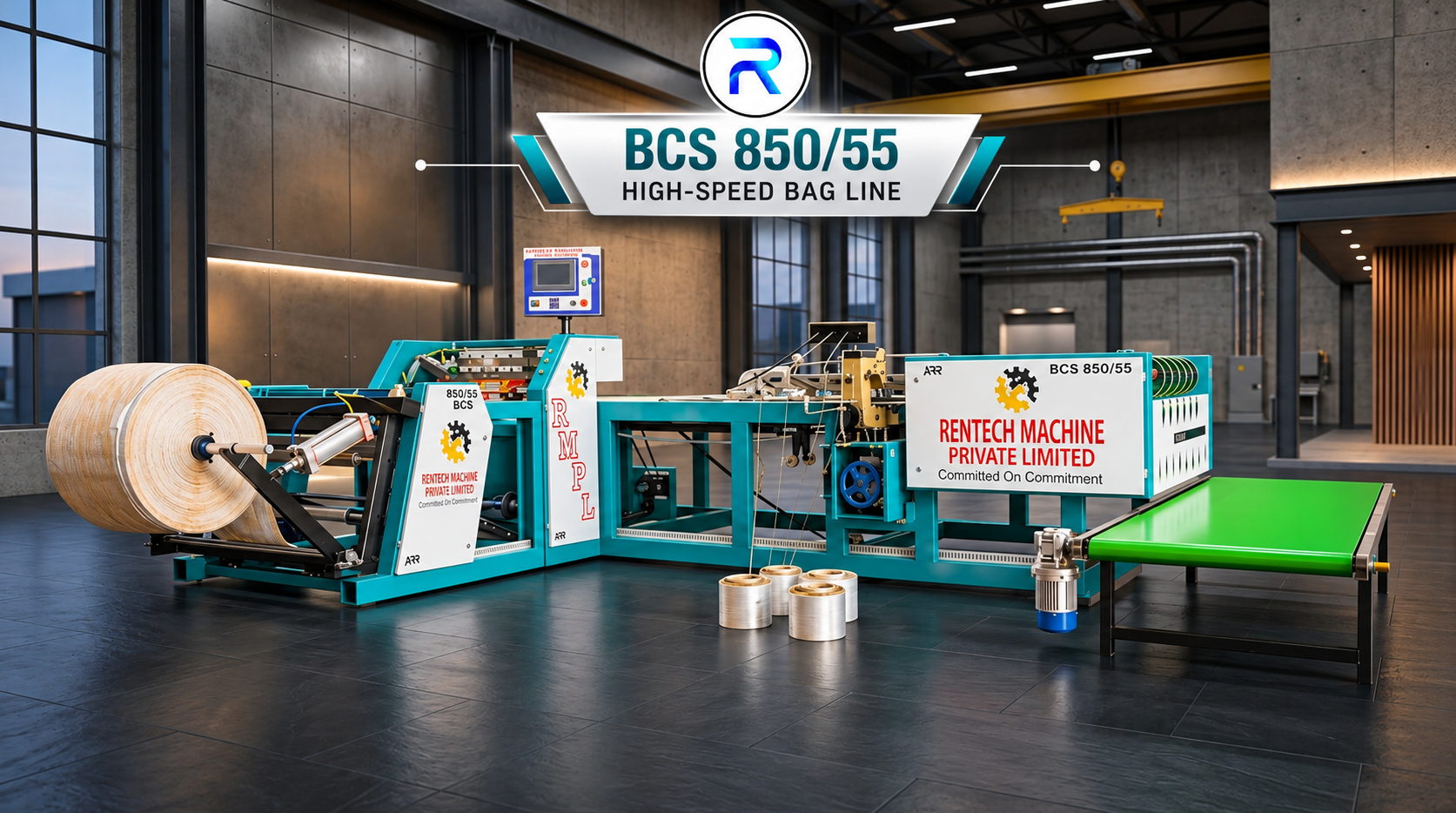
An automatic PP woven bag cutting and stitching machine is designed to convert continuous woven fabric into individual bags through coordinated manufacturing operations.
The process involves more than simply cutting fabric and sewing its edges. Every stage contributes to the quality and consistency of the finished product.
Fabric Feeding and Alignment
The production process begins with the feeding of PP woven fabric into the machine.
Proper fabric alignment is important because incorrect positioning can affect cutting accuracy and the overall appearance of finished bags.
Controlled feeding helps maintain a consistent material flow throughout the conversion process.
Controlled Bag Length Selection
Different industries require different bag sizes depending on the packaging material, filling requirements, and customer specifications.
Manufacturers need the flexibility to produce bags according to the dimensions required by their customers.
Automatic length control helps establish repeatable cutting operations and supports production of different bag sizes according to machine configuration.
Automatic Cutting Operation
Once the required fabric length is established, the cutting mechanism separates individual bag sections from the continuous fabric.
Consistent cutting helps maintain uniformity between bags and reduces unnecessary material variation.
This is particularly important for manufacturers supplying large quantities to customers who expect consistent packaging dimensions.
Bag Transfer and Handling
After cutting, the individual bag sections move towards the stitching operation.
Organised material transfer helps maintain production continuity and reduces unnecessary manual handling between operations.
Automatic Stitching
Stitching is one of the most important stages in PP woven bag manufacturing.
The machine performs the required stitching operation to prepare the cut fabric for use as a finished bag.
Appropriate stitching quality helps maintain bag integrity during filling, storage, transportation, and handling.
The stitching arrangement can be selected according to the required bag construction and application.
Finished Bag Collection and Inspection
Once stitching is completed, finished bags can be collected for inspection and further processing.
Manufacturers should check bag dimensions, cutting quality, stitch consistency, and overall appearance before approving the finished batch.
A well-organised inspection process helps identify production issues early and maintain customer quality requirements.
How Automatic Bag Conversion Improves Manufacturing Economics
For a PP woven bag manufacturer, investing in automation should be evaluated from a business perspective rather than simply comparing machine prices.
The real value of an automatic cutting and stitching machine lies in how it affects the overall manufacturing operation.
Better Utilisation of Production Time
Manual processes can involve repeated measuring, positioning, cutting, and transferring activities.
Automation helps coordinate these operations into a more systematic production cycle, potentially reducing avoidable delays between manufacturing stages.
Lower Dependence on Repetitive Manual Operations
When repetitive activities are automated, manufacturers can organise their workforce more effectively.
This does not eliminate the need for skilled operators. Instead, it changes their role from performing every repetitive operation to supervising the production process and maintaining quality.
Reduced Production Inconsistency
Inconsistent bag dimensions and stitching quality can lead to rejected products, customer complaints, and additional inspection work.
A controlled automatic process helps manufacturers improve repeatability and manage production quality more effectively.
Improved Order Management
Manufacturers frequently receive orders for different bag dimensions and quantities.
A production system that supports organised settings and repeatable operations makes it easier to plan different manufacturing batches.
Long-Term Manufacturing Development
Automation is not only an investment in present production requirements. It can also help a manufacturing business prepare for increasing order volumes and changing customer expectations.
The suitability of an investment should be assessed through production requirements, operating costs, labour utilisation, maintenance, and expected machine usage.
What Should Manufacturers Consider Before Investing in an Automatic PP Bag Cutting and Stitching Machine?
Selecting an industrial machine is an important decision because it influences the production process for years.
Before purchasing an automatic PP woven bag cutting and stitching machine, manufacturers should evaluate the following factors.
1. Type of Woven Fabric
Confirm that the machine is suitable for the PP woven fabric used in your manufacturing process. Fabric construction, thickness, lamination, and material characteristics should be considered.
2. Required Bag Dimensions
Identify the bag widths and lengths required for your regular customer orders. The machine should be appropriate for the intended product range.
3. Production Requirements
Evaluate your actual daily and monthly production requirements rather than selecting machinery based only on its advertised maximum speed.
4. Cutting Consistency
Ask about the cutting arrangement and how the machine maintains the required bag length during continuous production.
5. Stitching Quality
Check the stitching arrangement, finished seam quality, and suitability for the intended bag application.
6. Ease of Operation
An operator-friendly control system can make production settings, machine monitoring, and routine operation easier to manage.
7. Maintenance and Technical Support
Consider the availability of spare parts, maintenance assistance, technical guidance, and after-sales support.
8. Future Production Requirements
Consider whether your manufacturing business may require additional production capacity or different bag sizes in the future.
A machine should be selected according to the complete manufacturing requirement, not just its purchase price.
Applications of Automatic PP Woven Bag Cutting and Stitching Machines
Automatic cutting and stitching machinery is suitable for manufacturing different types of woven packaging bags used across commercial and industrial sectors.
Common applications include:
- Agricultural Packaging: PP woven bags used for grains, seeds, pulses, rice, wheat, and other agricultural products.
- Fertilizer Packaging: Woven sacks used for fertilizer storage, handling, and distribution.
- Animal Feed Packaging: PP woven bags used for packaging cattle feed, poultry feed, and other animal nutrition products.
- Food Grain Packaging: Bags used by rice mills, grain processors, and agricultural packaging companies.
- Industrial Packaging: Woven sacks used for different industrial raw materials and bulk packaging applications.
- Chemical Packaging: Suitable woven bag manufacturing applications where the required fabric and bag construction are compatible.
The final bag application should always be considered when selecting the fabric, bag construction, and stitching arrangement.
Why Choose Rentech Machine Private Limited?
Choosing the right machinery manufacturer is as important as choosing the right machine.
Rentech Machine Private Limited is an industrial machinery manufacturer based in Ahmedabad, Gujarat, India, specialising in machinery solutions for woven sack manufacturing and conversion applications.
The company focuses on developing machinery for PP woven bag cutting, stitching, printing, and conversion requirements.
For manufacturers planning to improve their existing production operations or establish a more automated bag manufacturing facility, Rentech Machine offers machinery solutions designed around industrial production requirements.
Key areas of focus include:
- Machinery solutions for PP woven bag manufacturing.
- Automatic cutting and stitching systems for woven bag conversion.
- Production solutions for different bag manufacturing requirements.
- Equipment designed to support organised industrial operations.
- Application-based machine selection and technical consultation.
- Support for manufacturers evaluating production automation.
The objective is to help woven bag manufacturers improve production processes through suitable industrial machinery.
The Future of PP Woven Bag Manufacturing
The future of woven bag manufacturing will increasingly depend on production efficiency, product consistency, automation, and the ability to respond to changing packaging requirements.
Manufacturers who evaluate their production processes and invest in appropriate automation can build a more organised manufacturing environment.
An automatic PP woven bag cutting and stitching machine is an important part of this development because it connects fabric conversion and stitching operations into a coordinated production process.
For businesses looking to expand their manufacturing capabilities, choosing suitable machinery is an important step towards building a reliable and scalable production facility.
Rentech Machine Private Limited continues to focus on industrial machinery solutions for the woven packaging industry, supporting manufacturers with automatic bag cutting, stitching, printing, and conversion machinery.
Contact Rentech Machine Private Limited to discuss your PP woven bag manufacturing requirements and explore a suitable automatic cutting and stitching solution.
Frequently Asked Questions (FAQs)
1. What is an automatic PP woven bag cutting and stitching machine?
An automatic PP woven bag cutting and stitching machine is industrial equipment designed to convert continuous PP woven fabric into individual finished bags through controlled feeding, cutting, and stitching operations.
2. What is the main purpose of an automatic bag cutting and stitching machine?
Its primary purpose is to automate the conversion of woven fabric into finished bags, helping manufacturers improve production organisation, dimensional consistency, and operational efficiency.
3. Can an automatic cutting and stitching machine produce different bag sizes?
Yes. Machines configured with adjustable cutting settings can support different bag lengths. The available size range depends on the particular machine model and configuration.
4. Why is automatic cutting important in PP woven bag manufacturing?
Automatic cutting helps maintain consistent bag lengths, reduce repetitive manual measuring, and organise the conversion process for continuous production.
5. How does automatic stitching improve bag manufacturing?
Automatic stitching helps establish repeatable stitching operations and consistent seam quality, supporting the structural integrity and usability of finished bags.
6. Is an automatic machine suitable for large-scale PP woven bag manufacturing?
Automatic machinery can be suitable for medium- and large-scale manufacturing operations, depending on production requirements, machine configuration, operating conditions, and the required output.
7. What factors affect the production output of an automatic bag conversion machine?
Production output can depend on machine speed, fabric quality, bag dimensions, cutting and stitching cycles, material handling, operator efficiency, and machine downtime.
8. Can an automatic cutting and stitching machine be integrated into an existing PP woven bag manufacturing unit?
Yes. Integration may be possible, subject to the existing production layout, fabric roll handling arrangement, material flow, electrical requirements, and machine compatibility.