

Automatic Woven Bag Making Machine: Advanced Solutions for PP, HDPE, Leno and BOPP Bag Manufacturing
Introduction
The packaging industry is continuously evolving, with increasing demand for durable, lightweight, and cost-effective packaging solutions across agriculture, fertilizers, food grains, construction, and industrial sectors. Woven bags have become an essential packaging choice because of their versatility, strength, and suitability for a wide range of applications.
To meet growing production requirements, manufacturers are increasingly adopting automatic woven bag making machines that help streamline fabric conversion, cutting, stitching, and finished-bag handling. Automation can improve production consistency, reduce repetitive manual operations, and support efficient manufacturing workflows.
Rentech Machine Private Limited, based in Ahmedabad, Gujarat, India, specializes in machinery for woven bag manufacturing and conversion applications. Our focus is on helping packaging manufacturers identify suitable machinery for their production requirements, whether they manufacture PP woven sacks, HDPE bags, Leno mesh bags, or compatible laminated woven bags.
This blog explores how automatic woven bag making machines support modern manufacturing, their industrial applications, important selection considerations, and the advantages of choosing the right machinery for long-term production.
What Is an Automatic Woven Bag Making Machine?
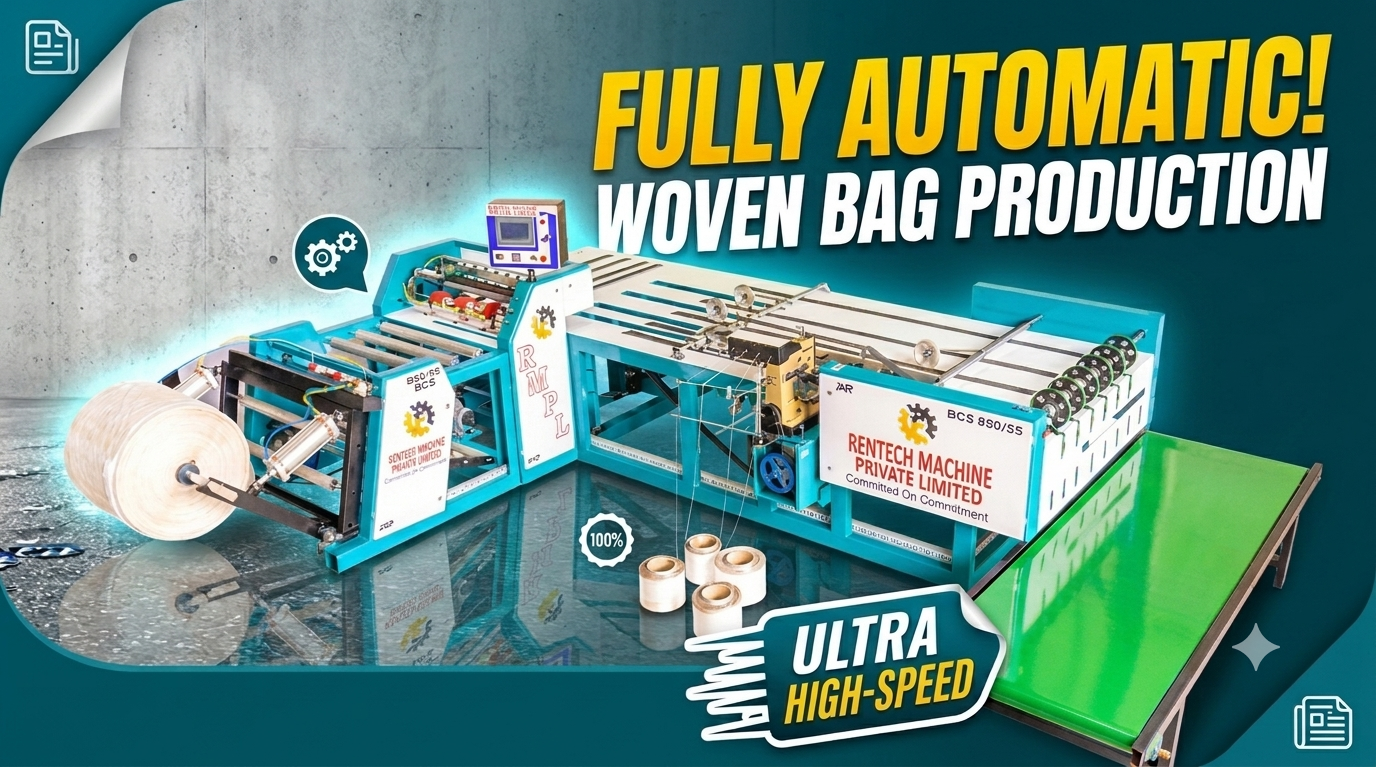
An automatic woven bag making machine is industrial equipment designed to convert woven fabric into bags through coordinated manufacturing operations. Depending on the machine configuration, these operations may include fabric feeding, length measurement, cutting, positioning, stitching, and finished-bag collection.
The primary purpose of automation is to make the bag conversion process more consistent and organized while reducing repetitive manual handling.
Automatic woven bag manufacturing equipment is used by packaging manufacturers producing bags for agricultural commodities, fertilizers, animal feed, industrial materials, and other applications that require woven packaging.
Modern conversion machinery can also help manufacturers respond to changing customer requirements by supporting different bag sizes and production specifications, subject to the capabilities of the selected machine.
Understanding the Woven Bag Manufacturing Process
Producing quality woven bags requires coordination between fabric handling, cutting, stitching, and inspection. Each stage contributes to the consistency and durability of the finished product.
1. Fabric Feeding and Alignment
The process begins with woven fabric positioned on the feeding arrangement. The fabric moves through the machine while the feeding system helps maintain proper alignment.
Consistent feeding is important because uneven movement can affect bag dimensions and create difficulties during cutting or stitching. Correct setup is particularly important when processing lightweight Leno mesh or laminated woven fabrics.
2. Accurate Fabric Cutting
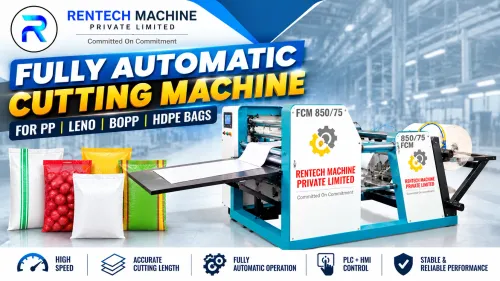
The fabric is cut according to the required bag length. A suitable cutting system helps manufacturers maintain consistent dimensions and prepare fabric blanks for the stitching operation.
Proper cutting can also help reduce avoidable material waste and minimize adjustments during subsequent production stages.
3. Stitching and Bag Formation
After cutting, the fabric is positioned for stitching according to the required bag construction. Stitching quality plays a significant role in the strength, appearance, and durability of the finished bag.
The appropriate seam arrangement depends on the intended application, fabric construction, filling process, and customer requirements.
4. Finished Bag Handling
After stitching, completed bags are collected for inspection, counting, bundling, or further processing. An organized collection process helps manufacturers maintain a smoother workflow between production and dispatch.
Additional operations, such as printing or specialized finishing, may require separate machinery or an integrated production arrangement.
Different Types of Bags Manufactured Using Woven Bag Conversion Machinery
PP Woven Bags
PP woven bags are widely used for packaging rice, wheat, pulses, seeds, fertilizers, animal feed, and various industrial products. Their versatility makes them a common choice for packaging manufacturers serving agricultural and commercial markets.
An appropriate PP woven bag conversion machine helps manufacturers process fabric into bags according to customer-specific dimensions and stitching requirements.
HDPE Woven Bags
HDPE woven bags are used in several industrial and commercial packaging applications. Manufacturers should select machinery according to the fabric construction, handling characteristics, and finishing requirements of the intended bag.
Suitable feeding, cutting, and stitching arrangements help support consistent conversion of compatible HDPE woven materials.
Leno Mesh Bags
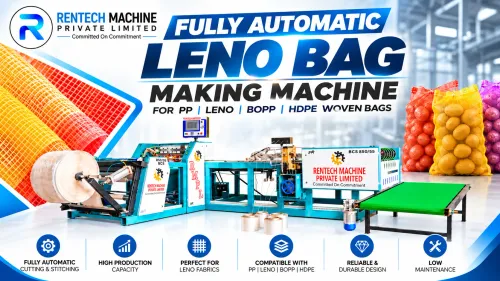
Leno mesh bags are commonly used for onions, potatoes, and other vegetables that benefit from ventilation during storage and transportation.
Because mesh fabrics have an open structure, manufacturers should consider fabric handling, cutting quality, and stitching performance when selecting suitable conversion machinery.
BOPP-Laminated Woven Bags
BOPP-laminated woven bags are popular for branded packaging because they combine woven fabric construction with an attractive printed outer surface.
These bags are used in applications such as food grains, animal feed, fertilizers, and other compatible products. The conversion equipment must be suitable for the laminated material and the required finishing process.
Laminated and Unlaminated Woven Sacks
Woven sacks may be manufactured using laminated or unlaminated fabric, depending on packaging requirements. The choice depends on the product being packed, desired appearance, handling conditions, and the required packaging performance.
Manufacturers should confirm machine compatibility for each fabric type before starting production.
Why Are Automatic Woven Bag Making Machines Important for Modern Manufacturing?
Automation is becoming increasingly relevant for manufacturers that need repeatable production processes and dependable product quality.
Improved Production Consistency
Automated feeding, cutting, and stitching operations can help reduce variations between finished bags when the machine is correctly configured and maintained.
Consistent bag dimensions and stitching are important for customers who require uniform packaging for filling, stacking, storage, and transportation.
Reduced Manual Handling
Automation can reduce repetitive manual work during bag conversion. This allows operators to concentrate on machine supervision, quality inspection, material preparation, and production planning.
The extent of labour savings depends on the machine design, production layout, and existing manufacturing process.
Better Material Utilization
Accurate cutting and repeatable operating settings can help reduce avoidable fabric waste. Effective material planning and operator training further support efficient production.
Organized Production Workflow
A properly planned conversion line helps manufacturers coordinate fabric feeding, cutting, stitching, inspection, and finished-bag collection.
An organized workflow can make production planning easier and improve visibility into manufacturing operations.
Support for Business Expansion
As customer demand grows, manufacturers may need equipment that supports higher production volumes and more consistent output.
Selecting machinery according to actual production needs helps businesses prepare for expansion without investing in unnecessary features.
Applications Across Multiple Industries
Automatic woven bag conversion machinery supports packaging manufacturers serving a broad range of sectors.
Agriculture: Packaging for rice, wheat, pulses, seeds, and other agricultural commodities.
Vegetable packaging: Leno mesh bags for onions, potatoes, and selected vegetables.
Fertilizer industry: Woven sacks for suitable fertilizer products.
Animal feed: Packaging for feed and related agricultural products.
Food grains: Woven bags used for commercial grain storage and distribution.
Construction materials: Suitable woven packaging for selected industrial and construction products.
Industrial packaging: Bags designed for customer-specific applications.
Branded packaging: Laminated and printed woven bags for businesses seeking product identification and improved presentation.
The final bag design and material selection should match the requirements of the product being packaged.
How to Choose the Right Automatic Woven Bag Making Machine
Selecting the right machine requires a clear understanding of the manufacturing process and the products you intend to produce.
Understand Your Material Requirements
Begin by identifying the fabric types you plan to process, such as PP woven fabric, HDPE woven fabric, Leno mesh, or BOPP-laminated fabric.
Different materials have different handling and processing characteristics. Confirm that the proposed machine configuration is suitable for your intended production materials.
Define Your Bag Specifications
Bag dimensions, fabric construction, stitching requirements, and intended applications influence machine selection.
Providing clear product specifications helps the manufacturer recommend an appropriate machine configuration.
Evaluate Automation Requirements
Consider the level of automation needed for your production volume and workflow. A fully automatic system may suit manufacturers seeking streamlined production, while a semi-automatic solution may be appropriate for certain smaller-scale operations.
Consider Maintenance and Technical Support
Reliable operation depends on proper maintenance, suitable spare parts, operator training, and technical assistance.
Before purchasing, understand the manufacturer's service arrangements and recommended maintenance practices.
Review the Complete Production Process
A bag cutting and stitching machine is only one part of a larger manufacturing workflow. If your business also requires printing, lamination, specialized finishing, or additional handling operations, plan how these stages will connect with the conversion process.
Evaluating the complete workflow helps avoid production bottlenecks and supports more effective equipment planning.
Quality Control in Woven Bag Manufacturing
Quality control is essential for producing woven bags that meet customer expectations and perform reliably during use.
Manufacturers should regularly inspect finished bags for:
Consistent bag dimensions
Clean and uniform cutting edges
Reliable stitching and seam formation
Appropriate fabric alignment
Consistent appearance and finishing
Suitability for the intended filling and handling process
Regular machine inspection, correct operating settings, and proper operator training help maintain product consistency.
Quality requirements may vary according to the application, customer specifications, and relevant packaging standards. Establishing clear inspection procedures helps manufacturers identify problems before finished bags are dispatched.
The Role of Printing in Woven Bag Manufacturing
Printing is an important part of woven bag production for businesses that supply branded or product-specific packaging.
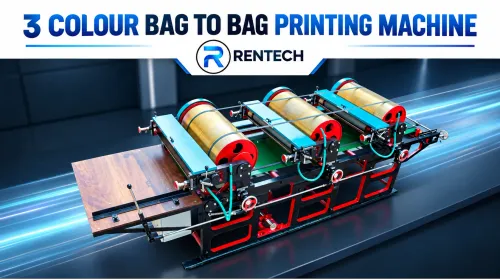
Flexographic printing machinery can be used to print logos, product information, company names, and other graphics on compatible woven packaging materials. Depending on the production arrangement, printing may take place before bag conversion or through a suitable bag-to-bag printing process.
For manufacturers supplying retail, agricultural, or commercial packaging, clear printing can improve product identification and brand presentation.
Rentech Machine Private Limited also serves the woven bag printing and conversion machinery sector, enabling customers to discuss their broader production requirements.
Why Choose Rentech Machine Private Limited?
Rentech Machine Private Limited is based in Ahmedabad, Gujarat, India, and provides machinery for woven bag manufacturing and conversion applications.
We understand that each packaging manufacturer may have different production objectives, fabric requirements, and customer expectations. Selecting machinery should therefore begin with an understanding of the actual manufacturing application.
Rentech offers customers an opportunity to discuss their requirements for bag cutting, stitching, printing, and woven bag conversion machinery.
When enquiring about a suitable machine, customers can share the materials they process, the types of bags they manufacture, their production objectives, and any special requirements.
This information helps establish a clearer understanding of the appropriate machinery solution for the business.
Our objective is to support packaging manufacturers in identifying practical equipment solutions that align with their manufacturing operations and future business plans.
Visit the official website to explore Rentech Machine Private Limited and its machinery solutions:
Website: https://rentechmachine.com
Frequently Asked Questions (Q&A)
1. What is an automatic woven bag making machine used for?
An automatic woven bag making machine is used to convert woven fabric into finished bags through operations such as feeding, cutting, positioning, and stitching. The available functions depend on the machine configuration.
2. Which industries use automatic woven bag making machines?
These machines are used by packaging manufacturers serving agriculture, fertilizers, food grains, animal feed, construction, and industrial packaging markets.
3. Can woven bag conversion machinery process PP woven fabric?
Yes, suitable machines are designed to process PP woven fabric. The appropriate configuration depends on the fabric characteristics, bag dimensions, and required stitching arrangement.
4. Can the machine manufacture Leno bags for onions and potatoes?
A suitable machine configuration can be used for Leno mesh bag conversion. Manufacturers should confirm compatibility with their mesh fabric and intended bag specifications.
5. Are automatic woven bag making machines suitable for HDPE bags?
Suitable configurations can process compatible HDPE woven fabrics. Buyers should confirm the intended material and production requirements with the machine manufacturer.
6. What is the difference between laminated and unlaminated woven bags?
Laminated woven bags have an additional laminated layer, which may improve surface appearance and provide specific packaging characteristics. Unlaminated woven bags use woven fabric without that additional layer. The appropriate choice depends on the product and packaging requirements.
7. Can woven bags be printed with company logos and product information?
Yes. Compatible woven bags can be printed using suitable printing equipment. The printing process and machinery depend on the material, design, and production workflow.
8. What factors affect the quality of finished woven bags?
Important factors include fabric quality, cutting accuracy, stitching consistency, material handling, machine setup, operator skill, and regular maintenance.
9. How can manufacturers improve efficiency in woven bag production?
Manufacturers can improve efficiency by selecting suitable machinery, maintaining consistent machine settings, training operators, planning material changes, conducting routine inspections, and minimizing avoidable downtime.
10. How should a manufacturer select the right woven bag making machine?
The selection process should consider fabric type, bag dimensions, stitching requirements, production objectives, automation needs, maintenance arrangements, and future manufacturing plans.
11. Does a woven bag making machine include printing equipment?
Not necessarily. Printing may require separate equipment or a specifically configured production line. Buyers should confirm the included operations before placing an order.
12. How can I contact Rentech Machine Private Limited for a machine enquiry?
Visit https://rentechmachine.com to contact Rentech Machine Private Limited. Share your material type, bag application, manufacturing requirements, and any special production needs to help identify a suitable machine solution.
Conclusion
Automatic woven bag making machines play an important role in modern packaging manufacturing by supporting organized fabric conversion, consistent cutting, reliable stitching, and efficient production workflows.
For manufacturers working with PP woven bags, HDPE woven sacks, Leno mesh bags, and compatible laminated packaging, selecting the right machinery is an important step toward improving product consistency and preparing for future growth.
The best equipment choice depends on the materials being processed, the required bag construction, production objectives, and the overall manufacturing setup.
Rentech Machine Private Limited, Ahmedabad, Gujarat, India, welcomes enquiries from woven bag manufacturers seeking suitable machinery for bag cutting, stitching, printing, and conversion applications.
Contact Rentech to discuss your manufacturing requirements and explore suitable machinery solutions for your business.