
Ahmedabad
08048031606
+917600133435
Bag Conversion Line by Rentech

Woven Bag Making Machine Manufacturer – Rentech Machine Private Limited

Phone Number

08048031606

Please keep 0 before dialling the number.

Mon-Thu: 10 AM - 2 PM • Fri: 3 PM - 7AM

Address 67, Road No. 1, Gopalcharan Industrial Hub, Bakrol, (Bujrang)

Ahmedabad, Gujarat, India, 382430
Description

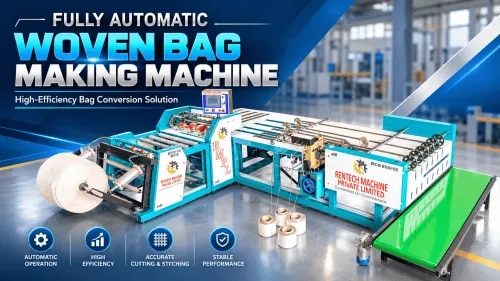
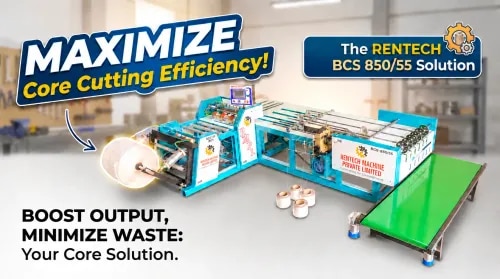
Integrated Woven Bag Manufacturing Solutions for Industrial Packaging Rentech Machine Private Limited offers woven bag manufacturing solutions designed to support packaging manufacturers in producing durable, functional and commercially suitable woven bags. A woven bag making machine is used to convert polypropylene (PP) woven fabric into finished bags through operations such as fabric feeding, length measurement, cutting, folding, stitching and stacking, depending on the selected machine configuration. Designed for industrial packaging applications, a woven bag manufacturing system helps manufacturers establish a more consistent production process, improve dimensional accuracy and reduce repetitive manual handling. The appropriate machine configuration depends on bag dimensions, fabric GSM, production targets, stitching requirements and the type of packaging product being manufactured. For businesses producing bags for agriculture, cement, fertilizers, animal feed, grains, chemicals and other bulk materials, selecting the right woven bag making machinery is an important step towards improving production efficiency and maintaining consistent finished-bag quality. Rentech Machine Private Limited focuses on providing machinery solutions according to production requirements, bag specifications and the intended manufacturing process. 1. Understanding the Woven Bag Manufacturing Process Woven bags are commonly manufactured from polypropylene tapes woven into fabric. The woven fabric is then processed into bags using suitable converting equipment. Depending on the production line, the process may include the following stages: Fabric Feeding and Unwinding The PP woven fabric roll is mounted on the feeding or unwinding arrangement. The system supplies fabric to the processing section at a controlled rate. Proper roll alignment and stable feeding help reduce fabric wrinkles, uneven cutting and material wastage. Fabric Guiding and Tension Control The fabric-guiding arrangement helps maintain alignment as the material moves through the machine. Appropriate tension control is important for maintaining consistent bag dimensions, particularly when processing large fabric rolls or lightweight woven materials. Length Measurement and Cutting The fabric is measured according to the required bag length and cut using the machine's cutting arrangement. Depending on the model, cutting may be performed through hot cutting, cold cutting or another specified cutting mechanism. Accurate measurement supports consistent bag dimensions and helps minimize unnecessary fabric consumption. Folding and Edge Preparation Where required, the cut fabric is folded or prepared for subsequent stitching. The folding arrangement and edge preparation method depend on the bag design, including whether the product requires a stitched bottom, hemmed opening or other finishing operation. Stitching and Bag Formation The cut fabric is stitched according to the required bag construction. A suitable industrial stitching system helps maintain seam consistency and bag integrity. The stitch type, thread selection and number of stitches per inch should be selected according to the fabric, bag application and required load performance. Collection and Stacking Finished bags are collected manually or through an optional stacking arrangement. Organized collection helps simplify counting, inspection, bundling and dispatch preparation. Important: A woven bag making machine does not necessarily perform every manufacturing operation in a single unit. Printing, lamination, tape extrusion, circular weaving and specialized valve-bag construction may require separate equipment or additional modules. 2. Key Features of a Woven Bag Making Machine Controlled fabric feeding: Supports stable movement of woven fabric through the processing section. Accurate cutting arrangement: Helps produce bags according to the specified length. Adjustable bag dimensions: Allows configuration for supported bag lengths and widths. Industrial stitching capability: Supports the formation of durable seams for suitable woven-bag applications. Operator-friendly controls: Provides access to the machine's operating and adjustment functions according to the installed control system. Production consistency: Helps reduce variation in cutting and finishing when the machine is correctly adjusted. Robust industrial construction: Designed for routine manufacturing operations under suitable operating and maintenance conditions. Flexible configuration: Machine features can be selected according to bag size, fabric characteristics, production volume and automation requirements. Maintenance accessibility: Accessible wear parts and routine service points help simplify scheduled maintenance. Optional automation: Depending on the model, automatic feeding, length control, stacking and other functions may be incorporated. 3. Applications of PP Woven Bag Manufacturing Machinery Woven bag manufacturing equipment can support the production of packaging products for several industries. Agriculture and Grain Packaging Production of suitable bags for rice, wheat, maize, pulses and other agricultural commodities. Fertilizer and Chemical Packaging Manufacturing woven bags for fertilizer and compatible industrial materials, subject to the required fabric construction, coating and chemical compatibility. Cement and Construction Materials Production of woven packaging bags for cement and other building materials when the bag construction and required barrier properties are appropriate. Animal Feed and Food-Related Packaging Manufacturing bags for animal feed, grains and other packaged commodities. Food-contact requirements and relevant packaging standards should be verified for the intended use. Sugar, Salt and Industrial Minerals Processing woven fabric into bags for suitable bulk and granular products. Industrial and Commercial Packaging Production of packaging bags for polymers, raw materials, industrial powders and other products that require woven packaging. 4. Why Choose Rentech Machine Private Limited? Selecting a woven bag making machine involves more than comparing its nominal production speed. The machine must match the fabric, required bag dimensions, seam construction and expected operating schedule. Rentech Machine Private Limited provides woven bag machinery solutions intended to support these production requirements. Application-oriented selection: Machine configuration can be evaluated according to the intended bag type and production process. Production-focused design: Feeding, cutting and stitching requirements can be considered together to support a practical workflow. Configurable specifications: Available features depend on the selected machine model and agreed scope of supply. Industrial packaging expertise: Suitable for manufacturers planning to produce woven packaging for multiple commercial sectors. Technical coordination: Bag samples, material specifications and production requirements can be reviewed before finalizing the machine configuration. Process improvement: Correctly selected machinery can help improve repeatability and reduce avoidable manual handling. Long-term operating considerations: Maintenance access, operator training, spare parts and service arrangements should be reviewed as part of the purchase decision. 5. Production Quality and Operating Considerations Finished-bag quality depends on the interaction of several machine and material variables. A suitable machine alone cannot guarantee a particular output or bag strength. Manufacturers should evaluate the following factors: Fabric GSM and construction: Fabric weight, tape properties and weave structure affect processing behavior and finished-bag performance. Cutting accuracy: Consistent bag length helps simplify downstream stitching and packing. Seam strength: Stitching quality, thread selection, stitch density and seam design influence bag integrity. Fabric alignment: Proper guiding helps reduce skewed cuts and inconsistent edges. Operating speed: Actual output depends on bag length, material properties, machine settings, operator intervention and stoppage time. Preventive maintenance: Inspection of cutting elements, guides, belts, stitching components and other wear parts helps maintain stable operation. Finished-product inspection: Random checks of dimensions, seam quality and bag construction help identify production variations. For applications involving heavy loads, food contact, hazardous materials or export packaging, the complete bag design should be evaluated against the relevant customer specifications and applicable standards. 6. Machine Selection for Different Production Requirements A woven bag manufacturer should select equipment according to its product range rather than relying solely on the maximum advertised speed. Small and medium production units: May prioritize straightforward operation, ease of adjustment and practical maintenance. High-volume bag manufacturers: May require automatic length measurement, controlled feeding, faster processing and organized finished-bag collection. Multiple-size bag production: Benefits from a configuration that supports the required adjustment range and changeover procedure. Heavy-duty packaging applications: Require appropriate fabric handling, seam construction and verification of the finished bag's performance. Specialized bag designs: May need additional equipment for printing, lamination, gusseting, liner insertion, valve formation or other operations. Rentech Machine Private Limited recommends confirming the complete process flow before choosing the final machine specification. 7. Request a Woven Bag Making Machine Quotation If you are planning to establish a new woven bag manufacturing unit or upgrade an existing production facility, share your bag dimensions, fabric specifications, target output and stitching requirements with Rentech Machine Private Limited. Providing these details helps determine a suitable machine configuration and identify any additional equipment required for your production line. Request information about the Woven Bag Making Machine from Rentech Machine Private Limited to discuss your manufacturing requirements, available configuration options and technical specifications. 8.Frequently Asked Questions About Woven Bag Making Machines Q1. What is a woven bag making machine? A woven bag making machine processes woven fabric into finished bags through operations such as feeding, measuring, cutting, folding and stitching. The exact operations depend on the machine model and the bag design. Q2. Which materials can be processed? PP woven fabric is a common material used in woven-bag manufacturing. Other fabrics should be evaluated for thickness, construction, coating and compatibility with the machine's feeding, cutting and stitching systems. Q3. Can the machine manufacture different bag sizes? Different bag sizes may be possible within the machine's specified adjustment range. Maximum and minimum bag lengths and widths should be confirmed before selecting a model. Q4. Is printing included in the woven bag making machine? Printing is not necessarily included. Depending on the production arrangement, fabric or bag printing may require a separate flexographic printing machine or an integrated printing module. Q5. Can laminated PP woven fabric be processed? This depends on the fabric construction, lamination type, thickness and cutting method. The manufacturer should evaluate the actual material sample before confirming compatibility. Q6. What determines the production capacity? Production output depends on bag dimensions, machine speed, cutting and stitching cycles, fabric characteristics, operator intervention, changeovers and downtime. A realistic output estimate should be established using the intended product specifications. Q7. Is the machine suitable for cement and fertilizer bags? A suitable configuration may be used to manufacture woven bags for these applications. The fabric specification, bag design, seam strength, coating and required product standards must be considered. Q8. Does the machine require an operator? Operator requirements depend on the automation level. Operators may be needed for fabric roll loading, parameter setting, quality checks, finished-bag handling and routine maintenance even when selected operations are automated.

Specifications

Machine Name Woven Bag Making Machine
Manufacturer Rentech Machine Private Limited
Application PP woven bag converting and finishing
Compatible Material PP woven fabric; other materials subject to compatibility
Cutting System Hot cutting, cold cutting or specified cutting arrangement

Other Products

view all

6814772a5d263414004dd4a4 Card 2

product image
Bag Conversion Line

Integrated Woven Bag Manufacturing Solutions for Industrial Packaging Rentech Machine Private Limited offers woven bag manufacturing solutions designed to support packaging manufacturers in producing durable, functional and commercially suitable woven bags. A woven bag making machine is used to convert polypropylene (PP) woven fabric into finished bags through operations such as fabric feeding, length measurement, cutting, folding, stitching and stacking, depending on the selected machine configuration. Designed for industrial packaging applications, a woven bag manufacturing system helps manufacturers establish a more consistent production process, improve dimensional accuracy and reduce repetitive manual handling. The appropriate machine configuration depends on bag dimensions, fabric GSM, production targets, stitching requirements and the type of packaging product being manufactured. For businesses producing bags for agriculture, cement, fertilizers, animal feed, grains, chemicals and other bulk materials, selecting the right woven bag making machinery is an important step towards improving production efficiency and maintaining consistent finished-bag quality. Rentech Machine Private Limited focuses on providing machinery solutions according to production requirements, bag specifications and the intended manufacturing process. 1. Understanding the Woven Bag Manufacturing Process Woven bags are commonly manufactured from polypropylene tapes woven into fabric. The woven fabric is then processed into bags using suitable converting equipment. Depending on the production line, the process may include the following stages: Fabric Feeding and Unwinding The PP woven fabric roll is mounted on the feeding or unwinding arrangement. The system supplies fabric to the processing section at a controlled rate. Proper roll alignment and stable feeding help reduce fabric wrinkles, uneven cutting and material wastage. Fabric Guiding and Tension Control The fabric-guiding arrangement helps maintain alignment as the material moves through the machine. Appropriate tension control is important for maintaining consistent bag dimensions, particularly when processing large fabric rolls or lightweight woven materials. Length Measurement and Cutting The fabric is measured according to the required bag length and cut using the machine's cutting arrangement. Depending on the model, cutting may be performed through hot cutting, cold cutting or another specified cutting mechanism. Accurate measurement supports consistent bag dimensions and helps minimize unnecessary fabric consumption. Folding and Edge Preparation Where required, the cut fabric is folded or prepared for subsequent stitching. The folding arrangement and edge preparation method depend on the bag design, including whether the product requires a stitched bottom, hemmed opening or other finishing operation. Stitching and Bag Formation The cut fabric is stitched according to the required bag construction. A suitable industrial stitching system helps maintain seam consistency and bag integrity. The stitch type, thread selection and number of stitches per inch should be selected according to the fabric, bag application and required load performance. Collection and Stacking Finished bags are collected manually or through an optional stacking arrangement. Organized collection helps simplify counting, inspection, bundling and dispatch preparation. Important: A woven bag making machine does not necessarily perform every manufacturing operation in a single unit. Printing, lamination, tape extrusion, circular weaving and specialized valve-bag construction may require separate equipment or additional modules. 2. Key Features of a Woven Bag Making Machine Controlled fabric feeding: Supports stable movement of woven fabric through the processing section. Accurate cutting arrangement: Helps produce bags according to the specified length. Adjustable bag dimensions: Allows configuration for supported bag lengths and widths. Industrial stitching capability: Supports the formation of durable seams for suitable woven-bag applications. Operator-friendly controls: Provides access to the machine's operating and adjustment functions according to the installed control system. Production consistency: Helps reduce variation in cutting and finishing when the machine is correctly adjusted. Robust industrial construction: Designed for routine manufacturing operations under suitable operating and maintenance conditions. Flexible configuration: Machine features can be selected according to bag size, fabric characteristics, production volume and automation requirements. Maintenance accessibility: Accessible wear parts and routine service points help simplify scheduled maintenance. Optional automation: Depending on the model, automatic feeding, length control, stacking and other functions may be incorporated. 3. Applications of PP Woven Bag Manufacturing Machinery Woven bag manufacturing equipment can support the production of packaging products for several industries. Agriculture and Grain Packaging Production of suitable bags for rice, wheat, maize, pulses and other agricultural commodities. Fertilizer and Chemical Packaging Manufacturing woven bags for fertilizer and compatible industrial materials, subject to the required fabric construction, coating and chemical compatibility. Cement and Construction Materials Production of woven packaging bags for cement and other building materials when the bag construction and required barrier properties are appropriate. Animal Feed and Food-Related Packaging Manufacturing bags for animal feed, grains and other packaged commodities. Food-contact requirements and relevant packaging standards should be verified for the intended use. Sugar, Salt and Industrial Minerals Processing woven fabric into bags for suitable bulk and granular products. Industrial and Commercial Packaging Production of packaging bags for polymers, raw materials, industrial powders and other products that require woven packaging. 4. Why Choose Rentech Machine Private Limited? Selecting a woven bag making machine involves more than comparing its nominal production speed. The machine must match the fabric, required bag dimensions, seam construction and expected operating schedule. Rentech Machine Private Limited provides woven bag machinery solutions intended to support these production requirements. Application-oriented selection: Machine configuration can be evaluated according to the intended bag type and production process. Production-focused design: Feeding, cutting and stitching requirements can be considered together to support a practical workflow. Configurable specifications: Available features depend on the selected machine model and agreed scope of supply. Industrial packaging expertise: Suitable for manufacturers planning to produce woven packaging for multiple commercial sectors. Technical coordination: Bag samples, material specifications and production requirements can be reviewed before finalizing the machine configuration. Process improvement: Correctly selected machinery can help improve repeatability and reduce avoidable manual handling. Long-term operating considerations: Maintenance access, operator training, spare parts and service arrangements should be reviewed as part of the purchase decision. 5. Production Quality and Operating Considerations Finished-bag quality depends on the interaction of several machine and material variables. A suitable machine alone cannot guarantee a particular output or bag strength. Manufacturers should evaluate the following factors: Fabric GSM and construction: Fabric weight, tape properties and weave structure affect processing behavior and finished-bag performance. Cutting accuracy: Consistent bag length helps simplify downstream stitching and packing. Seam strength: Stitching quality, thread selection, stitch density and seam design influence bag integrity. Fabric alignment: Proper guiding helps reduce skewed cuts and inconsistent edges. Operating speed: Actual output depends on bag length, material properties, machine settings, operator intervention and stoppage time. Preventive maintenance: Inspection of cutting elements, guides, belts, stitching components and other wear parts helps maintain stable operation. Finished-product inspection: Random checks of dimensions, seam quality and bag construction help identify production variations. For applications involving heavy loads, food contact, hazardous materials or export packaging, the complete bag design should be evaluated against the relevant customer specifications and applicable standards. 6. Machine Selection for Different Production Requirements A woven bag manufacturer should select equipment according to its product range rather than relying solely on the maximum advertised speed. Small and medium production units: May prioritize straightforward operation, ease of adjustment and practical maintenance. High-volume bag manufacturers: May require automatic length measurement, controlled feeding, faster processing and organized finished-bag collection. Multiple-size bag production: Benefits from a configuration that supports the required adjustment range and changeover procedure. Heavy-duty packaging applications: Require appropriate fabric handling, seam construction and verification of the finished bag's performance. Specialized bag designs: May need additional equipment for printing, lamination, gusseting, liner insertion, valve formation or other operations. Rentech Machine Private Limited recommends confirming the complete process flow before choosing the final machine specification. 7. Request a Woven Bag Making Machine Quotation If you are planning to establish a new woven bag manufacturing unit or upgrade an existing production facility, share your bag dimensions, fabric specifications, target output and stitching requirements with Rentech Machine Private Limited. Providing these details helps determine a suitable machine configuration and identify any additional equipment required for your production line. Request information about the Woven Bag Making Machine from Rentech Machine Private Limited to discuss your manufacturing requirements, available configuration options and technical specifications. 8.Frequently Asked Questions About Woven Bag Making Machines Q1. What is a woven bag making machine? A woven bag making machine processes woven fabric into finished bags through operations such as feeding, measuring, cutting, folding and stitching. The exact operations depend on the machine model and the bag design. Q2. Which materials can be processed? PP woven fabric is a common material used in woven-bag manufacturing. Other fabrics should be evaluated for thickness, construction, coating and compatibility with the machine's feeding, cutting and stitching systems. Q3. Can the machine manufacture different bag sizes? Different bag sizes may be possible within the machine's specified adjustment range. Maximum and minimum bag lengths and widths should be confirmed before selecting a model. Q4. Is printing included in the woven bag making machine? Printing is not necessarily included. Depending on the production arrangement, fabric or bag printing may require a separate flexographic printing machine or an integrated printing module. Q5. Can laminated PP woven fabric be processed? This depends on the fabric construction, lamination type, thickness and cutting method. The manufacturer should evaluate the actual material sample before confirming compatibility. Q6. What determines the production capacity? Production output depends on bag dimensions, machine speed, cutting and stitching cycles, fabric characteristics, operator intervention, changeovers and downtime. A realistic output estimate should be established using the intended product specifications. Q7. Is the machine suitable for cement and fertilizer bags? A suitable configuration may be used to manufacture woven bags for these applications. The fabric specification, bag design, seam strength, coating and required product standards must be considered. Q8. Does the machine require an operator? Operator requirements depend on the automation level. Operators may be needed for fabric roll loading, parameter setting, quality checks, finished-bag handling and routine maintenance even when selected operations are automated.

6814772a5d263414004dd4a4 Card 2

product image
FCM-Auto Bag Cutting Machine

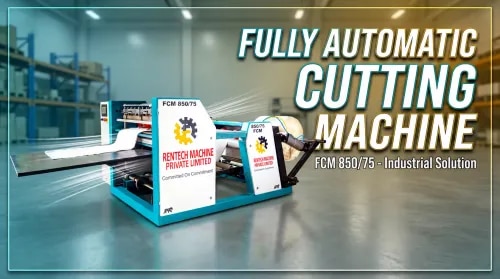
Auto Cutting Machine for Woven Bags – Advanced Fabric Cutting Equipment In modern woven packaging manufacturing, cutting accuracy and production consistency play an important role in achieving uniform bag dimensions and maintaining an organized workflow. Rentech Machine Private Limited offers an Auto Cutting Machine for Woven Bags designed to help manufacturers streamline the cutting of woven fabric for different packaging applications. This machine is intended for businesses that want to improve cutting consistency, reduce repetitive manual operations, and support a more systematic production process. The Auto Cutting Machine for Woven Bags is suitable for applications involving PP woven fabric and other compatible woven materials, subject to the selected machine configuration. It cuts fabric into predetermined lengths required for manufacturing woven sacks, industrial packaging bags, agricultural packaging bags, and other woven fabric products. Automated cutting helps maintain repeatable cutting dimensions and prepares fabric pieces for subsequent operations such as stitching, printing, folding, and finishing. For manufacturers managing regular production orders, a reliable cutting process can make a significant difference to the overall production sequence. When fabric pieces are cut consistently, operators can handle downstream stitching and finishing activities more efficiently. The machine can also help reduce dependence on repetitive hand-cutting work, improve production organization, and support better control over material handling. Designed for Practical Manufacturing Requirements Rentech Machine Private Limited understands that woven bag manufacturers may work with different fabric widths, bag lengths, material constructions, and production volumes. Therefore, selecting an appropriate cutting machine requires consideration of the intended application and the customer's operational requirements. Machine configuration should be evaluated according to the fabric type, cutting dimensions, feeding arrangement, control system, and required production output. An automatic cutting solution can be particularly useful for manufacturers supplying packaging products to agriculture, fertilizers, chemicals, construction materials, food grains, and other industrial sectors. By incorporating a suitable cutting machine into the production line, manufacturers can establish a more consistent process from fabric preparation to finished bag manufacturing. Key Advantages of an Auto Cutting Machine for Woven Bags Consistent cutting dimensions: The machine is intended to support repeatable fabric cutting lengths, helping manufacturers maintain uniformity across production batches. Reduced manual workload: Automation can minimize repetitive manual measuring and cutting activities, allowing operators to focus on monitoring the production process and handling fabric. Improved production workflow: Cut fabric pieces can be transferred to stitching and finishing operations in a more organized manner, supporting better coordination between production stages. Support for packaging applications: Depending on the machine model, it can be configured for suitable woven fabric used in the production of PP woven sacks and other packaging products. Better material management: Accurate length settings and suitable production planning can help reduce avoidable cutting errors and improve fabric utilization. Integration with manufacturing operations: The machine may be incorporated into an existing production arrangement after checking feeding requirements, operating speed, available space, and compatibility with other equipment. Applications Across Woven Packaging Industries The Auto Cutting Machine for Woven Bags can support manufacturers producing PP woven sacks, industrial packaging bags, fertilizer bags, grain bags, seed packaging bags, animal feed bags, and other compatible woven fabric products. The suitability of the machine for a specific application depends on the fabric characteristics and required cutting dimensions. For manufacturers expanding their production capacity or upgrading from manual cutting methods, an appropriately configured automatic cutting machine can help standardize an important stage of the bag-making process. Rentech Machine Private Limited provides machinery solutions for businesses seeking practical equipment for woven bag manufacturing and packaging production. Why Consider Rentech Machine Private Limited? Rentech Machine Private Limited focuses on machinery solutions for woven bag and packaging manufacturers. The company aims to help businesses identify equipment that matches their production requirements, material specifications, and manufacturing workflow. When selecting an Auto Cutting Machine for Woven Bags, buyers should consider more than the initial purchase price. Fabric compatibility, cutting accuracy, ease of adjustment, maintenance requirements, operator safety, and integration with existing equipment are all important factors. Sharing these requirements with the Rentech Machine Private Limited team helps establish a clearer basis for selecting the appropriate machine configuration. For manufacturers looking to improve the consistency and organization of woven fabric cutting, Rentech Machine Private Limited offers a solution worth evaluating for their production setup Frequently Asked Questions (Q&A) Q1. What is an Auto Cutting Machine for Woven Bags used for? An Auto Cutting Machine for Woven Bags is used to cut woven fabric into specified lengths for bag manufacturing. It helps standardize the cutting process and prepares fabric sections for stitching, folding, printing, and other production operations. Q2. Which fabric materials can this machine cut? The machine may be suitable for PP woven fabric and other compatible woven materials, depending on its design and cutting mechanism. Material thickness, weave construction, coating, and fabric properties should be confirmed before ordering. Q3. How does an automatic cutting machine help manufacturers? It can reduce repetitive manual cutting work, improve consistency between fabric pieces, and support a more organized production workflow. The actual improvement depends on the machine configuration, operator practices, and production conditions. Q4. Can the cutting length be selected according to the required bag size? The available cutting-length adjustment depends on the selected model and control system. Buyers should provide their required bag length and fabric specifications to confirm compatibility. Q5. Is the machine suitable for PP woven sack production? An appropriately configured machine can be used in PP woven sack manufacturing to prepare fabric sections before stitching and finishing. The exact application should be verified against the model's technical capabilities. Q6. Does automatic cutting help reduce material wastage? Consistent cutting lengths and proper fabric planning can help reduce avoidable cutting mistakes. Material savings depend on fabric alignment, cutting settings, production planning, and the dimensions of the finished bags. Q7. What should buyers check before purchasing this machine? Buyers should evaluate fabric width, required cutting length, material type, desired production capacity, cutting accuracy, feeding arrangement, control system, power supply, safety provisions, and maintenance requirements. Q8. Can the machine be connected to an existing woven bag production line? Integration may be possible after evaluating the existing equipment, fabric feeding arrangement, available floor space, and operating requirements. The final setup should be confirmed with the machine supplier. Q9. Which industries can benefit from this cutting equipment? Potential users include woven bag manufacturers serving agriculture, fertilizer, grain storage, animal feed, construction materials, chemicals, and industrial packaging markets, provided the fabric is compatible with the machine. Auto Cutting Machine for Woven Bags Choosing the right Auto Cutting Machine for Woven Bags is an important step toward improving production consistency, material handling, and overall manufacturing efficiency. Rentech Machine Private Limited provides machinery solutions designed to meet the evolving requirements of woven bag manufacturers and industrial packaging businesses. With a focus on practical production needs, the machine helps streamline woven fabric cutting and supports the preparation of uniform fabric sections for subsequent stitching and finishing operations. Whether you manufacture PP woven sacks, fertilizer bags, grain bags, agricultural packaging bags, or industrial packaging products, selecting a suitable automatic cutting solution can help establish a more organized production workflow. Contact Rentech Machine Private Limited to discuss your fabric specifications, required cutting dimensions, and production requirements to identify a suitable machine configuration for your business.

6814772a5d263414004dd4a4 Card 2

product image
Bag Conversion Line

Automatic Woven Bag Making Machine Manufacturer in India – Rentech Machine Private Limited In the modern packaging industry, manufacturing woven bags requires consistent dimensions, reliable stitching, efficient material handling, and high production output. An automatic woven bag making machine helps manufacturers streamline bag conversion operations by reducing repetitive manual work and improving production consistency. Rentech Machine Private Limited is a manufacturer and supplier of woven bag conversion machinery based in Ahmedabad, Gujarat, India. Our automatic woven bag making machine solutions are designed for businesses involved in PP woven sacks, HDPE woven bags, and other compatible woven packaging products, depending on the machine configuration. The machine can be configured to perform key bag conversion operations, including fabric feeding, length measurement, cutting, and stitching. Depending on the selected model and production requirements, additional features can be incorporated to improve material handling, operational convenience, and production efficiency. Designed for packaging manufacturers, industrial bag producers, and woven sack conversion units, Rentech machinery supports businesses seeking a more organized and scalable manufacturing process. Automation helps maintain repeatable bag lengths, reduces dependence on manual handling, and supports consistent production when the machine is correctly configured and maintained. Whether you are expanding an existing woven sack manufacturing facility or establishing a new bag conversion unit, selecting the right machinery is an important step toward improving productivity and meeting customer requirements. Key Features of the Automatic Woven Bag Making Machine Automated Bag Conversion Process The machine integrates selected bag conversion operations into a coordinated workflow, helping reduce manual intervention during regular production. Consistent Cutting Accuracy A controlled cutting mechanism helps produce bags with repeatable lengths. Actual cutting accuracy depends on the machine configuration, fabric characteristics, and operating conditions. Reliable Stitching Performance The stitching section is designed to produce consistent seams suitable for compatible woven sack applications. Stitch type and sewing configuration can be selected according to customer requirements. Efficient Fabric Handling The fabric feeding arrangement supports continuous and controlled movement of woven material through the conversion process. Production Flexibility Depending on the model, the machine can be configured for different bag lengths, fabric widths, and production requirements. Reduced Manual Work Automation can reduce repetitive handling, improve workflow organization, and help manufacturers utilize their workforce more efficiently. Industrial Construction The machine is designed for industrial production environments, with configuration and components selected according to the intended application and operating requirements. Customization Options Rentech can discuss machine configurations based on fabric type, bag dimensions, desired output, stitching requirements, and available factory space. Applications of the Machine The automatic woven bag making machine is suitable for manufacturers converting compatible woven fabrics into finished bags for packaging and transportation. - PP woven bags for industrial packaging - HDPE woven sacks - Woven bags for agricultural products - Grain and feed packaging bags - Fertilizer packaging sacks - Sugar and other commodity packaging - Industrial raw material packaging - Laminated and unlaminated woven sacks, subject to the selected configuration - Selected BOPP-laminated woven bag applications, subject to material and process compatibility Note: The final suitability of laminated, coated, printed, or specialty fabrics should be confirmed before ordering. How the Automatic Woven Bag Making Machine Works The machine converts woven fabric into bags through a sequence of coordinated operations. 1. Fabric loading: The woven fabric roll or prepared fabric is positioned according to the selected machine design. 2. Fabric feeding: The feeding mechanism advances the material through the machine. 3. Length measurement: The required bag length is set through the machine's available control system. 4. Automatic cutting: The cutting unit separates the fabric into individual bag blanks at the selected length. 5. Stitching operation: Where an integrated stitching unit is provided, the designated edge is stitched according to the bag design. 6. Collection and inspection: Finished bags are collected and inspected for dimensions, stitching quality, and overall consistency. The precise operating sequence depends on whether the selected machine is a cutting-and-stitching model, a complete conversion line, or another machine configuration. Why Choose Rentech Machine Private Limited? Choosing suitable machinery involves more than comparing the initial purchase price. Manufacturers must consider production requirements, material compatibility, operator convenience, maintenance, and long-term operating costs. Rentech Machine Private Limited works with customers to identify appropriate woven bag conversion solutions based on their intended production applications. Reasons to consider Rentech: - Machinery solutions for woven bag cutting, stitching, and conversion applications. - Configurations tailored to production requirements and bag specifications. - Technical discussions before finalizing the machine model. - Options for manufacturers planning to expand their production capacity. - Support in identifying suitable machinery for PP and HDPE woven sack applications. - Manufacturer-based communication for quotations, specifications, and project requirements. Our objective is to help packaging manufacturers establish a practical, efficient, and scalable bag conversion process. Frequently Asked Questions (Q&A) Q1. What is an automatic woven bag making machine? An automatic woven bag making machine is industrial equipment used to convert compatible woven fabric into finished bags through operations such as feeding, measuring, cutting, and stitching, depending on the machine model. Q2. Which materials can be processed on this machine? The machine can be configured for PP woven and HDPE woven fabrics. Laminated, coated, printed, or BOPP-laminated materials should be checked for compatibility with the selected machine. Q3. Can the machine manufacture bags of different sizes? Yes. Bag lengths and other dimensions can generally be adjusted within the operating range of the selected model. Maximum fabric width, minimum bag length, and other limitations should be confirmed before ordering. Q4. What is the production capacity of an automatic woven bag making machine? Production capacity depends on the machine model, bag dimensions, material properties, cutting cycle, stitching arrangement, operator workflow, and required quality standards. Contact Rentech Machine Private Limited for the applicable output specification. Q5. Does the machine include both cutting and stitching? Some configurations combine automatic cutting and stitching, while others perform only selected conversion operations. The required functions should be specified when requesting a quotation. Q6. Can the machine process laminated woven fabric? Certain configurations can process compatible laminated woven fabrics. The laminate type, thickness, fabric construction, and stitching requirements should be evaluated before finalizing the machine. Q7. Is the machine suitable for a new bag manufacturing business? It can be suitable for a new woven bag conversion business, provided the selected model matches the planned production volume, available investment, bag specifications, and factory infrastructure.