


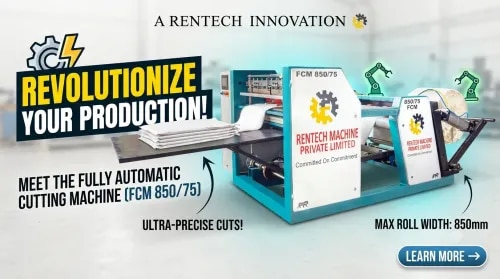
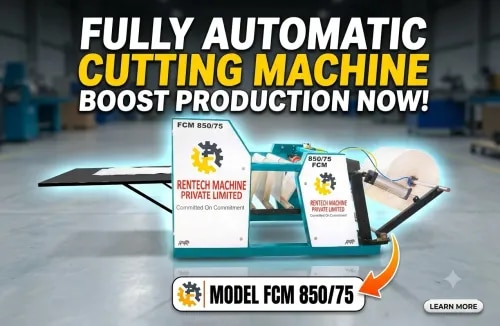
Automatic Bag Cutting Machine In today's competitive packaging industry, manufacturers need machinery that delivers consistent cutting quality, efficient material handling and dependable production performance. An automatic bag cutting machine plays an important role in woven sack manufacturing by converting continuous fabric rolls into accurately measured sections ready for stitching, printing or further bag-conversion operations. Rentech Machine Private Limited offers machinery solutions for the woven packaging industry, including automatic bag cutting applications designed around the requirements of PP woven sack manufacturers, HDPE woven bag producers and industrial packaging converters. Our approach focuses on helping businesses establish a structured cutting process that supports dimensional consistency, production planning and efficient utilisation of raw materials. The automatic bag cutting machine is designed to reduce repetitive manual measuring and cutting activities. Depending on the selected configuration, the system can combine fabric feeding, length measurement, cutting control and operator settings into a coordinated production cycle. This enables manufacturers to process woven material according to predetermined bag dimensions while maintaining a more organised workflow. For businesses producing agricultural sacks, fertiliser bags, rice bags, grain packaging and other industrial woven packaging, cutting accuracy is a critical part of the manufacturing process. If the fabric is cut incorrectly, the resulting variation may affect the stitching position, finished bag dimensions, material consumption and overall appearance. A suitable automatic cutting system helps control these variables and provides a repeatable process for everyday production. At Rentech Machine Private Limited, we understand that every bag manufacturer has different requirements. Some businesses prioritise higher output, while others need flexibility for different bag sizes, laminated materials or integration with existing stitching machines. Therefore, machine selection should be based on fabric width, cutting length, material construction, required production rate and the level of automation needed. Our automatic bag cutting machine solutions are intended to support manufacturers who want to move beyond conventional manual cutting methods and establish a more controlled, productive and scalable manufacturing operation. Key Features of Rentech Automatic Bag Cutting Machine Solutions 1. Automatic Feeding and Fabric Handling Fabric handling is an important consideration when processing long rolls of woven material. Uncontrolled feeding can cause misalignment, inconsistent measurement or interruptions during production. An automatic bag cutting system can incorporate a controlled feeding arrangement to move material through the cutting section. The feeding mechanism should be selected according to the fabric width, roll weight, material flexibility and required cutting speed. Proper roll loading, fabric alignment and routine inspection of feeding components also contribute to stable machine operation. 2. Adjustable Cutting Length Different packaging applications require different bag dimensions. Grain bags, fertiliser sacks, industrial packaging bags and other woven products may all use different cut lengths. An adjustable cutting system allows the operator to select the required length within the machine's rated operating range. This is particularly useful for manufacturers producing multiple bag sizes or handling orders with different specifications. For accurate results, the selected length should be verified against the finished-bag drawing and the requirements of the subsequent stitching process. The available adjustment range and setting method depend on the selected model. 3. Consistent Cutting Dimensions Repeatable cutting dimensions are essential for maintaining the quality of the final product. Variation in cut length may create problems during stitching, folding or other downstream operations. A properly configured automatic cutting machine helps establish a consistent cutting cycle. Measurement calibration, fabric tension, feeding accuracy, blade condition and material alignment all influence the final result. For businesses seeking consistent output across multiple production batches, routine inspection and calibration should be included in the operating procedure. 4. Suitable Cutting Mechanism for Different Materials PP woven fabric, HDPE woven fabric and laminated woven substrates can behave differently during cutting. The most appropriate cutting method depends on the construction of the material and the required edge finish. Depending on the machine configuration, cutting may use a mechanical blade, a hot knife or another suitable mechanism. A hot knife should only be selected where compatible with the substrate, coating, operating requirements and safety provisions. Manufacturers should confirm material suitability before purchasing a machine, particularly when working with BOPP-laminated woven fabric or specialised packaging materials. 5. Operator-Friendly Controls Modern industrial cutting equipment may use digital controls, preset length settings, cycle controls or PLC-based automation, depending on the model. These features can make it easier to configure production runs and reduce repetitive manual intervention. A suitable control arrangement should also allow the operator to monitor the cutting process and respond appropriately to faults or material-handling issues. The exact control system and available automation functions should be verified against the selected machine. 6. Integration with Bag Manufacturing Operations An automatic bag cutting machine is most effective when its output matches the requirements of the next production stage. For example, cut fabric sections may be transferred to a stitching machine or integrated into a larger woven sack conversion line. Integration may require compatible material handling, matching production speeds, appropriate transfer arrangements and sufficient working space. Rentech Machine Private Limited can help assess the machine requirements for a customer's intended production workflow. Materials and Industrial Applications The automatic bag cutting machine can be used for compatible woven packaging materials across several industrial sectors. PP Woven Fabric Used in the production of woven sacks for grains, fertilisers, animal feed, minerals and various industrial products. Cutting settings depend on fabric construction and bag specifications. HDPE Woven Material Suitable for compatible woven packaging applications where controlled cutting and repeatable dimensions are required. BOPP-Laminated Woven Fabric Used for printed packaging where appearance and presentation are important. Cutting compatibility should be checked according to the lamination and cutting mechanism. Agricultural and Industrial Packaging The machine can support preparation of compatible woven fabric for grain, seed, fertiliser, feed and other industrial packaging products. Additional applications may be possible depending on the machine design. Material samples, thickness, coating, width and required edge finish should be evaluated before confirming compatibility. How an Automatic Bag Cutting Machine Can Improve Production Better control over fabric consumption Accurate length setting helps manufacturers manage the amount of fabric allocated to each bag. Where bag dimensions are standardised and the feeding system is calibrated, repeatable cutting can reduce avoidable length variation. However, actual material savings depend on the cutting tolerance, roll condition, fabric defects, bag design and production practices. Automatic cutting alone does not guarantee a particular percentage of savings. Reduced repetitive manual work Manual cutting often requires operators to measure, mark, align and cut the material repeatedly. Automation can reduce these repetitive activities and allow operators to concentrate on monitoring, material handling and quality checks. The number of operators required will depend on the machine's automation level and the overall factory layout. Improved production planning A defined cutting length and repeatable operating cycle make it easier to organise production batches around customer orders. Manufacturers can plan material requirements, prepare different bag sizes and coordinate cutting output with stitching or conversion capacity. More consistent downstream processing When the cut fabric sections meet the required dimensions, subsequent stitching and finishing operations can follow a more predictable workflow. Consistency at the cutting stage can help reduce downstream adjustments, although final bag quality also depends on stitching settings, fabric properties and operator practices. Better scalability for growing businesses Manufacturers planning to increase output should evaluate whether their cutting operation can support the required production target. An appropriately selected automatic machine may help establish a more repeatable process, while a fully integrated conversion line may be preferable for businesses requiring coordinated feeding, cutting, stitching and material transfer. Factors to Consider Before Buying an Automatic Bag Cutting Machine Selecting a machine based only on its advertised speed or purchase price can lead to an unsuitable investment. Buyers should evaluate the complete production requirement before making a decision. Fabric width: Confirm the maximum material width and whether the machine can handle the actual roll dimensions used in your factory. Required bag length: Check that the cutting-length range covers all current and planned product sizes. Material construction: PP woven, HDPE woven and laminated materials may require different cutting settings or mechanisms. Target output: Define the required production rate using a specific bag length and material. A stated cutting speed without operating conditions may not accurately represent actual output. Cutting accuracy: Confirm the acceptable dimensional tolerance and how it is measured during machine trials. Control system: Determine whether basic automatic controls are sufficient or whether PLC-based settings, presets or additional automation are required. Downstream equipment: Ensure the cutting output can be handled by the stitching machine or bag-conversion line. Maintenance and service: Review blade replacement, calibration, spare-parts availability, operator training and routine maintenance requirements. Future requirements: If you intend to manufacture additional bag sizes or introduce laminated products, consider whether the selected machine can accommodate those changes. Quality Control and Machine Maintenance A reliable cutting process requires both suitable equipment and consistent operating practices. Regular inspection helps maintain cutting quality and supports stable production. Recommended practices include: 1. Inspect the fabric roll and confirm that its width and construction match the production requirement. 2. Check the fabric alignment and feeding arrangement before beginning a production run. 3. Verify the cutting-length setting against the approved bag specification. 4. Inspect the blade and cutting mechanism for wear, damage or contamination. 5. Confirm that measurement sensors and encoder systems, where fitted, are operating correctly. 6. Check the condition of rollers, belts, guides and other material-handling components. 7. Record dimensional checks at the start of a production batch and at suitable intervals during production. 8. Follow the manufacturer's procedures for cleaning, lubrication and preventive maintenance. 9. Isolate electrical, pneumatic and other energy sources as required before maintenance. 10. Train operators to recognise abnormal feeding, inaccurate cutting and machine faults. For hot cutting systems, follow the applicable temperature controls, guarding and material-specific safety requirements. Maintenance intervals should follow the machine manual and actual operating conditions Why Choose Rentech Machine Private Limited? Rentech Machine Private Limited specialises in machinery for woven sack manufacturing and bag conversion. We understand the importance of matching machine capabilities with the material, bag dimensions and output expectations of each manufacturing unit. Our approach is centred on practical machine selection and application requirements rather than relying on generic production claims. Whether a customer is upgrading a manual cutting process or planning a new packaging production setup, the machine configuration should be appropriate for the intended material and workflow. Customers evaluating our automatic bag cutting machine solutions can discuss: - Material compatibility and required cutting mechanism. - Fabric width and bag-length requirements. - Production targets and operating conditions. - Available automation and control options. - Compatibility with stitching and bag-conversion equipment. - Installation, operating requirements and maintenance considerations. By evaluating these points before installation, manufacturers can make a more informed decision and plan a cutting process that fits their existing operations and future business objectives. Frequently Asked Questions (Q&A) Q1. What is an automatic bag cutting machine used for? An automatic bag cutting machine is used to cut continuous fabric or compatible packaging material into predetermined lengths. In woven sack manufacturing, it prepares material for stitching, printing-related conversion workflows or other subsequent production operations. Q2. Is an automatic bag cutting machine suitable for PP woven bags? Yes, it can be suitable for PP woven fabric when the machine width, feeding arrangement and cutting mechanism match the fabric specifications. The exact model should be selected according to the material construction and required bag dimensions. Q3. Can the machine cut HDPE woven fabric? Compatible HDPE woven fabric can be processed if it falls within the machine's operating specifications. Buyers should confirm the fabric width, thickness, construction and required edge finish before placing an order. Q4. Can it cut BOPP-laminated woven fabric? The suitability of BOPP-laminated material depends on the lamination, substrate and cutting mechanism. A machine configured for ordinary woven fabric should not automatically be assumed to be suitable for every laminated material. Q5. Can different bag sizes be produced on the same machine? Generally, multiple cutting lengths can be selected if they fall within the specified operating range. Changeover requirements and the time needed to modify settings depend on the model and production arrangement. Q6. What determines the cutting speed? Cutting speed depends on the selected cut length, fabric feeding speed, cutting cycle, material characteristics and machine configuration. Shorter cutting lengths may allow more cutting cycles per minute than longer lengths, but the actual output must be verified under the intended operating conditions. Q7. Does the machine reduce fabric wastage? A suitable automatic cutting system can help reduce avoidable length variation and manual measurement errors. Actual waste reduction depends on material quality, roll defects, cutting tolerance, setup procedures and production management.
Address
67, Road No. 1, Gopalcharan Industrial Hub, Bakrol, (Bujrang)
Ahmedabad, Gujarat, India, 382430